When individuals pass away without specialized systems for transferring their cryptographic keys, their holdings do not go to probate—they enter a permanent vault of cryptographic lock. If you are securing your crypto estate by writing a master seed phrase or hardware PIN into a standard physical testament, you are guaranteeing an extreme security vulnerability for your digital wealth transfer. Lost crypto assets currently account for nearly 20% of the entire Bitcoin supply, according to research analyzing blockchain forensics. This catastrophic loss is rarely due to misplaced hard drives; it is frequently the direct result of incapacitated owners relying on conventional paper estate planning that fails to bridge the gap between analog law and cryptography. This guide unpacks why conventional documentation destroys digital assets, the operational realities of secure inheritance platforms, and the exact legal mechanisms required to protect your generational wealth without exposing it to premature theft or permanent loss.
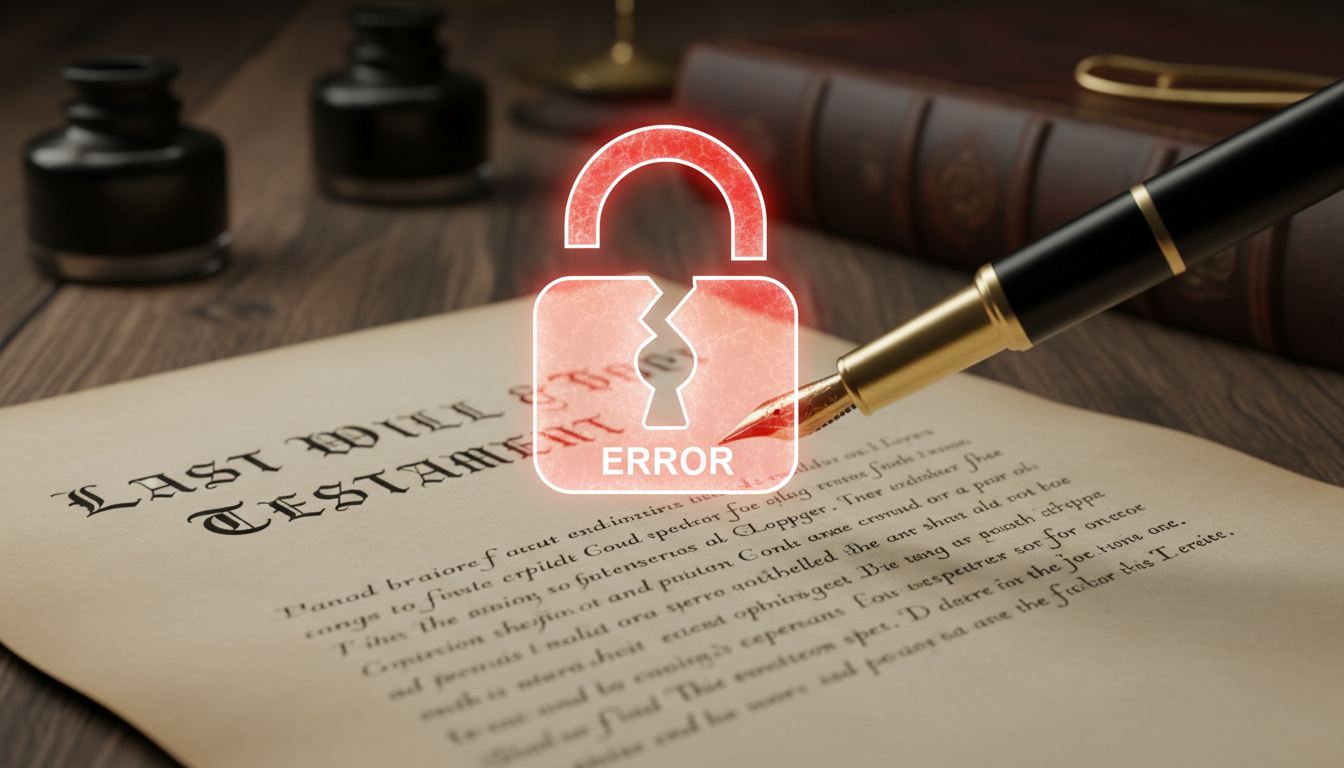
The Anatomy of a Systemic Inheritance Failure
Basic estate planning advice often relies on a fundamentally broken premise: treating bearer assets like standard real estate or equities. To understand the severity of this mismatch, we must examine the physical and operational journey of a traditional will upon the death of an asset holder. In traditional frameworks, financial custody is handled by regulated third parties—banks, brokerages, and transfer agents. When you pass away, these institutions require a certified death certificate and letters testamentary to transfer control to your named executor.
Cryptocurrency operates on a bearer-asset model. Custody is mathematically enforced by whoever holds the private key. There is no central authority to review legal documentation or reverse an unauthorized transaction. If you rely on the legacy system, you are attempting to shoehorn a cryptographically secure, decentralized asset into an analog, inherently administrative process.
Julian’s Critical Security Misstep
Consider the trajectory of Julian, an early technology adopter who amassed a significant digital portfolio held offline in cold storage. Understanding the value of his holdings, Julian followed conventional legal advice. He drafted a comprehensive living trust and included an addendum that contained his 24-word recovery phrase, leaving explicit instructions for his spouse.
Julian sits in the dimly lit conference room of his estate attorney’s downtown office. He slides a sealed envelope containing his unencrypted master seed phrase across the mahogany table. The attorney places it inside physical storage alongside hundreds of other client files. In this single transaction, Julian has degraded military-grade cryptography into a system protected only by a physical filing cabinet and the subjective trustworthiness of administrative staff.
Six years later, Julian unexpectedly passes away. The estate attorney has retired, and the firm’s records were acquired by a larger regional practice. When Julian’s widow attempts to initiate the transfer, the new paralegals must review and catalog all enclosed documents for the incoming executor. Julian’s seed phrase—the literal cryptographic bearer bond to his entire digital net worth—is now sitting in plaintext, handled by administrative staff who understand its value. Because cryptocurrency transactions are pseudo-anonymous and irreversible, if just one staff member takes a photograph of those 24 words, Julian’s digital wealth can be drained within seconds from anywhere in the world. The family would have absolutely no legal or technical recourse.
The Legal Threat Vector: RUFADAA and Probate Vulnerabilities
Beyond the immediate physical security risks of paper documentation, the legal process itself introduces significant vulnerabilities that lead to crypto inheritance failure. In the United States, the management of digital property by fiduciaries is largely governed by the Revised Uniform Fiduciary Access to Digital Assets Act (RUFADAA). While this legislation was a crucial step forward, it creates a dangerous illusion of security.
According to the American Bar Association, RUFADAA dictates that an executor is legally granted the authority to access and manage digital assets, provided the deceased consented to such access in their legal directives. However, granting legal permission does absolutely nothing to solve the cryptographic reality of decentralized networks. RUFADAA allows an executor to legally ask for access; it does not grant them the physical or technical capability to bypass encryption.
Furthermore, entering the standard probate process is inherently public. When a traditional will is filed with a local surrogate or probate court, it becomes a public record. Anyone can view the documents. If a seed phrase or specific instructions detailing the location of physical wallets are included in the primary public filing—rather than a carefully structured, private memorandum—the estate’s digital wealth is immediately exposed to targeted physical and digital theft. This is why addressing legal blind spots in traditional estate planning is not a luxury, but an absolute necessity for asset preservation.

Comparing Methodologies: Paper Estates vs. Encrypted Transfer Platforms
To securely execute a digital wealth transfer, high-net-worth investors must abandon the analog model and adopt cryptographic continuity solutions. Let us compare the fundamental operational mechanics of traditional methodologies against a specialized inheritance platform architecture.
| Architectural Feature | Traditional Testamentary Will | Encrypted Inheritance Platform |
|---|---|---|
| Key Exposure | Keys sit in plaintext; vulnerable to legal staff, family members, or physical burglary. | Zero-knowledge architecture. Keys are encrypted and fragmented; nobody can read them prematurely. |
| Release Mechanism | Manual verification post-mortem, reliant on slow probate courts (often 9-18 months). | Automated multi-factor status checks (Dead Man's Switch), executing on immediate predefined logic. |
| Operational Support | None. Executor is left to identify hardware, software versions, and network derivations alone. | Guided decryption and recovery pathways designed for non-technical beneficiaries. |
| Update Friction | Requires drafting new codicils, scheduling attorney meetings, and paying hourly legal fees for minor changes. | Dynamic digital updating. Assets and beneficiary allocations can be adjusted instantly. |
Overlooked Operational Realities in Digital Continuity
Beyond the plaintext vulnerabilities, digital asset planning must account for real-world friction points that emerge between the exact moment of incapacitation and the ultimate settlement of the estate. These technical realities destroy inheritance plans that rely purely on theoretical legal authority.
- The Authenticator Trap (2FA Silos): Even if assets are housed on centralized exchanges (like Coinbase or Kraken) where traditional succession laws apply, immediate operational lockout is common. Beneficiaries must navigate exchange bureaucracies that require two-factor authentication to even identify the balances.
- Hardware and Firmware Degradation: If a Ledger or Trezor device sits in a bank vault for a decade alongside a traditional will, the internal battery may die, or the foundational firmware may be fully deprecated by the manufacturer. If the executor only has the physical device and a legal document—but lacks the 24-word redundancy phrase or software integration notes—the funds are effectively burned.
- The Silent Wipe (Wiper Protocols): Many cold storage devices automatically initiate a self-wipe mechanism after three to ten incorrect PIN attempts. If an estate execution occurs without clear, encrypted operational guidance, a well-meaning relative might attempt to guess the PIN of a discovered device, permanently incinerating the assets before the executor is even appointed.
Fast forward to Julian’s appointed executor, Sarah. She holds the legal authority to manage his estate. However, when she attempts to log into the email address associated with his primary exchange account, the provider triggers a mandatory SMS authentication to Julian’s mobile phone—a phone line that the estate canceled three weeks prior to avoid recurring charges. Sarah possesses complete legal enforcement authority, but finds herself operationally paralyzed by basic consumer security protocols.
Common Mistakes Driving Crypto Inheritance Failures
To prevent becoming another statistical contributor to the billions in lost crypto assets, it is critical to avoid these foundational errors in digital continuity design:
- Fragmenting credentials without instructions: Hiding half a seed phrase in a safe and the other half with an attorney, but failing to specify the HD-derivation path or wallet software required to reconstruct it.
- Relying on physical device persistence: Believing that passing down a physical USB drive or hardware wallet is equivalent to passing down the assets. The device is a keyhole; the seed phrase is the key.
- Ignoring the timeline gap: Forgetting that traditional probate delays can lock assets during volatile crypto market crashes. Beneficiaries need secure, immediate access, which paper estates cannot provide.
- Over-trusting centralized entities: Assuming a crypto exchange will seamlessly distribute funds upon receipt of a death certificate, ignoring the frequent compliance friction and multi-month delays these platforms impose on grieving families.
The Modern Execution Framework: Zero-Knowledge Archiving
Understanding these systemic failures allows us to correct Julian’s path. The only secure method to orchestrate digital wealth transfer is to remove human intermediaries from the key preservation process entirely. This is where Cipherwill re-architects the digital legacy landscape.
Instead of entrusting plaintext vulnerabilities to a filing cabinet, a dedicated inheritance platform relies on zero-knowledge encryption frameworks paired with localized decryption. When you store the critical data (seed phrases, PINs, or exchange vault combinations) into a platform utilizing a dead man's switch, the information is immediately encrypted client-side. The platform's servers never possess the ability to read your structural wealth data. They only hold encrypted shards.
When the automated continuity system confirms your incapacitation via missed digital check-ins and trusted multi-party verification, it releases the proprietary decryption shards directly to the designated beneficiaries. Your heirs receive exactly what they need, exactly when they need it, fortified by instructional context—without ever presenting your overarching digital net worth to a lawyer, a regional clerk, or a public probate registry.
Your Strategic Execution Checklist
Implementing a robust digital continuity structure requires methodical exactness. Use the following checklist to transition your digital estate away from legacy peril and into cryptographic safety:
- Conduct a Digital Inventory Audit: Document every unhosted wallet, hardware device, centralized exchange account, and associated two-factor authentication methodology. Do not record passwords or seed phrases in this audit; simply list the asset locations.
- Remove Plaintext Keys from Legal Documents: If you currently maintain an unencrypted seed phrase referenced directly within your living trust or physical will, immediately rotate those wallets. Move the funds to a freshly generated seed phrase that has never touched your attorney's physical or digital network.
- Establish a Base Continuity Platform: Implement a digital legacy platform like Cipherwill that utilizes client-side encryption. Inject your new recovery phrases, hardware PINs, and step-by-step navigational guidance into this designated vault.
- Configure Your Release Protocol: Set your automated check-in intervals (e.g., email or SMS pings every 30 days) and designate your primary and secondary beneficiaries to trigger the release mechanisms seamlessly.
- Align Your Analog and Digital Strategies: Instruct your estate attorney to reference the existence of your chosen inheritance platform in your will, ensuring the executor has legal standing (per RUFADAA) to interface with the platform, without exposing the raw underlying credentials to the court.
Frequently Asked Questions
Question: What happens to my cryptocurrency if I only use a traditional paper will?
Answer: If your paper will includes your seed phrase, it exposes your funds to theft when the will becomes public record during probate. If it doesn't include the specific keys or hardware access protocols, your family will lack the technical ability to access the funds, rendering them permanently lost on the blockchain.
Question: Are centralized exchanges like Coinbase or Kraken safer for inheritance?
Answer: While centralized platforms do recognize traditional court orders and death certificates, the process can take many months of complex legal wrangling from your executor. Furthermore, 2FA protocols on these accounts frequently lock heirs out initially, requiring agonizing friction to resolve.
Question: How does the Uniform Fiduciary Access to Digital Assets Act (UFADAA/RUFADAA) protect my assets?
Answer: RUFADAA grants your fiduciary the legal right to manage and access your digital property, provided you consented to it. However, it only solves the legal permission layer. It does not provide the technical capability to bypass cryptographic security or retrieve lost decentralized assets.
Question: Is storing my seed phrase in a bank safe deposit box a viable strategy?
Answer: No. Safe deposit box access is notoriously delayed during the estate settlement process. Additionally, a bank employee, family member, or legally appointed stranger may gain access to the box before your intended heir, compromising the plaintext seed phrase immediately upon viewing it.
Question: How does zero-knowledge encryption secure my inheritance planning?
Answer: Zero-knowledge architecture ensures that the data you input (like your recovery phrases) is encrypted on your local device before touching the platform's servers. The service provider holding your legacy data cannot physically read, access, or steal your holdings at any point.
Question: What is a dead man's switch in digital legacy planning?
Answer: A dead man’s switch is an automated security protocol that requires the asset owner to periodically verify their active status. If they fail to check in over a predefined period—indicating incapacitation or death—the system automatically executes the secure data release to designated beneficiaries.
Question: Do beneficiaries need technical cryptocurrency knowledge to receive the assets?
Answer: Without an inheritance platform, yes. Beneficiaries must navigate derivation paths and hardware software solo. With specialized digital inheritance tools, the asset transfer is accompanied by encrypted, step-by-step guidance, deliberately engineered so that non-technical loved ones can recover funds without making critical operational errors.
Question: Should my estate attorney completely ignore my cryptocurrency?
Answer: Absolutely not. A holistic approach combines legal and mathematical structure. Your estate attorney should establish legal structures (like trusts) and invoke RUFADAA to empower your executor, while you rely on a cryptographically secure platform, not paper, for the actual storage and transfer of the private keys.
By Cipherwill Editorial Team, Reviewed by Cipherwill Review Board, Trust & Security Review Team
Editorial contributor: Iraan Qureshi
Review contributor: Tavish Bhonsle