The metaverse real estate market reached a valuation of over $1.4 billion in 2023, yet many investors overlook the fact that these digital acres are governed by code and contracts rather than traditional property law. Families often discover too late that a parent’s virtual land holdings are inaccessible because the legal and technical bridges to transfer them were never built. This guide explores the critical metaverse real estate legal risks and provides a roadmap to ensure your digital legacy doesn't vanish into the ether.
By Cipherwill Editorial Team, Digital Legacy Research Desk Reviewed by Cipherwill Review Board, Trust & Security Review Team Last reviewed: March 2026 Editorial contributor: Iraan Qureshi Review contributor: Reyansh Mehta
Legal and Accuracy Caution: The laws governing digital assets, AI likeness, and posthumous privacy are evolving rapidly and vary significantly by jurisdiction. Platform terms of service and corporate policies are subject to change without notice. This guide provides general information and should not be construed as specific legal or financial advice. Always consult with a qualified professional in your specific region regarding digital estate planning.

The Illusion of Ownership: Why Virtual Land Isn't Real Estate
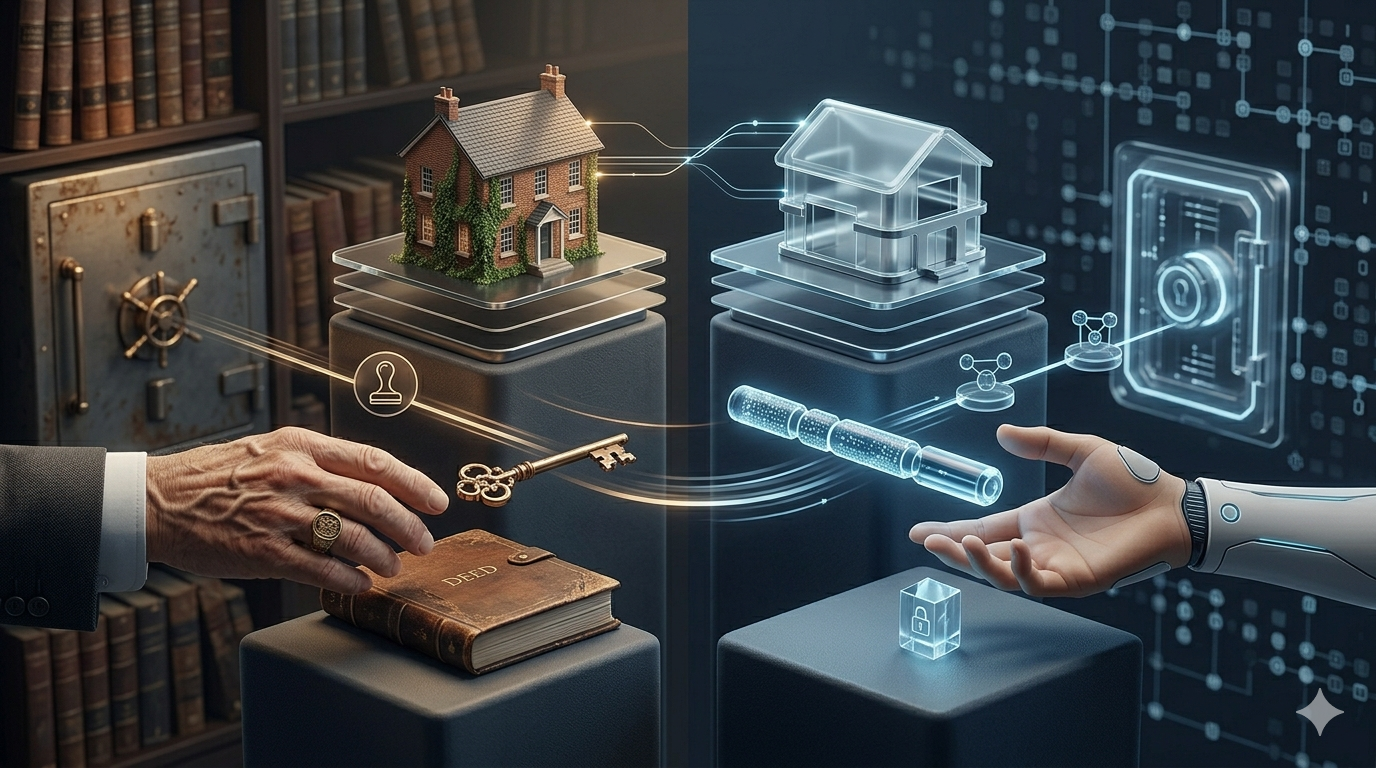
When you "buy" a plot of land in a virtual world, you aren't receiving a deed recorded at a local county office. Instead, you are acquiring a Non-Fungible Token (NFT) that represents a specific coordinate in a software environment. This distinction is the root of many metaverse property rights issues.
Terms of Service vs. Property Deeds
In the physical world, a deed gives you broad rights over your land. In the metaverse, your rights are strictly limited by the platform’s Terms of Service (ToS). Most platforms, including centralized ones, grant users a "license" to use the space rather than absolute ownership. If the platform decides to change its rules or shut down, your "property" may have no legal standing in a traditional court. According to Purdue Global Law School, digital assets often lack the same protections as tangible property, making it difficult for heirs to claim them through standard probate.
The Platform Dependency Trap
Your virtual land only exists as long as the platform’s servers are running. This is a major factor in virtual land ownership risks. If a metaverse company goes bankrupt or pivots its technology, your NFT might still exist in your wallet, but the world it represents could disappear. This makes digital estate planning for metaverse assets much more complex than planning for a physical house.
The Inheritance Gap: Why Digital Heirs Are Locked Out
The biggest tragedy in digital legacy is "terminal loss"-assets that exist on the blockchain but can never be touched because the access keys died with the owner. Why estate disputes happen even when a will exists is often due to the fact that a paper will cannot unlock a hardware wallet.
Private Key Management and Terminal Loss
Metaverse assets like land in Decentraland or The Sandbox are stored in digital wallets. These wallets are protected by private keys or seed phrases. If an investor does not share these keys or use a secure transfer tool, the assets become "ghost assets." No court order can force a decentralized blockchain to move funds without that key. This is why understanding why a dead man's switch is essential for your digital will is vital for anyone holding significant NFT real estate as of March 2026.
Smart Contracts vs. Traditional Probate Law
Smart contracts are self-executing lines of code. While they can facilitate a transfer, they do not recognize "death" unless they are programmed to do so. Traditional probate law involves a judge and an executor, but these human roles have no power over a smart contract unless the owner set up a technical trigger beforehand. This gap is a primary reason why virtual property inheritance laws are currently insufficient for most families.
Critical Legal Risks Threatening Your Family’s Digital Wealth
Protecting a digital legacy requires navigating a minefield of jurisdictional and technical hurdles.
Jurisdictional Chaos in Decentralized Worlds
If a user in France buys land from a seller in Japan on a platform hosted in the US, which laws apply? Decentraland property law and sandbox virtual land inheritance are still in their infancy. Most courts are still debating whether an NFT is a "security," "commodity," or "personal property." This uncertainty can lead to years of legal gridlock for heirs. According to McNeelyLaw, property rights in digital assets are more than just ones and zeros, yet they lack a unified global framework.
NFT Market Volatility and Estate Tax Valuation
The IRS and other tax authorities generally view NFTs as property. However, the value of metaverse land can drop significantly in a single month. If an owner dies when the land is valued at a high peak, but the heirs can’t access it until it has depreciated, they might still owe estate taxes based on the higher value at the time of death. Accurate digital asset succession planning must account for these valuation spikes and drops.
The "Ghost Account" Problem in Metaverse Platforms
Many metaverse platforms require active accounts to maintain "builds" or structures on the land. If an account remains inactive for years during a long probate process, the platform might flag it as abandoned. This is a common NFT real estate legal issue where the digital "house" is demolished by the system before the heirs even get the keys.
Scenario: The Locked Vault of a Virtual Architect
Consider a professional creator who spent years building a digital art gallery on a prime plot in a decentralized metaverse. This creator treated the virtual land as a primary retirement asset. They mentioned the land in a traditional paper will, leaving it to their children.
When the creator passed away, the children brought the will to a lawyer. The lawyer confirmed they were the legal owners. However, the creator had stored the private keys on a hardware device with a PIN that no one knew. Because there was no technical plan-such as checking how secure is your dead man's switch setup-the family spent thousands on "crypto recovery" experts to no avail. The land remains visible in the metaverse, a digital monument that the family can see but never sell or use.
Fixing the Digital Estate Plan Before It’s Too Late
To avoid the scenario above, families must bridge the gap between legal documents and technical access.
Moving Beyond Traditional Wills
A standard will is public record once probated. You should never put your private keys or seed phrases directly in a will. Instead, a will should reference a "Digital Asset Memorandum" or a secure digital vault that handles the technical transfer. This ensures your estate planning for digital heirs remains secure and private. As noted by The Village Law Firm, digital wills and cross-border estates require specialized handling to remain valid across jurisdictions.
Securing Hardware Keys for Seamless Transfer
Hardware wallets are the gold standard for security, but they are the enemy of inheritance if not managed. Owners should use a combination of physical backups and automated "heartbeat" systems that release access instructions to heirs only after a period of inactivity is detected.
Practical How-To: 5 Steps to Secure Your Metaverse Land
- Conduct a Digital Asset Audit: List every platform (Decentraland, Sandbox, Somnium Space), the wallet addresses associated with them, and the approximate current value.
- Update Your Beneficiary Designations: While many platforms don't have a "beneficiary" button like a 401-k when you change jobs, you can use smart-contract-based inheritance tools.
- Draft a Digital Power of Attorney: Ensure your legal documents specifically grant your executor the power to manage "digital assets" and "virtual currency."
- Set Up a Technical Handover: Use a service to create a "Dead Man’s Switch." This ensures that if you are unable to check in, your heirs receive the encrypted instructions needed to access the wallets.
- Review Platform ToS: Check if your chosen metaverse allows for "transfer upon death." Some centralized metaverses are beginning to implement legacy contact features as of March 2026.
Comparison: Digital Wills vs. Technical Vaults
| Feature | Traditional Paper Will | Technical Digital Vault |
|---|---|---|
| Legal Validity | High (in probate court) | Supplemental (supports the will) |
| Private Key Security | Low (risk of theft/exposure) | High (encrypted and automated) |
| Ease of Access | Slow (months of probate) | Fast (triggered by inactivity) |
| Technical Execution | None (heirs must figure it out) | Automated (delivers keys/info) |
| Cost | High (legal fees) | Low (subscription/setup) |
Caveats and Limits
It is important to understand that no digital estate plan is 100% foolproof.
- Platform Risk: If a platform closes its doors, no amount of estate planning can save the land.
- Regulatory Shifts: Governments may introduce new taxes or restrictions on NFT transfers that could complicate inheritance.
- Coding Errors: A bug in a smart contract could lead to assets being "burned" or sent to the wrong address.
According to Forbes, the "blind spot" in most plans is the failure to coordinate the lawyer's advice with the technologist's tools. Furthermore, Legacy Planning Law Group emphasizes that the place of the metaverse in estate planning is still being defined by case law.
Original Practical Insight: The "Instructional Avatar"
A non-obvious but highly effective strategy is to create a "Legacy Instructions" NFT or a private build on your virtual land that is only accessible via a specific secondary key. Instead of leaving a mountain of technical manuals, leave a "walkthrough" for your heirs. Digital literacy varies among generations; a video or interactive guide within the metaverse itself can help your heirs understand how to manage the assets they've just inherited. This "in-world" documentation ensures that the context of the asset is preserved alongside the value.
FAQ
- Can my children legally inherit my Decentraland or Sandbox land?
Yes, they can inherit the NFT that represents the land, provided you have a legal will that includes digital assets and a technical way for them to access the wallet holding the NFT.
- What happens to my metaverse property if the platform goes bankrupt?
In most cases, the land becomes worthless. While the NFT stays in your wallet, the servers that render the world and give the land value will go dark.
- Are virtual property rights protected by the same laws as physical homes?
Generally, no. Virtual property is often treated as "data" or "licensed content" rather than "real property," meaning you have fewer protections against seizure or platform changes.
- How do I include NFT real estate in my traditional will?
You should use general language such as "all my digital assets, including but not limited to NFTs and cryptocurrency." Do not include specific passwords in the will itself.
- What are the tax implications for heirs inheriting digital land?
Heirs may be subject to inheritance or estate taxes based on the fair market value of the NFT at the time of the owner's death, depending on local tax laws.
- Can a court order the transfer of a metaverse asset without a private key?
A court can order a person to hand over a key, but it cannot force the blockchain to move the asset. If the key is lost, the asset is usually gone forever, regardless of a court order.
Conclusion
Metaverse real estate represents a frontier of wealth, but it is a frontier without a fully developed legal map. The combination of platform dependency, private key risks, and jurisdictional uncertainty makes it one of the most fragile assets in a modern estate. To protect your family, you must treat your digital acres with the same seriousness as your physical home-combining legal "paper" protection with technical "code" solutions.
The risk of total asset loss is high for those who rely solely on traditional methods, but the opportunity to pass on significant digital wealth is possible with the right tools. Don't let your virtual legacy become a ghost in the machine. Start by auditing your assets today and implementing a fail-safe transfer mechanism to ensure your heirs aren't left standing at a locked digital gate.
This guide was last reviewed in March 2026 to reflect the latest shifts in blockchain inheritance technology and global digital asset regulations.
About the Author and Reviewer
By Cipherwill Editorial Team, Digital Legacy Research Desk Reviewed by Cipherwill Review Board, Trust & Security Review Team Last reviewed: March 2026 Editorial contributor: Iraan Qureshi Review contributor: Reyansh Mehta
Legal and Accuracy Caution
Legal and Accuracy Caution: The laws governing digital assets, AI likeness, and posthumous privacy are evolving rapidly and vary significantly by jurisdiction. Platform terms of service and corporate policies are subject to change without notice. This guide provides general information and should not be construed as specific legal or financial advice. Always consult with a qualified professional in your specific region regarding digital estate planning.