Building a SaaS company requires years of relentless effort, yet without a specific founder death contingency plan, your entire life’s work could vanish in the time it takes for a server to hit a billing cycle. Recent data suggests that nearly 90% of adults have not included digital assets in their estate plans, a gap that is catastrophic for entrepreneurs whose primary value exists in the cloud. Founders often face the pain of technical lockouts where Two-Factor Authentication (2FA) and encrypted silos prevent even legal heirs from maintaining operations. This guide solves these issues by identifying fatal mistakes in SaaS succession and providing a technical roadmap to ensure business continuity beyond a founder's physical presence.
By Cipherwill Editorial Team, Digital Legacy Research Desk Reviewed by Cipherwill Review Board, Trust & Security Review Team Last reviewed: March 2026 Editorial contributor: Myra Senapati Review contributor: Ishani Debroy
Legal and Accuracy Caution: The laws governing digital assets, AI likeness, and posthumous privacy are evolving rapidly and vary significantly by jurisdiction. Platform terms of service and corporate policies are subject to change without notice. This guide provides general information and should not be construed as specific legal or financial advice. Always consult with a qualified professional in your specific region regarding digital estate planning.

The Single Point of Failure: Admin Access and Encryption
Most SaaS founders believe that because they use a password manager, their business is "transfer-ready." In reality, the technical barriers to entry for an heir or a successor can be insurmountable if the founder is the sole "Super Admin." When a founder passes away without an accessible master key, the company often hits a brick wall known as the "encryption dead-end."
Why Password Managers Fail in Business Succession
Standard password managers are designed for individual security, not business continuity. If your master password is only in your head, your family or business partners cannot access the vaults. Even if they have the password, many modern managers use device-based encryption. This means that if they try to log in from a new computer, the system will demand an authorization from your "trusted device"-which is likely locked behind a biometric or passcode they do not have.
For those looking into more advanced automated solutions, understanding dead mans switches in the digital age what you need to know can provide a technical bridge for these access gaps as of March 2026.
The Trap of Two-Factor Authentication (2FA) Lockouts
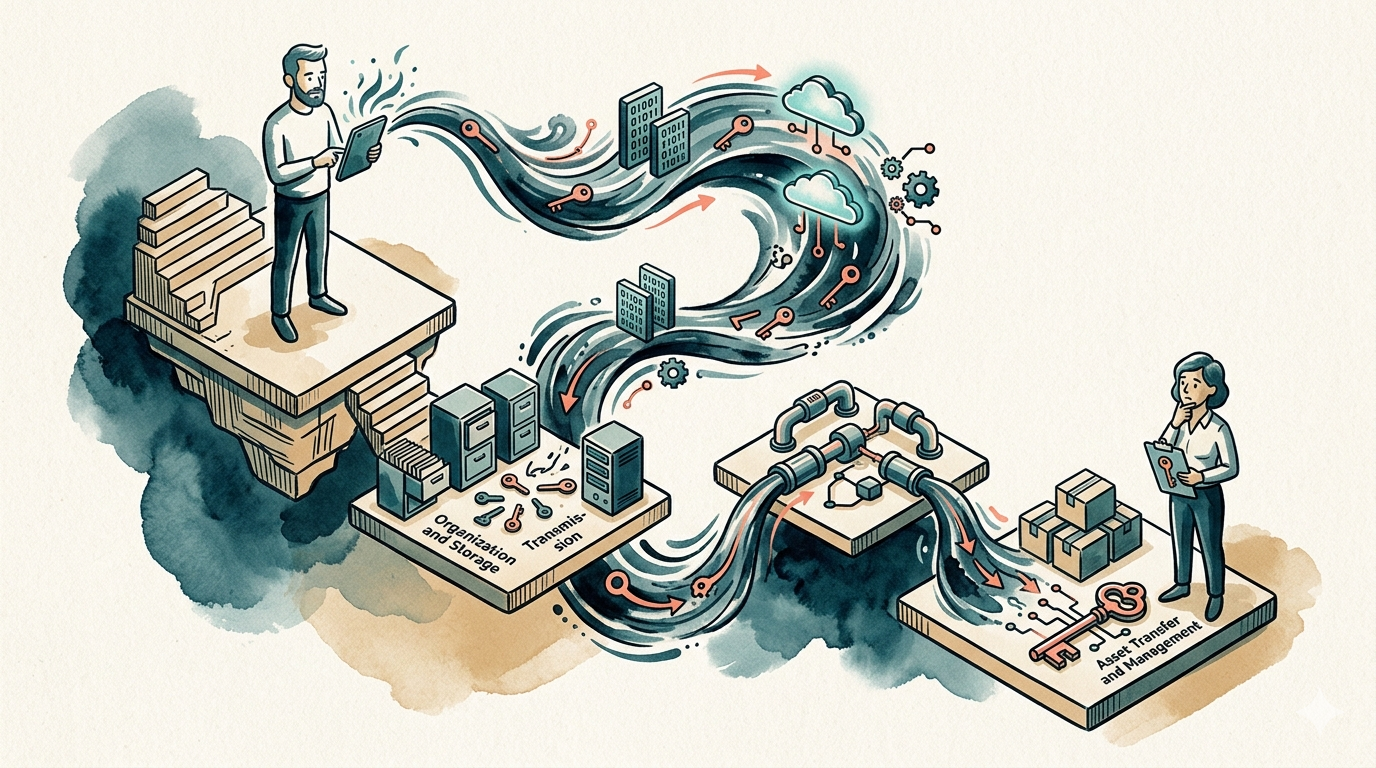
2FA is the gold standard for security but the primary enemy of digital legacy. If your AWS, Stripe, or GitHub accounts are tied to a physical security key (like a YubiKey) or a Google Authenticator app on your personal phone, your team may be locked out of critical infrastructure within minutes. Without the physical device or the "seed codes" used to set up 2FA, even a court order might not be enough to force a tech giant to grant access to a successor.
Intellectual Property: The Invisible Leak in Your Digital Will
A traditional will might mention "intellectual property," but for a SaaS founder, IP is highly granular. It lives in private GitHub repositories, Figma files, and Slack archives. If these aren't specifically named and the access methods aren't detailed, the IP can effectively become "orphaned," making the company impossible to sell or operate.
Trade Secrets vs. Public Repositories
There is a massive distinction between the code your customers see and the trade secrets hidden in your private repositories. If your digital asset protection for founders doesn't account for the transfer of repository ownership, your heirs might find themselves owning a company they cannot legally update. Furthermore, handling email accounts in a digital will gmail outlook yahoo is vital here, as your email is often the "root" of all IP ownership verification.
Passing Down Private AI Models and Personalized LLM Data
In the modern SaaS era, much of a startup's value resides in custom-trained AI models. These models are built on proprietary datasets and "weights" that are stored in specialized environments (like Hugging Face or private AWS S3 buckets). Transferring private AI models requires more than just a password; it requires the transfer of the underlying data pipelines. If your successor doesn't have the technical documentation to manage these models, the AI-and the business-will begin to "hallucinate" or degrade without maintenance.
The Subscription Trap: SaaS Licenses in Inheritance
The irony of a SaaS founder’s death is that while their own SaaS might stop working, the third-party SaaS tools they pay for will keep billing their credit cards until the accounts are frozen. This creates a "subscription trap" where recurring revenue access is blocked, but operational costs continue to drain the estate.
Contractual Roadblocks in Transferring Enterprise Seats
Managing SaaS licenses in inheritance is notoriously difficult because of "Non-Transferability" clauses in Terms of Service (ToS). Many enterprise software agreements are tied to a specific individual’s identity. If that person dies, the license may legally terminate. Founders must ensure that business-critical licenses are held by the corporate entity, not the individual, to prevent a total shutdown of the tech stack.
Managing Recurring Revenue Access for Heirs
If you are a solo founder, your Stripe or PayPal merchant account is the lifeblood of your business. If these accounts are tied to your personal social security number or personal bank account, the funds may be frozen by the payment processor upon notification of death. This can lead to a "death spiral" where the business has money but cannot pay its own hosting fees, leading to a permanent loss of customer data.
The Nomad’s Nightmare: Multi-Jurisdictional Legal Chaos
Many SaaS founders live as digital nomads, incorporating in one country, living in another, and hosting servers in a third. This creates a "multi-jurisdictional estate planning" nightmare. Digital assets often lack a physical "situs" (legal location), which leads to conflicting laws on who gets to inherit what.
Where Does Your Digital Asset Live Legally?
Is your SaaS business located where you are, where the servers are, or where the company is incorporated? According to Purdue Global Law School, the legal landscape for digital assets is still being defined. If a founder dies in one country but the company is a Delaware C-Corp and data is on servers in a third region, heirs may face years of legal battles in multiple court systems just to claim SaaS equity inheritance.
Navigating Cross-Border Succession for Remote Founders
For founders using decentralized structures, the complexity doubles. Integrating dao wills digital assets secure your inheritance now into your strategy can help manage assets that don't fit neatly into traditional national borders. Without a clear plan, your digital legacy risks for entrepreneurs become a reality as local probate courts struggle to understand how to handle a company that exists entirely in the cloud.
Equity and Governance: When the Cap Table Freezes
The final fatal mistake is failing to plan for the "governance gap." When a founder dies, their shares often enter probate. During this time, those shares cannot be voted. If the founder held a majority stake, the company may be unable to make critical decisions, such as hiring a new CEO or approving a pivot.
The Impact of Unclear Digital Asset Protection
Without a clear digital legacy plan, the cap table becomes a frozen asset. This uncertainty can trigger "Key Man" clauses in investment contracts, allowing VCs to pull funding or force a fire sale. Protecting your SaaS business succession planning means ensuring that voting rights can be exercised immediately by a designated successor or trustee.
Preventing Hostile Takeovers During Probate
In some cases, the death of a founder can leave the company vulnerable to hostile takeovers from competitors or disgruntled minority shareholders. If the founder’s digital tokens or private keys-which might control the company’s treasury-are lost, the business becomes a "zombie" entity. Using strategies for navigating web3 your digital estate plan for non defi nft assets can help founders manage these high-tech governance risks.
Scenario: The "Locked Root" Crisis
Consider the case of a mid-stage startup founder who managed all "Root" access for their AWS infrastructure. The founder was the only person with the 2FA device for the master account. Following an unexpected accident, the company continued to run for 30 days. However, when a routine security update required a root-level login, the engineering team was blocked.
Because the founder had not set up a "Digital Executor," AWS required a certified death certificate and a specific court order from the founder’s home country. By the time the legal paperwork was processed three months later, the site had gone down due to an expired SSL certificate that no one could renew. The customers migrated to a competitor, and a business valued at $10 million was liquidated for the price of its domain name. This highlights why Bragg Financial emphasizes securing access points before a crisis occurs.
Comparison: Traditional Wills vs. Digital-First Estate Plans
| Feature | Traditional Will | Digital-First SaaS Plan |
|---|---|---|
| Access Speed | Slow (Months of Probate) | Immediate (via Digital Vaults) |
| Technical Detail | Low (Mentions "Assets") | High (IP, 2FA, API Keys included) |
| AI/Data Assets | Often Ignored | Explicit Transfer of Models/Weights |
| Jurisdiction | Localized | Multi-jurisdictional/Cloud-based |
| Verification | Physical Signatures | Cryptographic/Multi-sig Proof |
Practical How-To: 5 Steps to Secure Your SaaS Legacy Now
- Conduct a "Ghost Account" Audit: Identify every account that is tied to your personal identity rather than the company. This includes domains, hosting, and third-party APIs.
- Implement a Corporate Password Manager: Move all business credentials to a team-based manager (like 1Password for Business) and ensure there are at least two "Emergency Contacts" with administrative rights.
- Formalize the "Digital Executor": Appoint a person who specifically understands the technical side of your business. This person is different from your standard executor who handles your house or bank accounts.
- Document the "Root" Hierarchy: Create a secure, encrypted document that outlines the hierarchy of your tech stack. If you were gone, which account must be accessed first to keep the others running?
- Update Your Operating Agreement: Ensure your company’s legal documents include "Digital Asset" language that specifically allows for the transfer of private keys, AI models, and social media handles.
Original Practical Insight: The "Emergency Billing" Buffer
One non-obvious risk is the "credit card expiration" failure. Most founders use their own credit cards for small, forgotten SaaS tools that the main business relies on. When a founder dies, their banks often freeze their cards within 48 hours. To prevent an immediate outage, set up a "Business Continuity Credit Card" with a high limit and long expiration date, held in the name of the corporation, and ensure its details are stored in your digital legacy vault. This buys your team 30–90 days of "uptime" while they sort through the legalities. This strategy addresses the common mistakes noted by Netlib Security regarding application uptime and security.
Caveats and Limits
Digital estate planning is not a "set it and forget it" task. Platform terms of service change constantly. For example, Google’s "Inactive Account Manager" may conflict with your personal will. Additionally, encryption technology evolves; a "digital vault" created today might be unhackable now but obsolete in ten years. Furthermore, laws like the Revised Uniform Fiduciary Access to Digital Assets Act (RUFADAA) in the US provide some protections, but they do not apply globally. Always verify how these laws interact with the specific country where your business is registered. According to National Advisors, failing to review these plans annually can lead to significant security gaps.
FAQ
- What happens to a SaaS business if the founder dies without a digital will?
The business often enters a state of "limbo." Without access to servers and bank accounts, the service eventually goes offline when bills go unpaid, and the legal ownership of the code becomes a matter for a lengthy probate court process.
- Can I include private AI models in my estate plan?
Yes, but you must treat them as a combination of Intellectual Property and Digital Assets. You need to provide the location of the weights, the training data, and the administrative credentials for the hosting environment.
- How do I transfer SaaS licenses to my heirs?
The most effective way is to ensure all licenses are registered to a business entity (LLC or Corp) rather than an individual. This allows the business to continue using the software regardless of changes in personnel.
- Why aren't standard wills enough for digital entrepreneurs?
Standard wills focus on physical property and bank accounts. They rarely include the specific technical instructions (like 2FA bypass codes or GitHub repo locations) required to actually manage a digital company.
- What is the risk of multi-jurisdictional estate planning for digital nomads?
The primary risk is "legal conflict," where two different countries claim the right to tax or distribute your digital assets, leading to frozen accounts and massive legal fees.
- How can I ensure my team retains access to critical infrastructure?
By using team-based access controls and setting up a "Digital Vault" that triggers access to a designated successor upon a verified event, such as a period of inactivity.
Conclusion
Your SaaS business is more than just code; it is a complex web of legal, technical, and financial threads. Failing to plan for your digital legacy is essentially planning for your business to die with you. By moving beyond simple password management and addressing the deeper risks of AI ownership, 2FA lockouts, and multi-jurisdictional legal chaos, you can ensure your startup remains a living legacy. The risk of total asset loss is high, but the opportunity to build a resilient, multi-generational company is within reach through proactive planning. Start your "Ghost Account" audit today and formalize your digital succession plan before the "encryption dead-end" becomes an unchangeable reality. As noted by Anzen Legal, the transition of digital accounts requires specific legal authorization that must be established well in advance.
This guide was last reviewed in March 2026 to ensure it reflects the latest developments in digital asset law and platform security policies.
About the Author and Reviewer
By Cipherwill Editorial Team, Digital Legacy Research Desk Reviewed by Cipherwill Review Board, Trust & Security Review Team Last reviewed: March 2026 Editorial contributor: Myra Senapati Review contributor: Ishani Debroy
Legal and Accuracy Caution
Legal and Accuracy Caution: The laws governing digital assets, AI likeness, and posthumous privacy are evolving rapidly and vary significantly by jurisdiction. Platform terms of service and corporate policies are subject to change without notice. This guide provides general information and should not be construed as specific legal or financial advice. Always consult with a qualified professional in your specific region regarding digital estate planning.