
Securing an alternative asset legacy requires explicitly decoupling your physical collections from standard "personal property" designations in your will. To successfully pass down high-value collectibles—like trading cards, sneakers, or crypto-backed physical items—you must provide your beneficiaries with authenticated provenance, precise market contexts, and secure access to your digital valuation tools. Standard probate fails niche assets; you need an operational framework combining specialized legal phrasing and an encrypted digital vault to prevent your alternative wealth from being liquidated for pennies at a blind estate sale.
The Context Collapse: When Collections Lose Their Lore
Imagine Marcus, a thirty-eight-year-old software engineer and fastidious cultural curator. His home office contains a heavy fireproof safe securing roughly $150,000 in alternative assets: highly graded trading cards, early-release sealed sneakers, and a titanium hardware wallet holding niche digital tokens. When Marcus dies unexpectedly, his traditional will confidently leaves "all personal effects" to his older brother, David.
David is grieving, overwhelmed, and completely unfamiliar with modern alternative markets. To him, the heavy acrylic trading card slabs look like cheap plastic playthings, and the sealed sneakers appear to be old shoes taking up unnecessary closet space. Lacking any login credentials, authentication papers, or market context, David hires a standard local estate liquidator to clear out the apartment quickly.
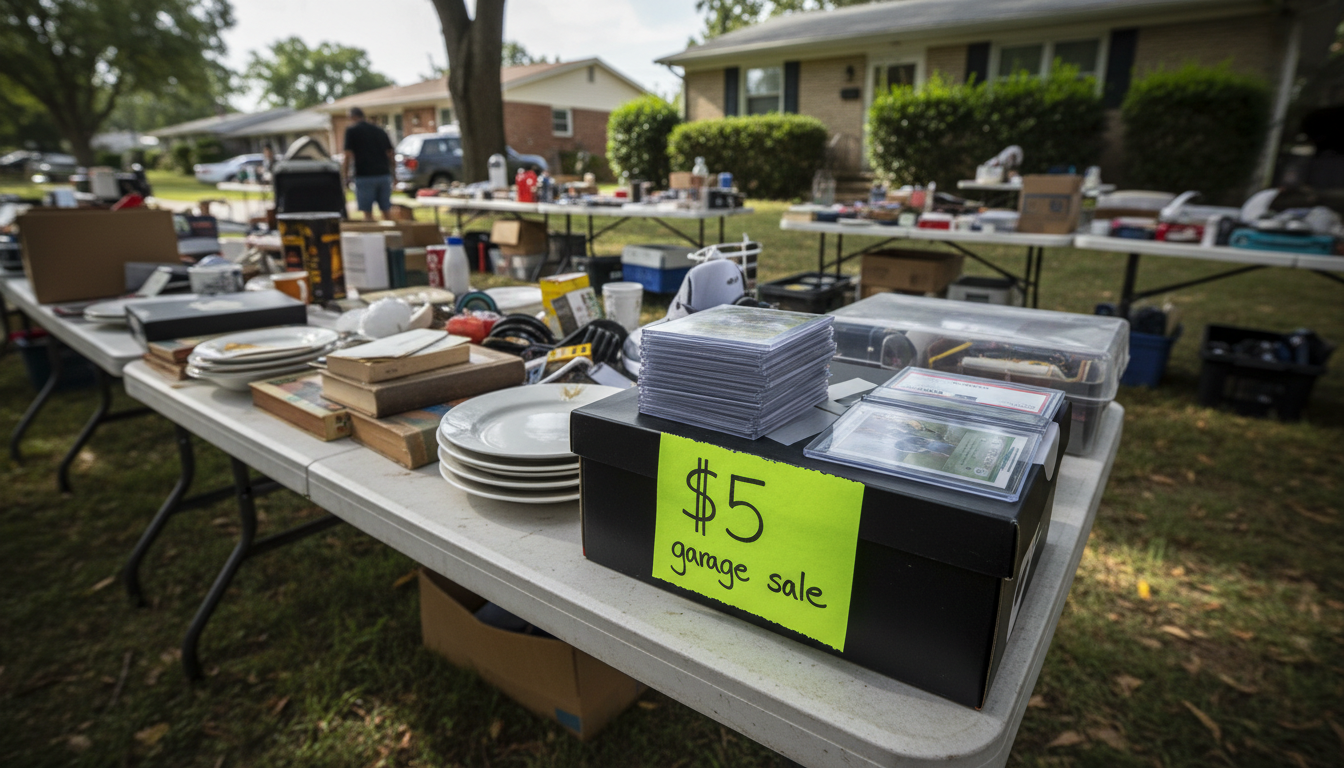
The liquidator is equally uninformed regarding niche subcultures. They set up a weekend estate sale, placing Marcus's meticulously curated items on folding tables alongside kitchen electronics. A local reseller attends the sale, recognizes the massive discrepancy in valuation, and negotiations a bulk buyout of the safe’s contents for just $600. Decades of careful curation, investment, and market tracking vanish in a five-minute transaction.
The physical asset is only half of the legacy. The lore, the digital authentication, and the community contacts are what transform a piece of cardboard into a five-figure financial instrument.
This catastrophe is not unique. As wealth transfers shift toward digital-native formats, the knowledge gap between the collector and the executor is the single largest threat to estate preservation. A physical item separated from its digital authentication history plummets in value.
The Fiduciary and Legal Reality of Niche Items
Navigating alternative investments requires understanding how legal and financial institutions classify them. You cannot treat a rare first-edition comic book identically to a mutual fund fractional share. For example, the Internal Revenue Service strictly defines collectibles under Internal Revenue Code (IRC) Section 408(m).
This section groups works of art, rugs, antiques, metals, gems, stamps, and coins into a category with distinctly different capital gains treatments. While the 28% rate generally applies to collectibles, inherited assets typically receive a "step-up in basis" to fair market value upon death under IRC Section 1014, meaning immediate liquidation by an executor incurs little to no capital gains tax. The tax risk primarily applies if heirs hold the assets long-term and they appreciate, or during the collector's lifetime.
Furthermore, executors bear a strict legal fiduciary duty. If an executor liquidates an estate, they are legally bound to act in the best financial interest of the beneficiaries. If David sells Marcus's $150,000 collection for $600 out of sheer ignorance, the other beneficiaries of the estate could technically hold David personally liable for the lost value. Providing explicit, documented context protects both your wealth and your executor from legal exposure.
Traditional Wealth vs. Alternative Wealth Mechanics
To comprehend why standard estate structures fail hobbies, we must contrast the operational mechanics of traditional asset transfers with alternative asset realities. The friction almost always lies in market access and condition subjectivity.
| Operational Phase | Traditional Assets (Stocks, Bonds) | Alternative Assets (Cards, Sneakers) |
|---|---|---|
| Identification | Located via standard brokerage statements and tax filings. | Hidden in safes, requiring digital authentication logs to prove authenticity. |
| Valuation | Objective market tick. Exact value documented at closing bell. | Highly subjective. Dependent on third-party grading condition and micro-market demand. |
| Liquidation | Executed instantly via institutional brokers with minimal spread. | Requires specialized auction houses, consignment networks, or community negotiation. |
Three Common Mistakes in Estate Planning for Hobbies
Even collectors who acknowledge the value of their alternative assets frequently make critical structural errors when formalizing their inheritance plans. These oversights effectively lock beneficiaries out of the value.
1. Relying on General Personal Property Clauses
Most automated or templated wills contain a phrase bequeathing "all tangible personal property" to a primary beneficiary. Legally, this equates a $30,000 game-worn jersey to a set of rusted garden tools. Without explicit itemization or a separate memorandum of personal property referencing the collection, executors have zero mandate to seek specialized appraisals.
2. Siloing Digital Provenance
Physical assets today are heavily reliant on digital footprints. If you purchase high-end sneakers, the true proof of authenticity exists in your email receipts, your account history on platforms like StockX, or in blockchain-based NFT certificates of authenticity. Because of strict platform privacy policies, your heirs are routinely barred from accessing these accounts. This issue of platform terms overruling legal heirs means families possess physical items but cannot definitively bypass counterfeit accusations.
3. Appointing the Wrong Facilitator
It is natural to appoint a spouse or eldest child as the sole executor. However, expecting a spouse with no background in horology to navigate global luxury watch auctions is operationally cruel. The error lies in failing to appoint a "special co-executor" or failing to leave a mandatory advisory contact list for the primary executor to rely on.
A Decision Framework: Four Steps to Route Niche Assets
To prevent the catastrophic loss of value seen in Marcus's original timeline, collectors must actively engineer a transition framework while they are still sound of mind. This structured approach builds an unbreakable chain of custody and context.
- Establish the Secondary Ledger: Do not just list items in a physical notebook. Create a living digital inventory detailing the item name, condition grade, serial number, purchase date, and exact physical location in your home or safe deposit box.
- Identify the Liquidation Pathway: Leave exact instructions on how to sell the asset. Do not force your family to Google "where to sell trading cards." Name the specific auction houses (e.g., Goldin, Heritage, Sotheby's) and include the required account representative contact email.
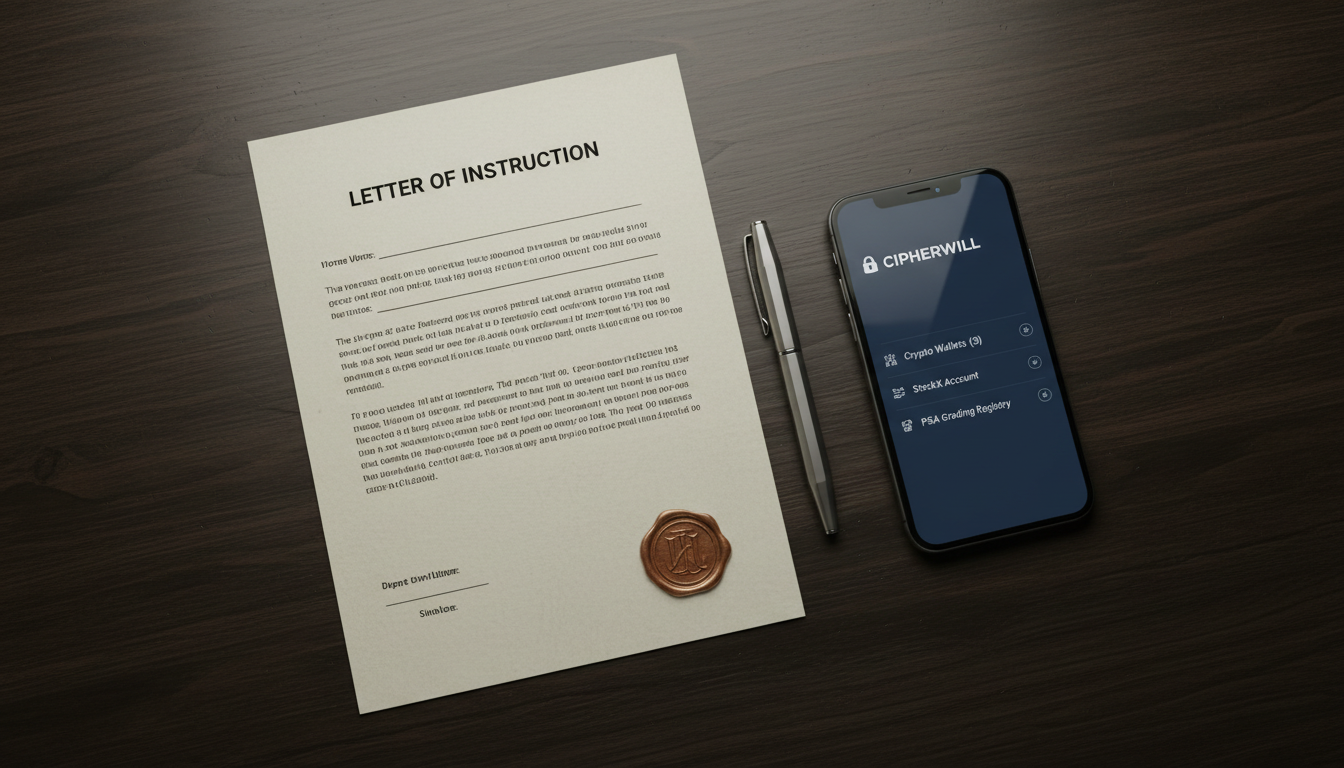
- Legal Itemization: Draft a formal Letter of Instruction or a binding Memorandum of Tangible Personal Property that explicitly identifies the collection as an alternative investment. Reference IRC Section 408(m) if applicable to signal to estate attorneys that special tax handling is required.
- Synchronize the Digital Keys: Lock all account credentials, digital certificates, appraisal scans, and private vault combinations into a decentralized, encrypted storage platform built for legacy transfer.
The Power of a Digital Vault for Collections
Let’s revisit Marcus and David, but run a secondary scenario where Marcus actively prepared his estate. In this alternate timeline, Marcus recognized that his hobbies required specialized tracking. Alongside his standard will, he built an alternative asset legacy profile using a digital vault.
When Marcus passed away, David did not just inherit a silent metal safe. Within days of Marcus’s passing, an automated dead man's switch verified Marcus’s status and dispatched encrypted access directly to David’s device. David opened the payload to find a meticulously organized dashboard.
The dashboard contained a personalized video from Marcus acknowledging his obscure hobbies, followed by a PDF spreadsheet of his PSA registry with live API links to recent market comparison tools. Next to this was a dedicated entry containing login credentials for Marcus’s digital appraisal portal and an introduction template to an account manager at a prime sports memorabilia auction house.
Empowered by context, David entirely bypassed the generic estate liquidator. He securely shipped the acrylic slabs to the specified auction house. Six months later, the collection achieved a hammer price of $142,000 at auction. The financial injection cleared Marcus’s outstanding debts and fully funded the college tuition for David’s children. This is the difference between hoarding and legacy planning.
Using a dedicated platform like Cipherwill solves the structural disconnect. It allows collectors to tether the physical objects they love to the digital proofs required to validate them, releasing them to trusted beneficiaries automatically and securely through zero-knowledge encryption protocols.
The Alternative Asset Legacy Checklist
Before considering your estate planning complete, verify that you have satisfied the distinct requirements of non-traditional wealth. Work through this exact inventory list:
- I have categorized all niche items of value separately from my standard household furniture and clothing.
- I have compiled digital proofs of authenticity (PDF receipts, blockchain wallet addresses, app credentials) into an encrypted environment.
- I have explicitly named an executor or defined a specialized "co-executor" who understands the market nuances of my collections.
- I have written clear, blunt instructions on what NOT to do (e.g., "Do not remove items from acrylic cases," "Do not take these to a local pawn shop").
- I have established a secure dead man's switch to release my digital vault credentials only upon verification of my passing or incapacitation.
- I have ensured my estate attorney understands my valuation model to prevent improper estate tax reporting to the IRS.
Protecting the Lore and the Ledger
A collection only survives you if its context survives you. The artifacts, sneakers, and sealed items you have spent your life curating represent exceptional financial foresight. Standardizing how these items are documented, stored, and routed isn't just about preserving capital; it is a profound act of care for those you leave behind. Remove the burden of a digital scavenger hunt from your family's grief and ensure your alternative asset legacy transfers with intact integrity, total transparency, and uncompromised market value.
Frequently Asked Questions
Question: How do I legally include a trading card collection in my will?
Answer: Instead of relying on a broad personal property clause, specifically detail the collection in a separate memorandum of tangible personal property. Appoint an executor familiar with the hobby, and reference an external digital vault containing grading details, authentication certificates, and preferred auction formats.
Question: What happens to my physical collectibles if I leave no instructions?
Answer: Without context, high-value alternative assets are almost universally undervalued. Most uninformed executors will bundle them into general estate sales, allowing local resellers to purchase years of curated investments for pennies on the dollar.
Question: How does the IRS view alternative investments and collectibles?
Answer: Internal Revenue Code (IRC) Section 408(m) classifies items like art, antiques, metals, and stamps as collectibles. While they are generally subject to a 28% maximum capital gains tax rate, the "step-up in basis" inheritance rule means the asset's taxable value resets to its fair market value upon the original owner's death. Consequently, immediate sales by the estate usually incur little to no capital gains tax. Accurate appraisals remain a critical legal requirement to properly establish this new basis for the IRS.
Question: Why can't my family just access my authentication apps after I die?
Answer: Standard Terms of Service prevent unauthorized account login, even by surviving spouses. Without using a secure legacy transfer platform to proactively release your digital credentials, your heirs will be locked out of the platforms storing your collection’s provenance.
Question: What is a special co-executor for a will?
Answer: A special co-executor is a trusted individual appointed specifically to manage complex or niche asset classes within an estate. While the primary executor handles banking and real estate, the co-executor ensures specialized collections are appraised and liquidated accurately.
Question: How often should I update the valuation of my collection for my estate plan?
Answer: Given the volatile nature of alternative markets, updating your collection’s valuation annually is highly recommended. Linking your tracking spreadsheets or API-driven registry dashboards directly into your digital vault prevents outdated numbers from confusing your executor.
Question: Are digital vaults secure enough for passing down hardware crypto passwords and safe combinations?
Answer: Yes, provided you utilize a platform built on zero-knowledge encryption technology. Services designed explicitly for digital inheritance utilize decentralized setups and dead man's switches to ensure neither hackers nor the company itself can view your sensitive credentials.
This article is for informational purposes only and does not constitute legal or tax advice. Consult a professional regarding your specific situation.
By Cipherwill Editorial Team, Reviewed by Cipherwill Review Board, Trust & Security Review Team
Editorial contributor: Myra Senapati
Review contributor: Ishani Debroy