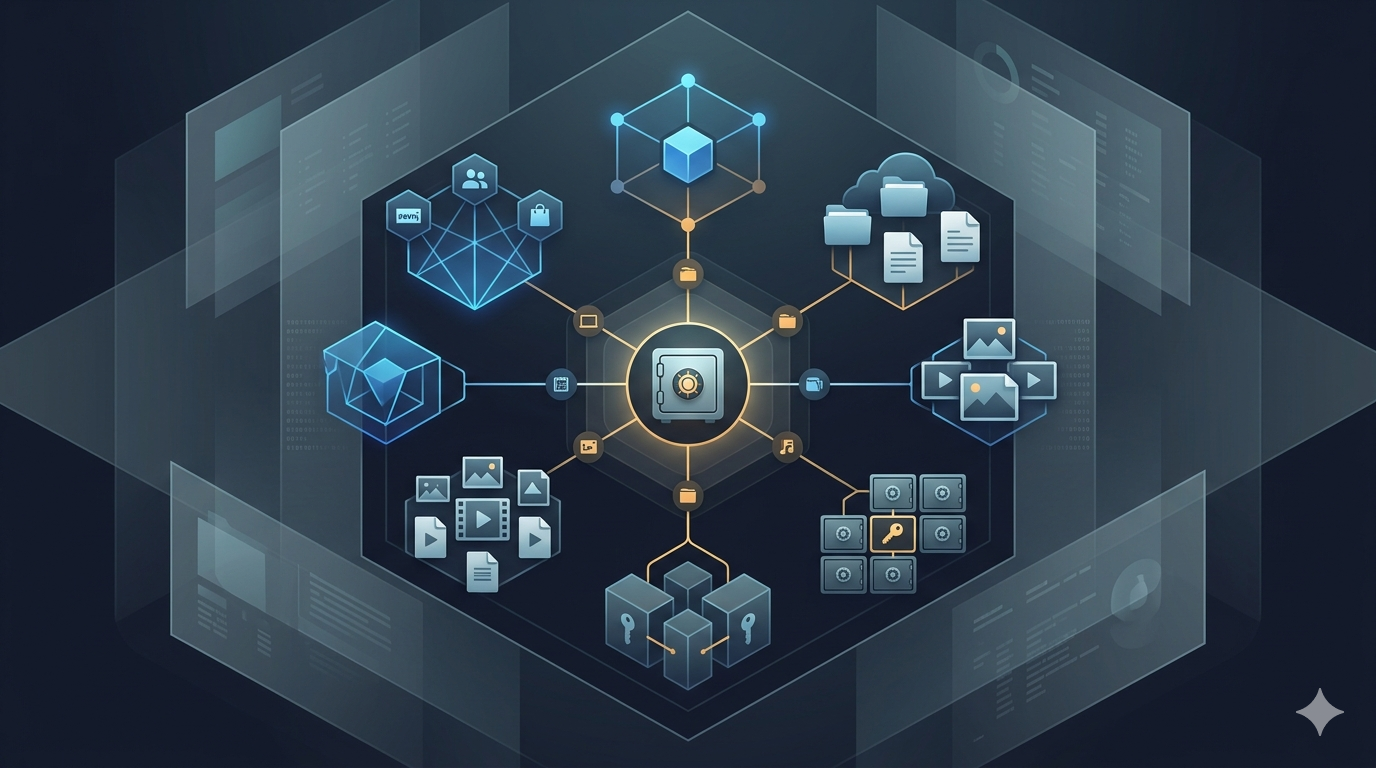
Recent data suggests that over 90% of individuals have not included digital instructions in their estate plans, potentially leaving billions of dollars in "dark assets" unreachable by heirs. For many families, the pain of losing a loved one is compounded by the technical frustration of being locked out of cryptocurrency wallets, subscription-based businesses, or sentimental cloud storage due to a single missing password. This guide solves the problem of digital fragmentation by providing a structured roadmap for digital asset estate planning, ensuring that your financial and emotional legacy remains accessible to the next generation.
By Cipherwill Editorial Team, Digital Legacy Research Desk Reviewed by Cipherwill Review Board, Trust & Security Review Team Last reviewed: March 2026 Editorial contributor: Myra Senapati Review contributor: Reyansh Mehta
Legal and Accuracy Caution: The laws governing digital assets, AI likeness, and posthumous privacy are evolving rapidly and vary significantly by jurisdiction. Platform terms of service and corporate policies are subject to change without notice. This guide provides general information and should not be construed as specific legal or financial advice. Always consult with a qualified professional in your specific region regarding digital estate planning.
The Invisible Estate: Why Digital Assets Are Often Overlooked
Most traditional estate planning focuses on "bricks and mortar"-houses, bank accounts, and physical jewelry. However, the modern estate is increasingly invisible. We live in an era where a significant portion of a person’s net worth may exist only as entries on a blockchain or files on a cloud server. According to a report by Purdue Global Law School, many digital platforms use Terms of Service (ToS) that explicitly state accounts are personal and terminate upon death, creating a "legal vacuum" for heirs.
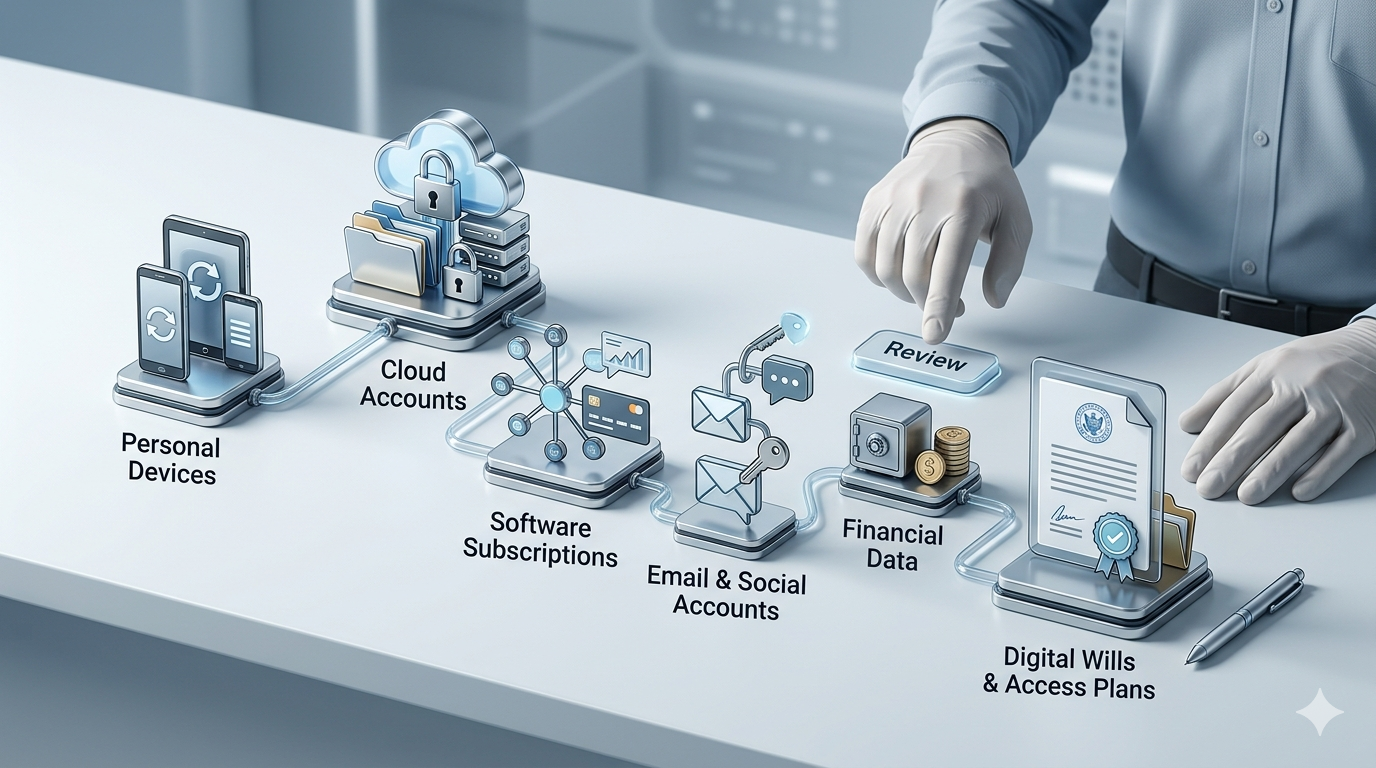
Defining the Modern Digital Footprint
A digital footprint is the trail of data you leave behind while using the internet. For estate planning purposes, this includes:
- Financial Assets: Crypto wallets, PayPal balances, and online brokerage accounts.
- Virtual Property: Domain names, social media handles, and gaming accounts.
- Intellectual Property: Unprocessed manuscripts, digital art (NFTs), and royalty-generating code.
- Sentimental Data: Photos stored in iCloud or Google Photos.
The Legal Gap Between Physical and Virtual Property
There is a significant legal disconnect between how the law treats a physical book and an eBook. When you buy a physical book, you own it and can bequeath it. When you "buy" a digital movie or book, you are often only purchasing a non-transferable license. Without proactive planning, these assets may not just sit idle; they can effectively vanish. This risk is highlighted in The Estate Planning Blind Spot, which notes that digital assets are frequently omitted from standard wills as of September 2025.
Risk 1: Permanent Loss of Access and Private Key Vulnerability
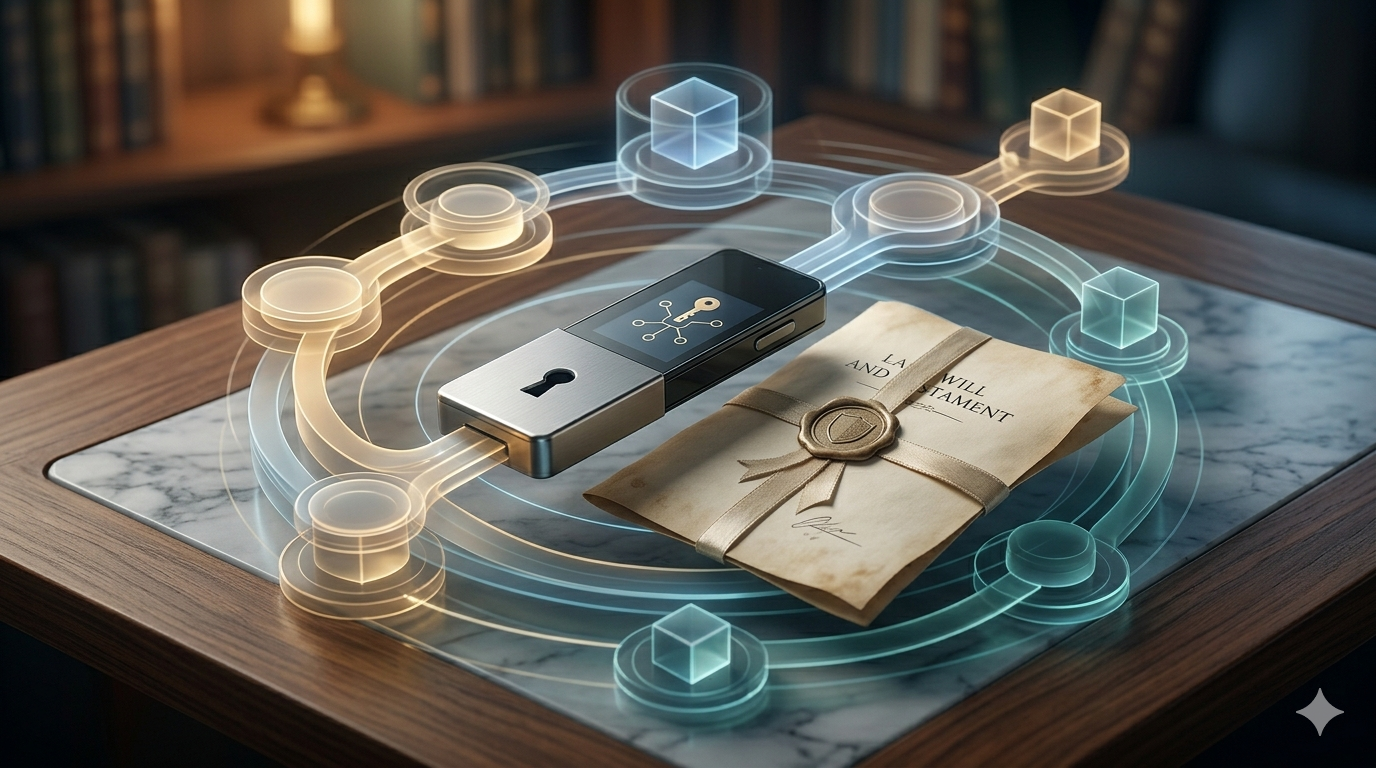
The greatest strength of blockchain technology-decentralization-is also its greatest weakness in estate planning. Unlike a bank account, there is no "Forgot Password" button for a hardware wallet.
The Danger of Cold Storage Without a Transfer Plan
Many investors use private key cold storage to keep their assets safe from hackers. While this is excellent for security, it creates a "dead man's switch" problem. If the owner passes away without sharing the location of the hardware device or the recovery seed phrase, those assets are mathematically unrecoverable. If you find yourself in a situation where access is already compromised, you may need to consult Lost Crypto Recovery Expert Strategies To Reclaim Your Digital Assets to understand the technical limitations of retrieval.
Why 'Memorizing' Your Seed Phrase is a Legacy Killer
Some users choose "brain wallets," memorizing their 12 or 24-word seed phrases. While this prevents physical theft, it ensures that your digital wealth dies with you. Relying on memory offers zero redundancy for your heirs. A robust plan requires a secure, encrypted way to pass these keys to the next generation without exposing them to current online threats.
Risk 2: Posthumous Identity Fraud and Ghosting
When a person passes away, their digital presence remains active. This "ghost" identity can be a target for cybercriminals.
How Unmanaged Social Accounts Become Targets
Unattended social media profiles can be hijacked to scam friends or family members. Hackers often look for accounts that haven't posted in months to use as "aged" accounts for phishing. Furthermore, identity thieves may use personal information found in emails or cloud storage to open fraudulent credit lines in the deceased's name. This posthumous identity fraud can take years for a grieving family to untangle.
Conducting a Digital Footprint Audit to Secure Your Identity
A digital footprint audit is the process of mapping out every online account you own. This isn't just about money; it’s about security.
- List all email accounts (the "keys to the kingdom").
- Identify all social media profiles.
- Document all automated billing and subscription services.
- Review privacy settings and "Legacy Contact" features on platforms like Facebook and Apple.
Risk 3: Revenue Stoppage for SaaS and Digital IP
For entrepreneurs and creators, digital assets are often income-generating engines. If these engines stall, the financial impact on the family can be devastating.
Solo Founder Pitfalls: The SaaS Business Handover
Imagine a solo founder running a Software-as-a-Service (SaaS) business. If the founder passes away, and the family cannot access the server credentials or the payment gateway, the service will eventually go offline when a credit card expires or a server bill goes unpaid. A SaaS business handover plan ensures that a designated technical executor can keep the lights on or facilitate a sale of the company.
Protecting Royalty Streams for Musicians and Creators
Musicians, authors, and YouTubers often have complex royalty structures. A digital will for musicians should specify who has the right to manage the back catalog on streaming platforms. Digital intellectual property rights are often governed by both contract law and copyright law, making it essential to explicitly name these assets in your estate documents.
Scenario: The Cost of Digital Silence
To understand the real-world implications of poor digital planning, consider the following anonymized scenario based on common estate disputes.
The Persona: The Independent Software Developer A solo developer managed a profitable niche SaaS tool with several hundred monthly subscribers. The developer used a hardware wallet for company reserves and had no "Legacy Contact" set up for their primary email or cloud hosting account.
The Outcome:
- Business Stagnation: When the developer passed away unexpectedly in early 2026, the family could not access the cloud servers to fix a minor security patch. Customers began churning within 30 days as the service became unstable.
- Locked Capital: Approximately $200,000 in cryptocurrency reserves remained on a hardware device. The family found the device but did not have the PIN or the 24-word recovery phrase, rendering the funds inaccessible.
- Identity Exploitation: Because the developer's email was not secured, a malicious actor was able to reset the password for their professional networking account and began soliciting "investments" from the developer's contacts.
This scenario illustrates that traditional wills often fail to address the technical hurdles of the digital age. For more on protecting family assets, see Digital Asset Management for Families.
Comparison: Methods for Digital Asset Transfer
| Method | Security Level | Ease of Use for Heirs | Legal Standing |
|---|---|---|---|
| Paper List in Safe | Low (Physical theft risk) | Easy, if found | Good, if referenced in will |
| Password Manager | High | Moderate (Requires Master Key) | Variable by provider |
| Platform Tools | Moderate | Easy | Governed by ToS |
| Encrypted Digital Will | Very High | Seamless (Automated) | Strong (Encrypted Evidence) |
How to Fix It: A 5-Step Digital Inheritance Plan
You can begin securing your digital inheritance by following these steps:
- Inventory Your Assets: Create a comprehensive list of all high-value digital accounts, including crypto, SaaS businesses, and domain names. Do not write passwords on this list; instead, list the account names and their purpose.
- Appoint a Digital Executor: Choose a tech-savvy individual who understands how to handle sensitive data and private keys. This person should be legally authorized in your traditional will to manage digital property.
- Use Zero-Knowledge Storage: Store your access instructions in a vault that uses zero-knowledge encryption. To understand how this technology protects your data, read How Zero Knowledge Encryption Protects Your Digital Will.
- Formalize with a Digital Will: Ensure your traditional will references your digital assets. Using a Guide To Estate Planning For Digital Assets can help you align your digital and physical estate documents.
- Automate the Handover: Utilize a service that triggers the release of information only after a verified period of inactivity or a confirmed legal event, ensuring heirs are not left guessing.
Original Practical Insight: The "Subscription Kill-Switch"
One non-obvious risk in digital estate planning is the "subscription drain." If you have dozens of SaaS subscriptions tied to a business credit card, those charges may continue until the card is canceled. However, if the card is canceled before the data is migrated, the accounts may be locked or deleted for non-payment, leading to permanent data loss.
The Insight: Use a dedicated virtual credit card for your digital business expenses. In your digital legacy instructions, provide the login for the virtual card provider. This allows your executor to keep critical services (like hosting) running while shutting down non-essential ones, without needing to manage your primary bank account immediately. This strategy provides a "buffer zone" for the executor to triage assets.
Caveats and Limits
Digital estate planning is not a "set it and forget it" task.
- Platform Changes: Major providers like Google or Apple may change their legacy policies at any time.
- Jurisdiction Matters: The Revised Uniform Fiduciary Access to Digital Assets Act (RUFADAA) in the US provides a framework, but laws vary significantly in other regions.
- Encryption Risks: If you lose your own master key to an encrypted vault, even the provider may not be able to help you.
Practical Checklist: Digital Asset Readiness
| Asset Category | Action Item | Priority |
|---|---|---|
| Cryptocurrency | Document location of hardware wallet and seed phrase. | High |
| Social Media | Set up "Legacy Contacts" on Facebook and Apple ID. | Medium |
| SaaS/Business | Store API keys and admin credentials in a secure vault. | High |
| Ensure 2FA recovery codes are accessible to your executor. | Critical |
FAQ
- What happens to my crypto if I don't share my private keys?
It remains on the blockchain, but becomes inaccessible. No bank or government can "unlock" it for your family without the keys.
- Can my family inherit my SaaS business subscriptions?
They can inherit the business entity, but the subscriptions themselves are usually contracts. They will need admin access to transfer billing to avoid service interruption.
- How do I include digital intellectual property in a traditional will?
You should specifically list the IP (e.g., "all rights to the source code of [Project Name]") and state that the digital executor has the power to manage the platforms where this IP is hosted.
- What is a digital footprint audit and why do I need one?
It is a comprehensive review of your online presence. You need it to ensure no "hidden" accounts are left open for hackers to exploit after you pass away.
- Are gaming loot boxes considered legal assets for inheritance?
Generally, no. Most gaming companies view these as "licensed entertainment" rather than owned property, as discussed in Who Inherits Your Digital Life?.
- How can I prevent identity fraud after I pass away?
The best way is to ensure your digital executor can quickly memorialize or close your social media accounts and notify credit bureaus of your passing.
- What is the best way to secure private keys in cold storage for my heirs?
Using a combination of a physical backup (like a metal seed plate) and a digital "dead man's switch" that provides the location and instructions to your heirs after a period of inactivity.
Conclusion: Take Control of Your Digital Legacy
Your digital wealth is a testament to your hard work and foresight. Leaving it to chance is not just a financial risk; it is a burden you place on the people you love most. By conducting a digital footprint audit and setting up a secure transfer mechanism, you ensure that your assets-from Bitcoin to business code-continue to benefit your family. The risk of inaction is the permanent loss of both wealth and memory, while the opportunity lies in creating a seamless transition for your heirs. To begin this process, you can learn How To Build A Family Digital Will Using Cipherwill Today and secure your legacy in minutes.
Freshness Note: This guide was last reviewed and updated in March 2026 to reflect the latest changes in digital asset law and platform security protocols.
About the Author and Reviewer
By Cipherwill Editorial Team, Digital Legacy Research Desk Reviewed by Cipherwill Review Board, Trust & Security Review Team Last reviewed: March 2026 Editorial contributor: Myra Senapati Review contributor: Reyansh Mehta
Legal and Accuracy Caution
Legal and Accuracy Caution: The laws governing digital assets, AI likeness, and posthumous privacy are evolving rapidly and vary significantly by jurisdiction. Platform terms of service and corporate policies are subject to change without notice. This guide provides general information and should not be construed as specific legal or financial advice. Always consult with a qualified professional in your specific region regarding digital estate planning.