In 2017, the Florida First District Court of Appeal issued a ruling that serves as a grim warning for anyone relying on standard email to manage critical assets. A prominent law firm lost a major appeal involving a significant financial judgement. The reason for the loss was not a courtroom defeat, a missed filing deadline, or a lack of legal standing. The case collapsed entirely because the firm’s email server interpreted the official court order as spam, routed it away from the attorneys' primary inboxes, and silently deleted it without triggering a single notification. The Florida First District Court of Appeal ruling determined that an automated email deletion did not constitute legally "excusable neglect."
If seasoned attorneys with dedicated IT departments can permanently lose high-stakes legal outcomes to a basic server algorithm, families attempting secure digital legacy planning via email face identical, catastrophic risks. Securely passing on passwords, financial access, and end-of-life wishes requires recognizing that standard email is inherently fragile. For those searching for how to share estate documents securely, the solution is not encrypting a ZIP file and emailing it to a spouse. True digital continuity demands an active, algorithmic-proof delivery mechanism that guarantees your beneficiaries receive access exactly when they need it, free from the silent failures of the modern inbox.

The Illusion of the Sent Folder
Hitting the "Send" button provides a deceptive sense of finality. You attach a PDF containing your final wishes, a spreadsheet of your brokerage account numbers, and the master password to your digital vault. You type your child's email address, press send, and hear the satisfying swoosh sound indicating delivery. In reality, you have just relinquished control of your family's financial future to a precarious chain of third-party servers.
Email protocols were built for immediate, passive communication, not for multi-generational wealth transfer. When a message leaves your outbox, it traverses multiple SMTP (Simple Mail Transfer Protocol) relays. At any point, network filters analyze the content. Messages containing terms like "inheritance," "Bitcoin seed phrase," "bank wire," or documents categorized as "Last Will" consistently trigger elevated threat scores across major platforms. If the receiving email provider experiences a transient DMARC policy failure, or if your beneficiary's server settings aggressively quarantine unexpected attachments, your legacy vanishes into a hidden folder. Worse, many platforms auto-purge spam folders every thirty days. If you send your estate plan years before it is needed, the digital footprint is securely erased before your family even knows to look for it.
A Failure to Recover: Marcus's Fragile Blueprint
Marcus, a fifty-four-year-old network architect, recognized the value of preparing his digital estate. He carefully compiled his investment login credentials, his cryptocurrency wallet seed phrases, and the unlisted contact numbers for his corporate attorneys into a single, password-protected document. To ensure his three children had access, he emailed the encrypted file, followed by a separate email containing the unlock phrase. He felt secure knowing he had taken action.
Three years later, Marcus suffered a severe, debilitating stroke. As he lay in the intensive care unit, his children urgently needed to access his health savings accounts and authorize operational transfers using his corporate accounts to cover his medical care. The breakdown began almost immediately.
His eldest daughter recalled the email Marcus had sent years prior. She spent hours searching her heavily congested inbox, eventually finding the message archived deep in a subfolder. But possessing the password was only the first barrier. When she attempted to log into Marcus's primary financial portal, the system recognized a new, untrusted IP address and triggered mandatory two-factor authentication (2FA). A six-digit code was sent to Marcus's iPhone—which was powered off and locked inside an evidence bag at the hospital admissions desk.
"He gave us all the keys, but none of the doors would open. We were staring at million-dollar accounts locked behind a text message we couldn't receive."
The tragedy of Marcus's planning was that it prioritized information transmission over state execution. He treated his digital estate like a physical locker, assuming simply handing over a combination was enough. He fundamentally misunderstood what happens to your emails after you die or become incapacitated in a modern, zero-trust security environment.
The Silence of the Terms of Service Agreement
A prevailing myth among wealth builders is that a legal will explicitly naming an executor compels technology companies to grant access to accounts. The legal reality operates under vastly different mechanics. The Revised Uniform Fiduciary Access to Digital Assets Act (RUFADAA) governs how executors and fiduciaries interact with a deceased person's online footprint in the vast majority of jurisdictions.
Crucially, RUFADAA dictates that a platform's Terms of Service Agreement directly supersedes generalized instructions in a traditional legal will if the user has not explicitly utilized the platform's proprietary online tool for access allocation. If your executor attempts to use a password you emailed them to log into your Vanguard or Coinbase account, that platform is legally obligated to immediately freeze the account under federal anti-hacking statutes. Providing your password to an unauthorized party—even your legally appointed spouse—violates nearly all service agreements.
This forces families into agonizing, protracted custodial battles. It requires securing expensive court orders to compel tech companies to release individual pieces of data, a process that can bleed estates of tens of thousands of dollars and drag on for over a year. The middle class, lacking unlimited legal retainers, often abandons these assets entirely.
Email vs. A Dedicated Digital Inheritance Vault
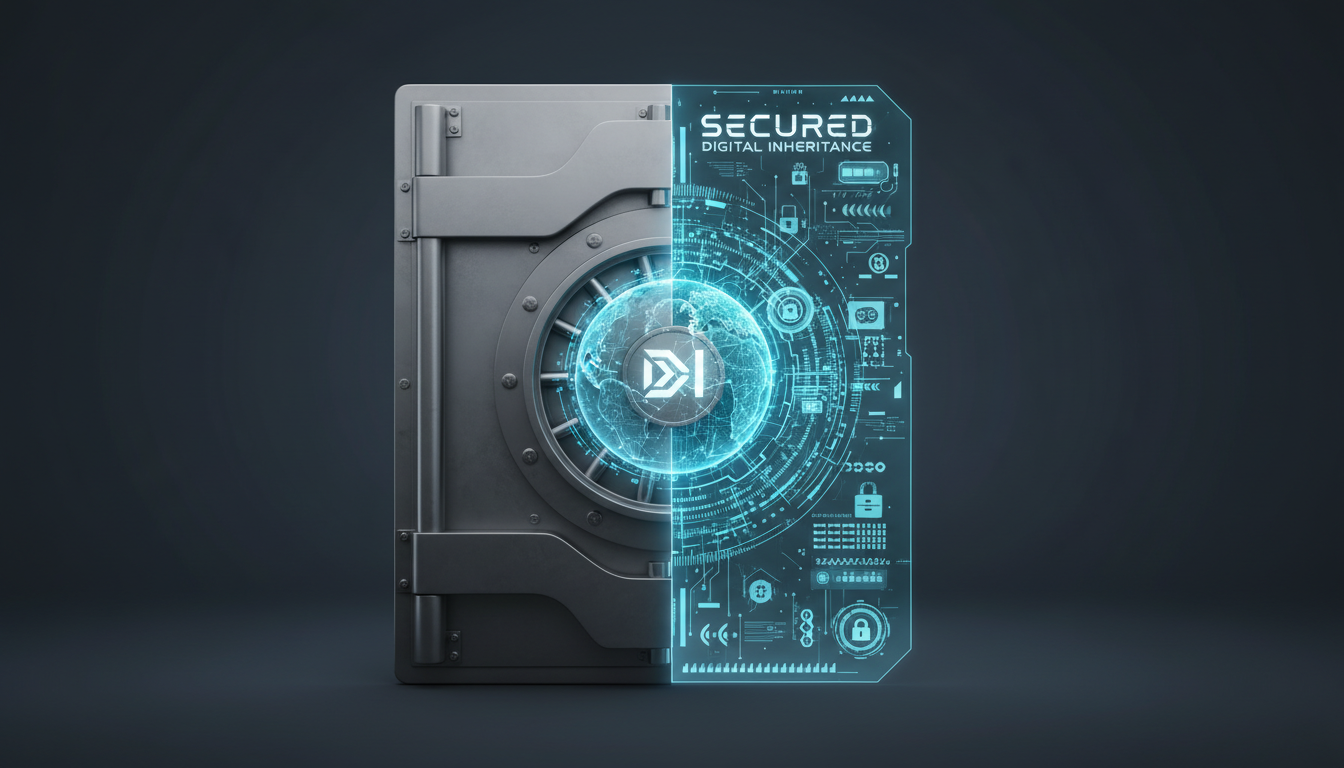
Understanding why email security for families breaks down necessitates comparing passive data transmission against an active inheritance vault. A secure legacy architecture does not just hold data; it verifies the living status of the creator and legally gates access until strict criteria are met.
| Operational Metric | Traditional Email / Cloud Link | Cipherwill (Secure Vault) |
|---|---|---|
| Delivery Reliability | Vulnerable to spam algorithms, auto-deletion, and changing email addresses. | Guaranteed programmatic delivery unaffected by third-party inbox filters. |
| Access Timing Control | Immediate access granted upon sending; risk of snooping or premature exposure. | Strictly gated via verified life-status checks. Beneficiaries cannot access early. |
| State Verification (2FA) | Fails when primary device is lost or disconnected from the network. | Integrates specific protocols to securely transition authorization authority. |
| Encryption Standards | Usually unencrypted in transit unless manual PGP keys are awkwardly applied. | Zero-knowledge cascade encryption ensuring platform operators cannot view data. |
By abstracting the inheritance delivery away from an inbox, families protect themselves against silent platform errors. Implementing a reliable dead man's switch guarantees that sensitive data is only unlocked upon definitive absence, preventing both accidental loss and premature access.
Common Mistakes When Constructing a Digital Plan
The transition from traditional paper-based estate planning to digital security introduces unique vulnerabilities. According to Cybersecurity & Infrastructure Security Agency (CISA) guidelines regarding identity protection and password integrity, merely possessing a credential without the proper authorization framework creates massive institutional risk. The most profound digital will mistakes seen by estate attorneys stem from these fundamental misunderstandings of modern infrastructure:
- The Shared Device Fallacy: Assuming that because a spouse knows the passcode to your iPad, they possess unfettered access to the financial apps on it. Banking applications routinely perform background biometric verification intervals that will lock a partner out regardless of device access.
- The Static Printout Vulnerability: Printing out 24-word cryptocurrency seed phrases or master passwords and storing them in a home safe. These lists are non-dynamic. The moment a user rotates a compromised password online, the physical printout renders the entire estate plan obsolete.
- SMS Authentication Blind Spots: Failing to plan for the SIM card. If an asset requires a text message to verify a login, and the service provider disconnects the mobile line upon being notified of the owner's death, the digital assets are effectively burned forever.
- Premature Trust Delegation: Sending an unencrypted email with raw passwords to adult children "just in case." Emails can sit in vulnerable, unmonitored accounts for a decade, exposing family wealth to routine credential stuffing attacks.
Building a Resilient Transfer Protocol
Escaping the fragility of email requires adopting a robust continuity architecture. This involves transitioning from passive document storage to an active state of operational readiness. Rather than hoping a provider honors a PDF attachment, implement systems that enforce your wishes mathematically.
The Implementation Checklist
- Conduct an Asset Location Audit: Before moving data, map exactly where your digital footprint exists. Group assets into tiers: Tier 1 (Financial/Crypto), Tier 2 (Identity/Telecom), Tier 3 (Sentimental/Social).
- Audit Two-Factor Dependencies: Document exactly which assets require biological authentication (FaceID) versus hardware keys (YubiKey) or SMS. Establish trusted executor protocols for these secondary hurdles.
- Centralize via Zero-Knowledge Architecture: Transfer all relevant credentials, legal PDFs, and final instructions into a dedicated digital inheritance vault like Cipherwill, completely isolating them from Google or Microsoft account lifecycles.
- Establish the Verification Cadence: Configure your dead man’s switch interval. Whether it is a bi-weekly or monthly required check-in, set a frequency that aligns with your daily technology habits so it operates frictionlessly in the background.
- Legal Synchronization: Instruct your estate attorney to reference your digital vault within your traditional will, fully executing your rights under RUFADAA without exposing the specific sensitive keys within the public probate document.
How to Share Estate Documents Securely: The Migration Plan
To properly execute a legacy plan that avoids the hazards outlined in the Odom & Barlow network failure case, families must migrate their critical transmission away from legacy SMTP servers.
- Revoke Past Emailed Plans: If you have previously emailed a comprehensive document outlining your net worth or passwords, mandate the deletion of that file by your beneficiaries immediately. Those dormant files are major attack vectors.
- Onboard to the Vault Layer: Establish a primary continuity layer that actively governs access rights. Secure digital legacy planning hinges on an immutable environment where the rules of release are enforced programmatically.
- Identify Trust Nodes: Nominate specific individuals to receive vault access. Clearly distinguish between roles. A spouse might receive unconditional financial access, whereas an estate attorney might only be granted access to the legal entity structuring documents upon verified incapacitation.
- Simulate the Worst-Case Execution: Sit down with your primary beneficiary and walk through the access process. Ensure they understand how the platform will securely notify them and what identity verification steps they must undergo when the time comes. No one should be navigating a complex legacy platform for the first time while actively grieving.
Frequently Asked Questions
Question: Why shouldn't I just email my passwords to my spouse?
Answer: Standard email is unencrypted in transit and vulnerable to hacks, spam-filter deletions, and account lockouts. Furthermore, logging into an account using another person’s credentials usually violates the provider's Terms of Service. This can trigger automated fraud protections, instantly freezing the financial assets indefinitely when your family needs them most.
Question: Can a standard legal will force tech companies to release my emails?
Answer: Under the Revised Uniform Fiduciary Access to Digital Assets Act (RUFADAA), a general will does not automatically grant access to digital accounts if the platform has its own proprietary access tools or strict Terms of Service. A court order is almost always required unless you use a proactive digital continuity platform.
Question: What happens if an email containing important legacy documents goes to spam?
Answer: The reality is severe: most major email providers automatically and permanently delete the contents of a spam folder every 30 days without notifying the user. If you send an estate document years in advance, and it triggers a spam filter, it will be irrevocably destroyed long before your beneficiary realizes it is gone.
Question: What is a dead man’s switch in digital inheritance?
Answer: A dead man’s switch is an automated security mechanism that routinely asks the user to confirm they are alive and well. If the user fails to respond after a predetermined series of escalating notifications, the system assumes incapacitation or death and automatically releases the highly encrypted digital vault to verified beneficiaries.
Question: How does two-factor authentication (2FA) complicate estate planning?
Answer: Even if your executor possesses your username and password, most financial platforms require a secondary code sent to a mobile device. If your phone is lost, damaged, permanently locked, or the cellular service is cancelled upon your death, the accounts remain completely inaccessible despite having the correct password.
Question: What is a zero-knowledge architecture in legacy planning?
Answer: Zero-knowledge architecture is a cryptographic model where the platform securely storing your information cannot view, read, or access it. It ensures that the company providing the digital vault, and any potential hackers breaching their servers, only see scrambled data. Only the creator and their verified beneficiaries hold the encryption keys necessary to unlock the information.
Question: Are printed paper lists of passwords safer than email?
Answer: While paper lists avoid network-based hacking, they introduce massive physical risks. They are static and immediately outdated the moment you update a password online. They are sensitive to fire, theft, and loss during household moves. Security requires dynamic, updateable systems rather than quickly depreciating pieces of paper.
Question: Do text messages count as a secure way to share estate details?
Answer: No. SMS text messages are entirely unencrypted and frequently stored indefinitely on telecom provider servers and across multiple synchronized devices (like iPads or MacBooks). Sending sensitive financial instructions or seed phrases via text creates a permanent, easily searchable vulnerability that can be exploited by sim-swapping attacks long after the message was sent.
By Cipherwill Editorial Team, Reviewed by Cipherwill Review Board, Trust & Security Review Team
Editorial contributor: Samarjeet Vohra
Review contributor: Ishani Debroy