If you are searching for where to keep a will safely, the immediate operational answer is not a metal box in your basement. Relying on a fireproof home safe or a bank deposit box for your last will and testament guarantees a localization failure precisely when your family needs velocity and access. While older generations treated physical paper as the ultimate authority, modern estate execution requires navigating digital assets, multi-factor authentication, and immediate institutional lockouts.
Securing a legacy is no longer just about guarding a wet-ink signature from a house fire. It requires a resilient system that transfers both legal authority and operational capability to your executors. When families rely exclusively on physical storage methods, they frequently encounter bureaucratic gridlock, environmental document destruction, and agonizing probate court delays. To execute an estate efficiently today, you must replace the brittle fragility of physical paper vaults with decentralized, cryptographic legacy solutions.
The Endothermic Trap: Why Fireproof Safes Destroy Documents
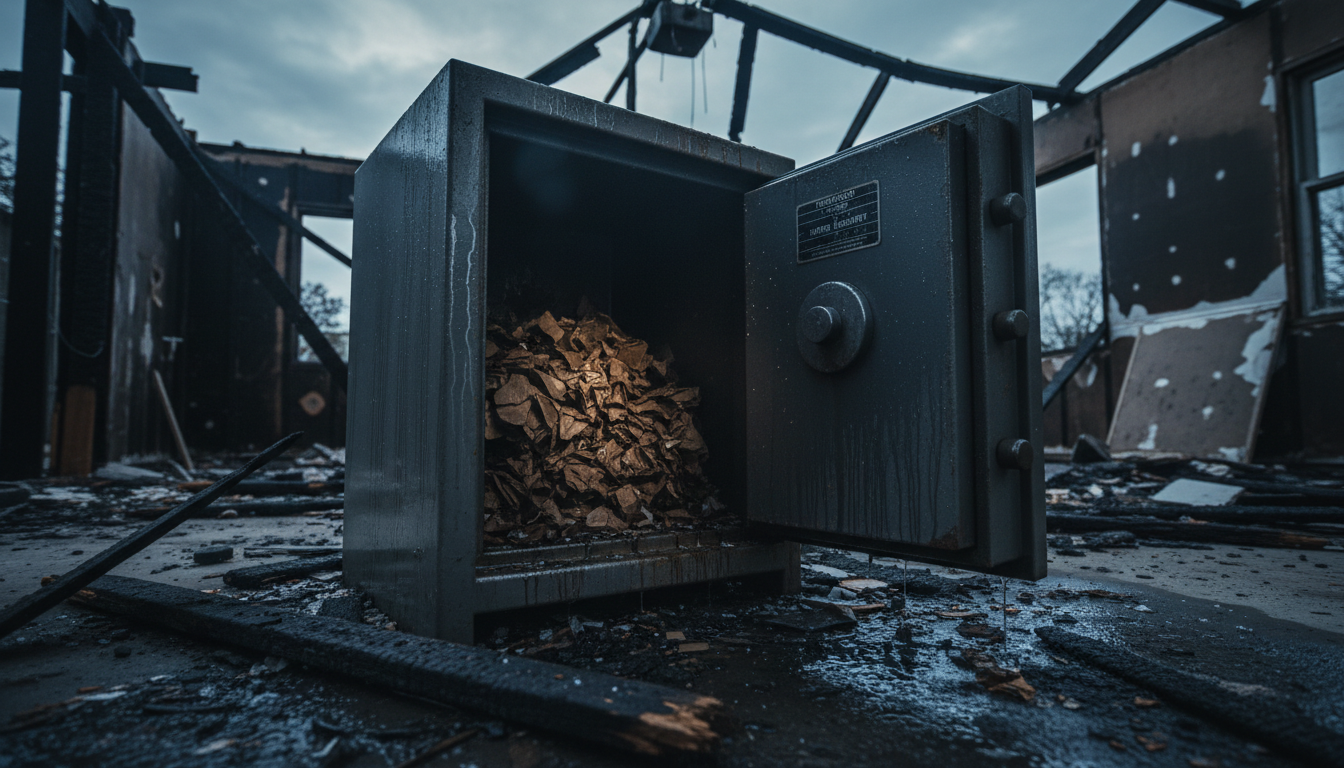
Consider the operational reality of commercial fireproof safes, a method overwhelmingly recommended by outdated legal advice. Robert, a cautious 58-year-old software engineer, placed his original will, property deeds, and hardware wallets in a heavy-duty, UL-rated fireproof home safe. When a severe electrical fire swept through his home, Robert believed his documents were secure. The safe survived the extreme external temperatures perfectly.
However, when Robert opened the vault a week later, he discovered a block of unreadable, black moldy pulp. He fell victim to an uncommon risk that manufacturers rarely advertise: the endothermic reaction.
Most consumer fire safes use insulation composed of gypsum or similar chemical compounds. When exposed to high heat, this insulation releases chemically bound water molecules as steam. The internal temperature stays below the ignition point of paper, effectively preventing combustion. Unfortunately, this process pumps dense, superheated moisture directly into the sealed chamber.
"Without specialized airtight, waterproof inner enclosures, the steam generated by a safe's fire-resistant insulation will effectively boil documents into illegible pulp, turning a fire-survival story into an estate-planning disaster."
Even if a fire is averted, another threat looms: high-pressure water ingress. When fire departments aggressively douse a residence, the pressurized water from the hoses forcefully breaches standard consumer-grade water seals, flooding the internal compartments of the safe. According to disaster recovery protocols from the Federal Emergency Management Agency (FEMA), reliance solely on primary physical storage during catastrophic events frequently results in total data unrecoverability.
The Bureaucratic Nightmare of Bank Deposit Boxes
Abandoning the home safe, many individuals pivot to bank safe deposit boxes. This introduces an entirely different, heavily institutionalized operational failure. Robert's sister, for instance, learned this the hard way.
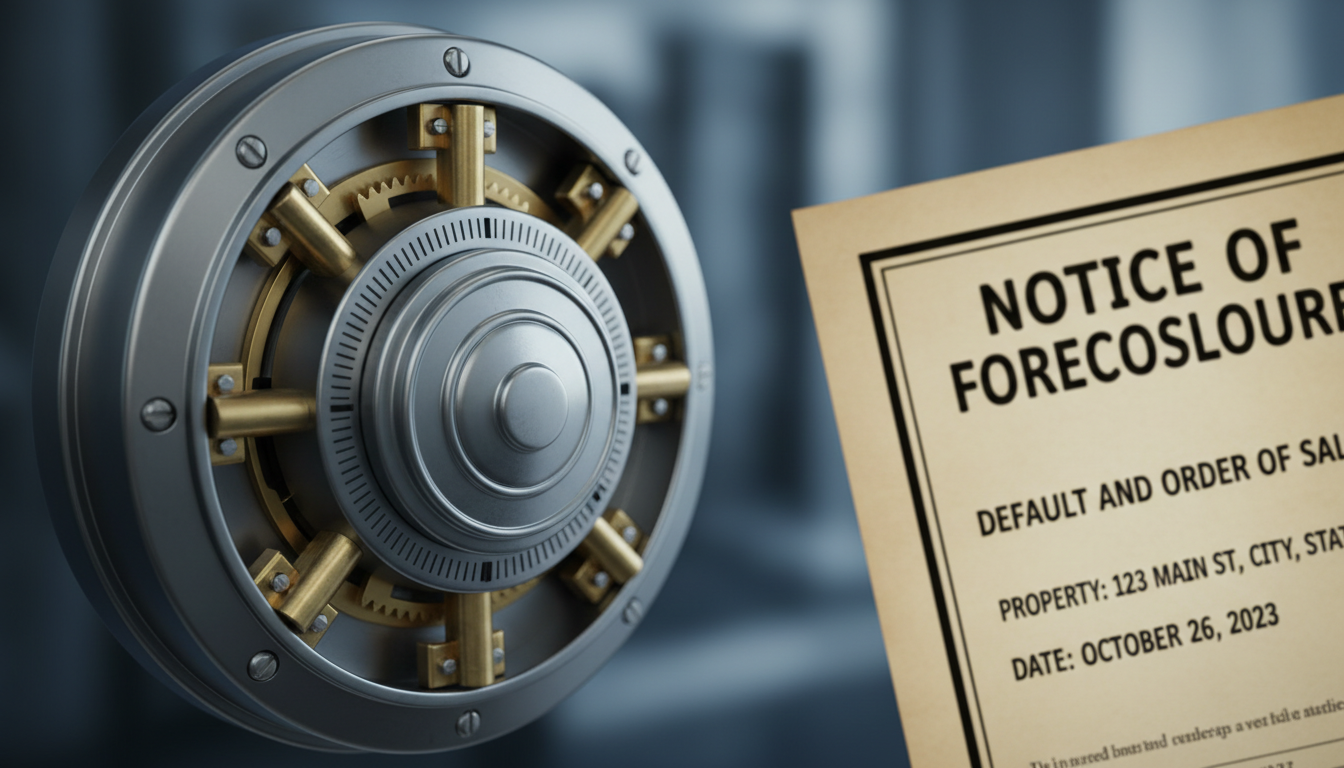
When an individual dies, the bank instantly freezes access to the safe deposit box. To open it, the surviving family members must provide the bank with a death certificate and legally binding Letters of Administration or Letters Testamentary issued by a probate court. Herein lies the catastrophic legal Catch-22 of our current financial system.
The probate court will not issue Letters Testamentary until the family presents the original, wet-ink will. But the original will is locked inside the safe deposit box. The family cannot get into the box to retrieve the will because they do not have the court orders, and they cannot get the court orders because they do not have the will. Breaking this stalemate requires hiring a probate attorney, filing an emergency petition to search the box, paying hefty legal fees, and waiting weeks for a judge's intervention—all while funeral expenses and unresolved financial liabilities compound.
Furthermore, banks are increasingly consolidating. A hidden, yet devastating risk is bank relocation. When financial institutions merge, close branches, or transfer assets, they frequently physically relocate safe deposit boxes to regional hubs. If your address is outdated on their specific deposit box ledger, you may never receive the notification, effectively losing your most critical inheritance documents in a corporate warehousing maze.
Recognizing What Physical Wills Fail to Pass On
The inadequacies of paper storage become most apparent when trying to manage a modern, technology-driven estate. Even if Robert's family recovered an original paper will, the document is fundamentally disconnected from the digital reality of modern wealth. Under the guidelines of the Uniform Law Commission's Revised Uniform Fiduciary Access to Digital Assets Act (RUFADAA), simply naming a beneficiary on a piece of paper does not compel Apple, Google, or a cryptocurrency exchange to bypass encryption and hand over account contents.
Consider a frantic ICU waiting room scenario. A daughter, holding a legally binding power of attorney document, tries to access her incapacitated father's financial accounts to pay for experimental critical care therapies. The bank refuses to accept a scanned copy of the document, demanding the original. Even worse, she needs to log into his cryptocurrency exchange to liquidate funds, but the account is protected by an authenticator application locked on his personal phone, which is sitting in the mangled wreckage of his vehicle. The physical documents she possesses are legally valid but functionally useless in the face of rigid two-factor authentication constraints.
To prevent an inheritance lockout, families must utilize a digital legacy platform that bridges the gap between authorized legal transfer and technical access provision.
Evaluating Storage Architectures: A Meaningful Comparison
Understanding the specific vulnerabilities of varying storage solutions helps executors build a risk-resistant inheritance strategy. The following comparison breaks down how catastrophic failure points manifest across platforms.
| Storage Architecture Type | Primary Failure Risk & Consequence |
|---|---|
| Fireproof Home Safe | Endothermic steam destroys unsecured paper. Vulnerable to theft, misplacement of physical keys, and high-pressure water hose ingress during disasters. |
| Bank Safe Deposit Box | Jurisdictional gridlock. Creates a legal Catch-22 requiring expensive surrogate court intervention just to initiate the search for the will. Subject to unnotified corporate relocation. |
| Attorney's Office Vault | Solo practitioners abruptly retire, relocate, or pass away. Successor firms frequently lose indexing data, causing delays during urgent estate administration. |
| Cryptographic Succession Vault | Requires technical forethought to establish initial parameters. Once configured, completely immune to physical destruction and localized legal gridlock. |
Common Mistakes When Storing Estate Documents
Because legacy management intersects deeply with emotional taboos surrounding death, individuals commonly make panicked, poorly researched operational decisions. Avoiding these pitfalls is critical to ensuring your beneficiaries aren't left fighting a losing battle against localized data loss.
The Fatal Storage Missteps
- Hiding items without documentation: Placing a home safe key in a hollowed-out book and failing to leave explicit recovery instructions. If the executor cannot find the safe key, the safe must be destructively drilled by a licensed locksmith, incurring high costs.
- Relying on joint bank access without succession rights: Assuming that adding a spouse to a standard checking account will grant them rights to the adjacent safe deposit box. Contractually, the two services are highly distinct and require separate beneficiary designations mapping.
- Storing unlaminated documents without desiccants: Placing sensitive paper sheets directly into an insulated fire safe without placing them inside a secondary watertight, vacuum-sealed silicone envelope containing silica gel packs to minimize ambient moisture degradation over decades.
- Ignoring the transition of digital passwords: Failing to configure decentralized access systems, assuming that family members can simply "guess" Master Passwords or use FaceID to open a deceased relative's laptop to locate the scanned drafts of the estate plans.
The Recovery Path: Transitioning to Indestructible Succession
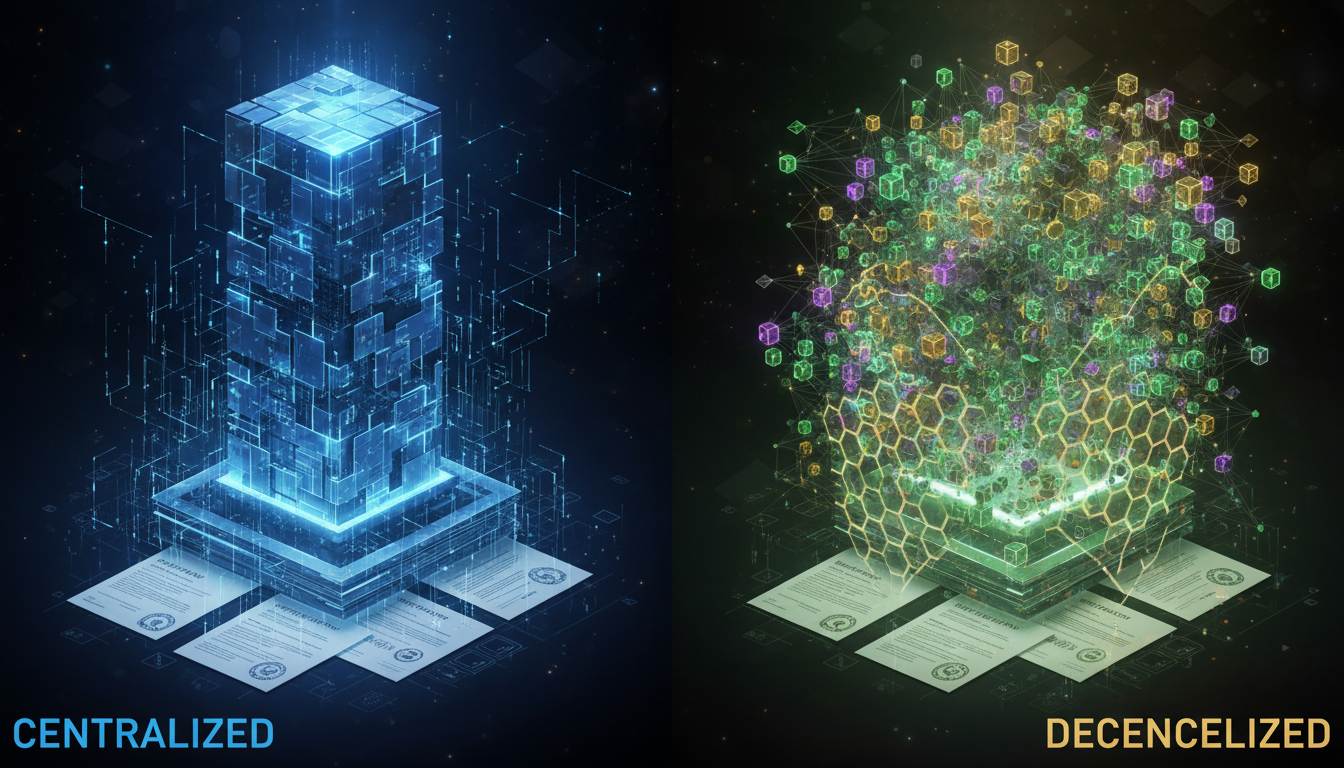
Resolving the profound vulnerabilities of physically isolated wills demands transitioning toward a layered, decentralized strategy. This involves decoupling the legal validity of your documents from a single fragile, geographical location and integrating automated digital triggers.
Follow this concrete operational framework to modernize and safeguard your estate handovers:
- Separate Execution Instructions from the Master Key: File the original wet-ink document with the respective county probate clerk's specialized "wills for safekeeping" repository (if your county permits it), effectively removing the physical possession risk from your heirs. If your local probate court does not offer this service, register the document with a specialized corporate fiduciary service rather than a solo-practice attorney.
- Implement a Zero-Knowledge Cryptographic Vault: Because RUFADAA legislation strictly mandates that you explicitly grant executor access to digital interfaces, utilize a robust platform utilizing zero-knowledge encryption to store your sensitive 2FA recovery codes, seed phrases, and specific data repository mappings.
- Configure an Automated Verification Strategy: To prevent your digital assets from staying locked if you are incapacitated unexpectedly, configure a dead-man's switch mechanism. This proactive system monitors user activity pings; upon detecting a sustained period of unresponsiveness, it automatically alerts trusted legal beneficiaries and initiates a controlled, verified transfer sequence of encrypted instructions.
- Establish a Redundant Legal Override: Ensure the primary digital inheritance system connects securely to secondary contacts. By leveraging multi-party access thresholds—requiring a combined verification from an attorney, a spouse, and a neutral executor—you systematically mitigate the risk of premature execution while guaranteeing uninterrupted post-mortem accessibility.
The Implementation Checklist for Immediate Protection
In order to systematically dismantle the single points of failure in an out-of-date estate plan, take the following actionable steps this week. According to the American Bar Association, proactive organization significantly reduces the timeline and emotional hostility commonly associated with the probate execution process.
- Confirm with your local surrogate or probate clerk regarding their intake procedures for filing original wills for life-long safekeeping.
- Digitize high-quality, uncompressed PDF scans of every executed page, complete with notary seals.
- Package the original wet scans, precise locational instructions, and digital account credentials into a cryptographic inheritance platform container.
- Draft a separate legal memorandum that explicitly references your utilization of a digital succession switch, adhering to latest RUFADAA stipulations.
- Evacuate critical non-replaceable legal directives from domestic fireproof safes, utilizing those spaces strictly for easily replicable documents or low-value sentimental physical items.
Frequently Asked Questions
Question: Where to keep a will safely at home without using a fireproof safe?
Answer: Keeping the original will at home is fundamentally risky due to disaster and misplacement factors. However, if absolutely necessary, store the document inside a fully waterproof, airtight silicone pouch placed inside a lockbox, but only as a temporary measure until filing with a county probate clerk or uploading to a secure digital legacy platform.
Question: Can an executor open a safe deposit box without a court order?
Answer: In most jurisdictions, no. Bank policies strictly seal the deposit box upon notification of death. Executors usually face a severe legal gridlock where they must petition a probate judge for specialized, temporary search orders merely to locate the will inside, causing weeks of expensive administrative delay.
Question: Are fireproof safes completely waterproof during a fire response?
Answer: Absolutely not. While fire safes resist extreme external ambient temperatures, they rarely maintain waterproof integrity when subjected to the high-pressure water jets from fire department hoses. Furthermore, their inner insulation releases endothermic steam when heated, which severely molds and destroys unprotected interior paper documents.
Question: Does a digital copy of a will hold up in a standard probate court?
Answer: A scanned digital copy is rarely accepted on its own if the original wet-ink document is presumed lost, as courts may assume the testator intentionally destroyed the original to revoke it. However, a secure digital copy profoundly aids executors in recreating estate intent while petitioning the court for copy validation.
Question: What happens if an attorney retires and they have my original will?
Answer: When solo practitioners retire or pass away, their document archives are often transferred to successor firms or state bar associations. This chaotic transition frequently results in lost or drastically misplaced original files, underscoring why individuals must maintain heavily documented, decentralized digital backups of their most vital estate records.
Question: How does cryptographic digital inheritance solve the accessibility problem?
Answer: Cryptographic inheritance utilizes secure digital vaulting integrated with automated triggers. It eliminates physical vulnerabilities, bypassing jurisdictional restrictions and geographic lockdowns. When verified criteria such as incapacitation or death activate the system, the architecture automatically releases necessary execution keys to authorized beneficiaries without requiring agonizing institutional approvals.
Question: Should I keep the passwords to my digital assets written directly inside the paper will?
Answer: No. Since a will becomes immediate public record once it passes through the probate court, writing raw passwords or master key phrases directly into the legal text exposes your entire digital estate to the public. You must utilize external, encrypted succession platforms that securely map and bridge the execution authority.
By Cipherwill Editorial Team, Reviewed by Cipherwill Review Board, Trust & Security Review Team
Editorial contributor: Iraan Qureshi
Review contributor: Ishani Debroy