People turn to fully automated digital wills to streamline asset transfer, assuming code is inherently more reliable than cumbersome legal processes. But relying exclusively on zero-human software to execute your estate plan creates a dangerous single point of failure. If an algorithm strictly demands a multi-factor authentication token from a deceased person's deactivated phone line, or automatically wipes a drive due to a missed algorithmic check-in, beneficiaries are permanently locked out. A functional digital inheritance requires a hybrid approach: immutable cryptographic security mixed with operationally flexible, human-guided recovery workflows. This guide breaks down the unrecognized vulnerabilities of robotic succession plans and outlines how to structure a fail-proof transition for those you leave behind.
The Zero-Human Illusion: Marcus’s Catastrophic Setup
Marcus, a senior systems architect, wanted to bypass probate court entirely. Believing that traditional legal frameworks were too slow for his extensive portfolio of cryptocurrency and remote SaaS businesses, he engineered a custom, fully automated algorithmic dead man’s switch. His system tracked his online activity; if he failed to log in for ninety consecutive days, a script would execute, decrypting his master vault and emailing the raw access link directly to his brother, David.
It was mathematically perfect. It was also operationally doomed.
When Marcus unexpectedly passed away, the countdown began ticking in the background. Family members grieved, funeral arrangements consumed weeks, and traditional estate proceedings crawled forward. Exactly ninety days post-tragedy, the server executed its command flawlessly. A highly encrypted archive link was dispatched to David’s inbox.

When Flawless Code Meets Human Grief
David was a talented high school history teacher with virtually zero cryptographic literacy. The automated email, flagged by security protocols due to its unusual payload, routed directly into his spam folder. By the time David discovered the message three weeks later, the automated link had expired—a security feature Marcus had intentionally coded to prevent brute-force attacks.
When David attempted to trigger a reset, the zero-human system rigidly demanded a multi-factor authentication token from Marcus’s physical smartphone. But Marcus’s cellular plan had been cancelled by his executor a month prior to save the estate money. The phone was dead. The zero-human system, lacking any contextual awareness of mortal realities, permanently sealed the vault.
"An estate plan built solely on cryptographic rigidity without human fail-safes isn’t a legacy plan. It is a digital prison built for the people you love the most."
This failure loop represents the foundational risk of automated estate planning software. Algorithms do not understand context, they do not feel grief, and they cannot bypass their programming when a surviving spouse inadvertently clicks the wrong notification button.
Technical Checkmates and Edge Cases
The architectural flaw in purely algorithmic wills is the assumption of a static environment. In reality, modern security environments are highly erratic. Several technical hurdles consistently trap beneficiaries who rely on zero-human software:
The Biometric Lockout
Hardware security standards championed by groups like the FIDO Alliance are increasingly making physical biometric verification mandatory for financial accounts. If an automated script sends an heir a password, but the platform forcibly requires a FaceID scan from a registered device, the inheritance is rendered inaccessible.
Dynamic IP Filtering
Consider Sarah, a surviving spouse who received her late husband’s banking credentials via an automated legacy script. When she logged in from her mother’s house in a different state, the bank’s fraud detection system flagged the unfamiliar IP address and device fingerprint. The system immediately froze the account, demanding a phone verification from a number that no longer existed. What should have been a seamless transfer turned into a fourteen-month administrative nightmare requiring court orders and continuous legal fees.
Identity Lifecycle Management
According to the National Institute of Standards and Technology (NIST), long-term credential viability requires active identity lifecycle management. A script cannot proactively update passwords across varied platforms if a major data breach forces mandatory, ecosystem-wide resets between the time the will was programmed and the creator's eventual passing.

The Legal Reality: Why Technical Access Isn't Legal Ownership
Even if an automated system successfully delivers a pristine set of passwords without triggering security flags, beneficiaries still face severe legislative hurdles. Having the technical ability to log into an account is fundamentally different from owning the legal right to do so.
Under the Revised Uniform Fiduciary Access to Digital Assets Act (RUFADAA), originally drafted and championed by the Uniform Law Commission, technical access does not legally equate to authorized stewardship. RUFADAA dictates that service providers will only recognize an executor’s authority if the deceased explicitly granted lawful consent via the platform's proprietary online tools or within a formally drafted will.
If an automated script blindly hands over a raw master password in violation of a platform's terms of service, an heir using that credential could inadvertently find themselves violating local computer crime statutes. A legitimate platform bridges this gap by ensuring technical data transfers comply with fiduciary authorization sequences.
Comparing pure Automation Against Hybrid Systems
To secure an estate against both cyber threats and administrative bottlenecks, understanding the difference in operational mechanics is crucial.
| Purely Automated Code | Human-Tethered Inheritance |
|---|---|
| Executes rigidly regardless of situational context, risking lockout if hardware fails. | Adapts execution timelines based on real-world verification and human fallback steps. |
| Relies strictly on raw credential sharing, often violating platform terms of service. | Integrates cryptographic security with legally accepted asset transfer procedures. |
| Zero fallback options if the primary authentication channel (like an email) goes offline. | Provides secondary, guided verification workflows tailored for grieving families. |
Common Mistakes in Automated Estate Planning
Many technically proficient asset holders inadvertently sabotage their own legacy by making assumptions about platform stability. Below are the most frequent operational errors.
1. The "Set and Forget" Fallacy
Digital estates expire. Subscription models pivot, passwords require mandatory resets, and multi-factor applications switch from SMS to authenticator apps. A dormant script mapped to legacy URLs will eventually degrade, pointing heirs toward broken endpoints.
2. Ignoring Executor Technical Proficiency
Cryptographic isolation prevents theft, but it also prevents inheritance if the recovery curve is too steep. Sending a non-technical loved one a PGP-encrypted file with complex decryption instructions amidst extreme emotional distress guarantees failure.
3. The Cold Storage Isolation Trap
Moving all primary assets to localized cold storage hardware and relying on a robotic script to deliver the PIN code is highly risky. If the hardware is physically misplaced during estate clearing by a well-meaning family member, the digital PIN delivered by the software becomes useless.
Implementing a Resilient, Hybrid Transition
Building a secure digital legacy demands a framework that expects failure points and mitigates them. The goal is to construct a system where security protocols protect the asset while the owner lives, but human-centered accessibility initiates when the owner passes.
Digital Asset Recovery Readiness Checklist
Use this checklist to self-audit your current succession readiness:
- Map and categorize all core assets heavily protected by physical hardware keys or local 2FA.
- Document the specific physical locations of localized backup codes within your legal will.
- Confirm that your designated fiduciary understands the distinct legal difference between receiving raw password access and obtaining authorized, platform-level stewardship.
- Verify that your asset handover tools comply with RUFADAA by granting explicit legal consent alongside technical credentials.
- Test the recovery workflow organically with the intended recipient to gauge technical friction.
Structured Execution Workflow
If you are moving away from purely robotic scripts, establish your plan following this hierarchy of operations:
- Audit and consolidate your disparate virtual footprint into manageable, categorized segments (financial, media, operational).
- Establish a legally recognized consent framework mapped identically to local fiduciary expectations.
- Deploy a redundant authentication protocol that bridges uncompromising cryptographic security with compassionate human oversight.
- Designate a knowledgeable technical proxy directly in your estate documents if your primary emotional beneficiary lacks fundamental digital literacy.
The Cipherwill Alignment: Security Meets Compassion
A legitimate inheritance ecosystem must refuse to operate as an isolated, zero-human loop. At Cipherwill, the architecture enforces ruthless cryptographic protection over your data, ensuring unparalleled security during your lifetime while orchestrating a deeply human-compatible legacy handover upon verification.
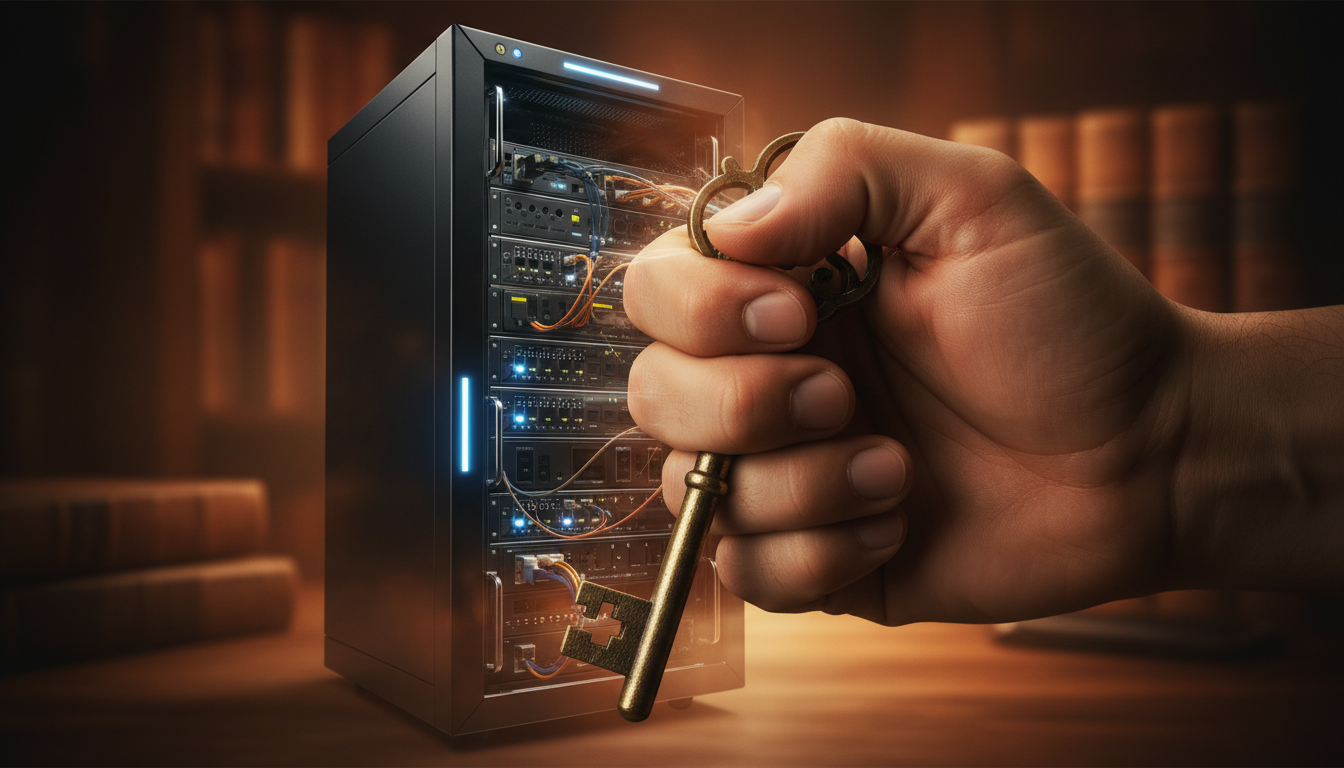
By replacing isolated scripts with guided succession flows, edge cases like expired session tokens and inaccessible authenticator apps are mitigated. Beneficiaries are guided securely through retrieval, maintaining stringent standards without punishing grieving families for their lack of technical expertise. Ultimately, legacy planning shouldn't feel like hacking into a mainframe; it should feel like passing down the keys to your home.
Frequently Asked Questions
Question: What are the main risks of using fully automated digital wills?
Answer: Fully automated digital wills rely exclusively on rigid code. If the software encounters a technical edge case—such as an expired authentication token, an unrecognized geographic IP address, or a deleted email account—it fails completely. Without a human oversight mechanism, a single system error can permanently lock beneficiaries out of critical assets.
Question: How does multi-factor authentication (MFA) cause issues for heirs?
Answer: MFA typically requires a code sent to a personal device or an authenticator app. If a beneficiary has the correct password but the deceased person's phone plan has been canceled or the device is biometric-locked, the login fails. Automated wills cannot bypass systemic hardware requirements imposed by external platforms like banks or crypto exchanges.
Question: What is RUFADAA and why does it matter for digital wills?
Answer: RUFADAA is a legal framework created by the Uniform Law Commission allowing fiduciaries legal access to digital assets. Having a password via a robotic script does not grant legal authorization. RUFADAA ensures that platforms legally recognize the executor’s right to manage the account, preventing accidental violations of federal computer fraud laws during asset retrieval.
Question: Can an automated script violate a platform's terms of service?
Answer: Yes, extremely easily. Most digital service platforms prohibit credential sharing entirely. If an automated script logs in or distributes raw passwords without utilizing formal legacy contact features or legal fiduciary documentation, the host platform may flag the activity as a breach and completely terminate the account for policy violations.
Question: Why is the "Set and Forget" strategy dangerous for estate plans?
Answer: Digital environments are constantly evolving. Security protocols upgrade, platforms pivot, and passwords expire. An automated estate plan created five years ago is highly fragile because the links, tokens, and verification methods it relies upon may no longer exist. Routine proactive maintenance and flexible human-led workflows are critically required to prevent data decay.
Question: Could a dead man's switch accidentally activate while I am alive?
Answer: Yes. If a purely algorithmic switch relies solely on email responses or login activity, severe illness, extended offline vacations, or lost access to a linked tracking email can trigger premature execution. A well-designed hybrid system utilizes multiple verification layers to confirm an emergency before initiating any irreversible data transfer to beneficiaries.
Question: Should my executor also be my technical proxy?
Answer: Not necessarily. Estate executors handle the legal distribution of assets, but they often lack the technical prowess to navigate encrypted hard drives or virtual asset ledgers. It is highly advisable to legally designate a specialized technical proxy who understands digital asset nuances to assist the primary executor with complex retrieval tasks.
Question: How does Cipherwill prevent zero-human execution failures?
Answer: Cipherwill fundamentally bridges advanced cryptographic data protection with intuitive, human-centered recovery operations. Rather than blindly dispatching passwords through rigid scripts, the platform manages a legally coherent and operationally guided handover, ensuring that verified beneficiaries can successfully retrieve assets regardless of their shifting physical and emotional circumstances.
By Cipherwill Editorial Team, Reviewed by Cipherwill Review Board, Trust & Security Review Team
Editorial contributor: Vedant Kulshreshtha
Review contributor: Ishani Debroy