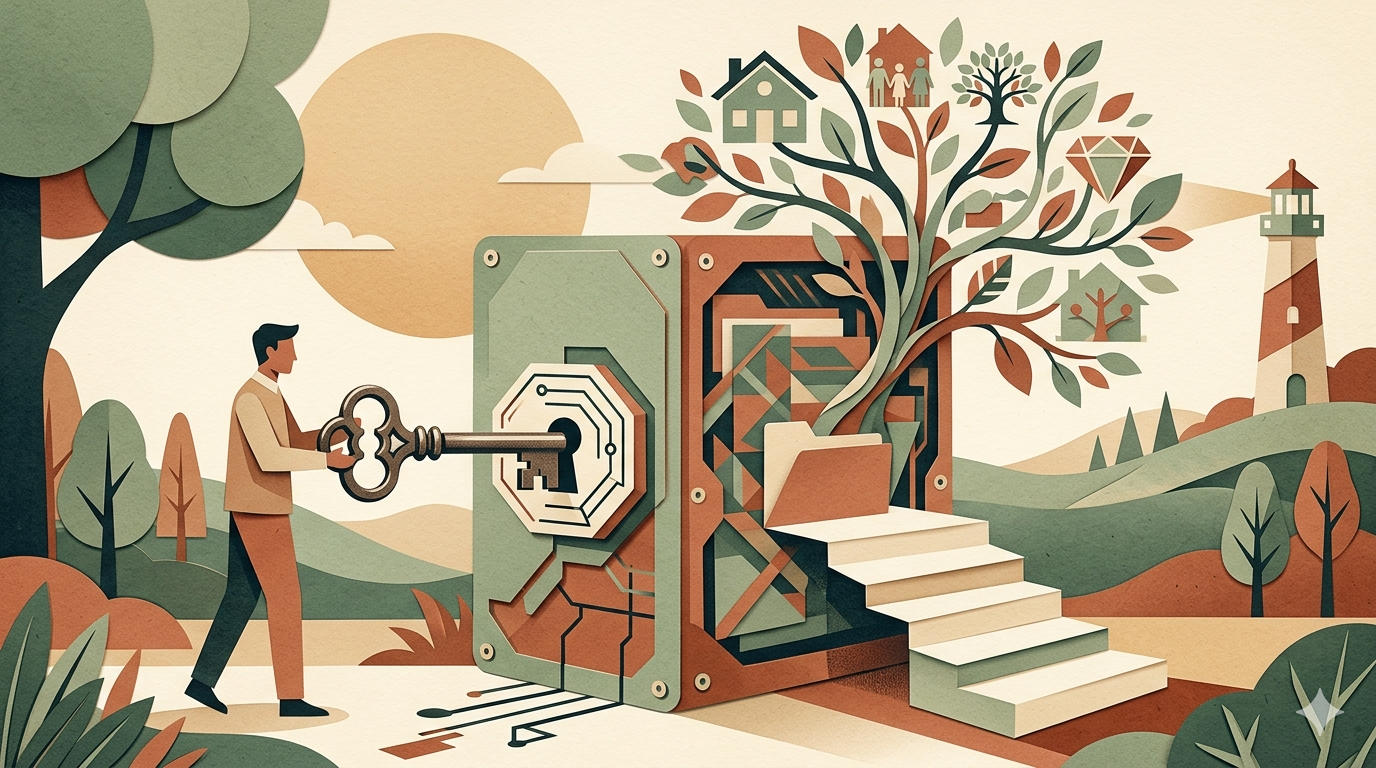
Research from the Uniform Law Commission indicates that while the vast majority of individuals maintain extensive digital lives, only a small fraction have established formal protocols for their transition. As of March 2026, over 40 U.S. states have adopted versions of the Revised Uniform Fiduciary Access to Digital Assets Act (RUFADAA), yet families frequently encounter insurmountable barriers when attempting to access vital accounts because a standard legal will often lacks the technical keys required for encrypted systems. This guide provides a comprehensive digital asset estate planning checklist designed to solve the "technical lockout" problem, ensuring that everything from encrypted drives to smart home ecosystems remains accessible to designated successors.
By Cipherwill Editorial Team, Digital Legacy Research Desk Reviewed by Cipherwill Review Board, Trust & Security Review Team Last reviewed: April 2026 Editorial contributor: Myra Senapati Review contributor: Reyansh Mehta
The Essential Digital Asset Estate Planning Checklist
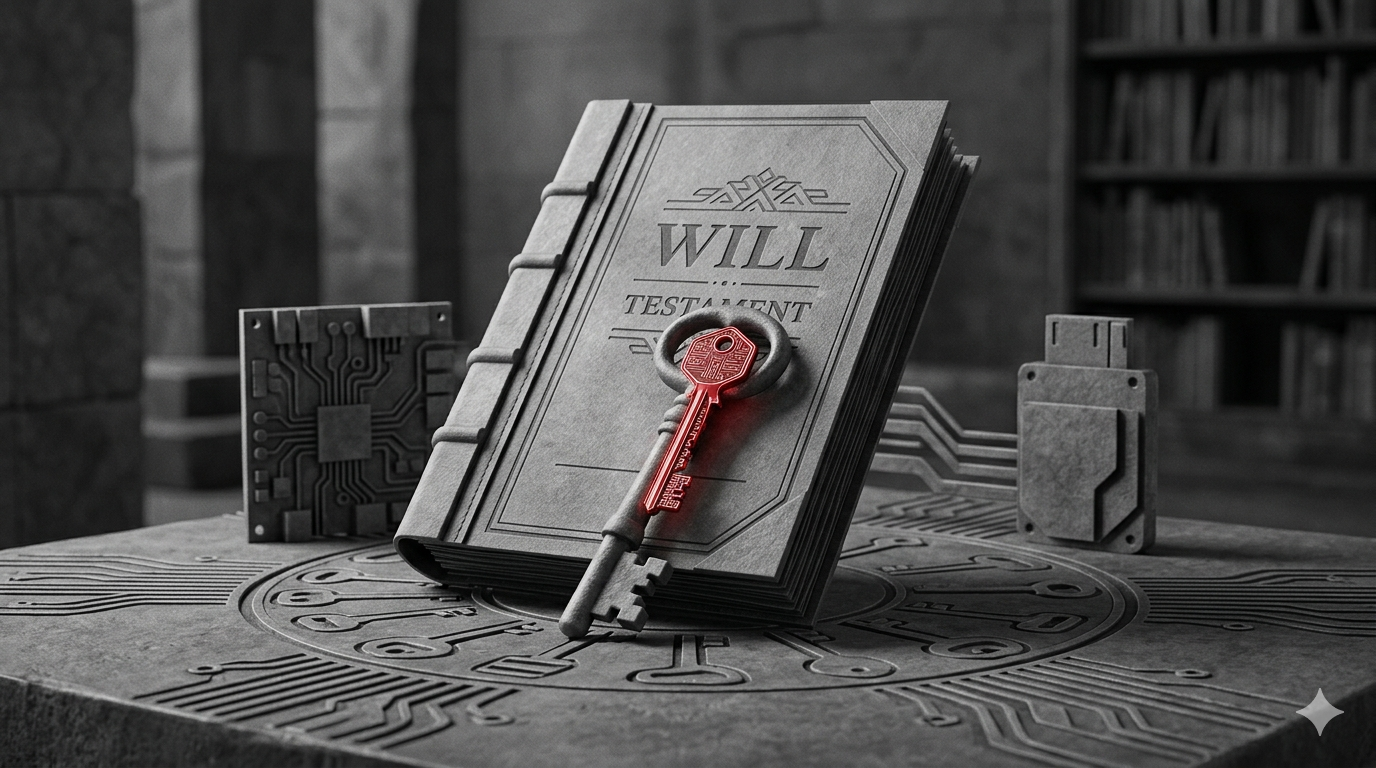
A traditional will is a foundational legal instrument, but it can be functionally powerless against 256-bit encryption. Even if a probate court grants an executor full legal authority over an estate, that judicial order cannot technically compel a localized encryption module to decrypt a hard drive without the specific alphanumeric key. This creates a scenario where assets exist in a legal sense but are effectively destroyed by lack of access.
The RUFADAA Gap: Legal Authority vs. Technical Access
The Revised Uniform Fiduciary Access to Digital Assets Act (RUFADAA) was developed to harmonize privacy statutes with estate administration needs. It provides executors with a legal pathway to manage digital property, but it contains a significant limitation: it generally does not require service providers to disclose actual passwords.
Under RUFADAA frameworks as of April 2026, the law prioritizes a user’s instructions within a platform’s internal tools (such as Google’s Inactive Account Manager) over instructions in a will. If no platform-specific tool was used, the will takes precedence, followed finally by the platform's Terms of Service. Without explicit consent for "disclosure of content" in a will, an executor may only receive a "log of activity" rather than the actual substance of emails or private files. Understanding Digital Inheritance 101 What Happens To Your Data is a critical first step in identifying which data categories require specific legal language.
Private Metadata: The Hidden Key to Proving Ownership
Beyond the files themselves, the preservation of private metadata is a growing concern in estate litigation. Metadata-including timestamps, geolocation data, and authorship logs-often serves as the primary evidence for intellectual property ownership. For creators or business owners, a lack of a technical handover plan can lead to metadata being stripped or corrupted during unauthorized login attempts by family members, potentially devaluing the estate’s commercial assets.

The Technical Handover Checklist: Securing the Keys to the Kingdom
To prevent permanent data loss, a testator should provide a technical roadmap that addresses both physical hardware and software permissions.
Encrypted Hard Drives and Physical Cold Storage Protocols
When transferring encrypted hard drives after a death, the primary obstacle is usually the absence of a recovery key. Modern operating systems frequently utilize full-disk encryption, such as FileVault for macOS or BitLocker for Windows.
A technical handover plan should document:
- The physical location of all encrypted storage devices.
- The primary system login credentials.
- The 48-digit recovery key, ideally stored in a physical, non-digital format.
- Requirements for hardware security keys (e.g., YubiKey) to bypass secondary authentication.
For those holding cryptocurrency, this extends to hardware wallets. If a seed phrase is lost, the assets are generally considered unrecoverable by any known technical means. For individuals currently facing access issues, reviewing Lost Crypto Recovery Expert Strategies To Reclaim Your Digital Assets provides context on the extreme difficulty of post-mortem recovery without prior planning.
Smart Home Master Admin: Preventing Physical Property Lockouts
Smart home master admin succession is increasingly viewed as a safety and habitability issue. If a homeowner passes away and was the sole administrator of smart locks, thermostats, and security systems, the surviving residents may find themselves unable to manage their own environment.
Because master accounts are typically tied to a single email address protected by Two-Factor Authentication (2FA) on the deceased's mobile device, resetting these systems can be nearly impossible for survivors. A technical handover must ensure a "Successor Admin" is designated within the application or that master credentials are accessible via an emergency protocol.
GitHub Repositories: Transferring Proprietary Code to Successors
For software developers, passing down GitHub repositories to heirs involves maintaining "maintainer" status to ensure the continuity of proprietary projects. GitHub allows users to appoint a "Successor" who can manage repositories after a period of inactivity. If this is not configured, a software project may become orphaned, which can prevent heirs from licensing the code or maintaining business operations.
Specialized Asset Classes: From Metaverse to Medical Records
As digital lives expand into virtual environments and professional compliance spheres, the complexity of the handover increases.
Decentralized Metaverse Assets: Transferring Land and Rare Items
Decentralized metaverse asset inheritance presents unique challenges because there is no centralized customer support to facilitate transfers. Virtual land in platforms like Decentraland or The Sandbox is typically held as an NFT in a private crypto wallet. While a will may specify the distribution of these assets, the technical handover requires the transfer of private keys. According to Digital Assets: Incorporating Them Into Your Will, failure to categorize these assets specifically can lead to them being treated as "residuary estate," which may complicate the distribution process.
Healthcare Practitioners: Compliant Patient Record Offboarding
For medical professionals in private practice, the death of the practitioner triggers strict regulatory requirements under HIPAA or GDPR. Medical record offboarding for deceased practitioners requires the appointment of a "custodian of records." This individual must have technical access to the Electronic Health Record (EHR) system to fulfill patient requests for years following the closure of the practice. Failure to provide this access can result in significant legal penalties against the estate.
Minor Heirs: Appointing Guardians for Crypto and NFT Portfolios
A legal guardian for minor crypto inheritance faces a complex fiduciary environment. Cryptocurrencies are highly volatile, and traditional Uniform Transfers to Minors Act (UTMA) accounts are not always natively equipped to hold digital tokens. A technical handover plan should specify how assets should be secured-perhaps in a multi-signature wallet-until the minor reaches the age of majority.
Scenario: The Startup Founder and the Single-Point-of-Failure
In this anonymized case, a startup founder managed all company domains, cloud hosting (AWS), and primary business banking through a single hardware security key and a private email account.
When the founder passed away unexpectedly in early 2026, the company’s primary website went offline because the domain registration expired. The remaining employees could not access the cloud servers to renew the registration because the 2FA was tied to the founder's locked smartphone. Although the founder’s family legally inherited the company shares, they could not maintain business operations. This scenario demonstrates why a digital asset estate planning checklist must include a "Business Continuity" section that separates personal digital assets from professional infrastructure.
The Legal-Technical Bridge: Ensuring RUFADAA Compliance
To ensure a plan is legally enforceable, the testator must bridge the gap between technical instructions and legal documentation.
Drafting Specific Technical Instructions for Executors
An executor does not need to be a technical expert, but they require a clear map. A will should ideally include a "Digital Asset Memorandum." This is a separate document-intended to keep sensitive passwords out of the public probate record-that provides:
- A comprehensive list of significant hardware.
- A directory of digital accounts (social, financial, and utility).
- Instructions on locating the "Master Key" or password manager emergency access.
Utilizing a Guide To Estate Planning For Digital Assets can help in categorizing these items to ensure no asset class is overlooked.
The Risk of Deepfake Avatars in Posthumous Estate Messaging
A rising trend involves using AI to create "legacy avatars" for posthumous communication. However, there is a significant risk regarding the use of deepfake avatars in posthumous estate messaging. If an executor uses an AI likeness of the deceased to communicate with heirs, it may lead to "Will Contests" or claims of undue influence. As of April 2026, courts are still determining if an AI avatar's verbal instructions carry any legal weight. It is generally safer to rely on written or recorded video instructions that are verified and dated.
Practical How-To: 5 Steps to Secure Your Technical Handover
- Audit Your Hardware and Encryption: Identify every device that utilizes encryption, including smartphones, laptops, and external backup drives.
- Configure a Password Manager with Emergency Access: Utilize platforms that allow you to designate an "Emergency Contact" who can request access to your vault after a predefined waiting period.
- Secure Physical Recovery Keys: For BitLocker, FileVault, and 2FA backup codes, print these keys and store them in a physical fireproof safe or a bank safe deposit box.
- Appoint a Technical Co-Executor: If your primary executor lacks technical proficiency, name a "Digital Executor" in your will specifically tasked with managing accounts and hardware.
- Update Legal Documents with RUFADAA Language: Ensure your legal counsel includes a clause that explicitly grants your executor the right to access the *content* of electronic communications, as per Uniform Law Commission standards.
Comparison: Digital Vaults vs. Physical Safes
| Feature | Digital Vault (Password Manager) | Physical Safe (Paper Records) |
|---|---|---|
| Accessibility | Instant from any location | Requires physical presence |
| Security | Vulnerable to remote hacking | Vulnerable to physical theft/fire |
| Updates | Easy to synchronize changes | Requires manual re-printing |
| Reliability | Depends on service provider longevity | Permanent as long as paper is preserved |
| Best For | Daily passwords and 2FA codes | Master recovery keys and seed phrases |
Original Practical Insight: The "YubiKey Shadow" Strategy
A non-obvious but vital recommendation is the "YubiKey Shadow" strategy. If you utilize hardware security keys for 2FA, you should maintain two identical keys. One remains on your person; the second (the "shadow") is stored in a secure, off-site location like a bank safe deposit box. In your technical handover instructions, simply direct your executor to the location of the "shadow key." This bypasses the need for them to attempt to unlock your smartphone for 2FA codes, as the physical key serves as a hardware-level "skeleton key" for your most critical accounts.
Caveats and Limits
Digital estate planning is an iterative process rather than a one-time task.
- Platform Volatility: Social media and cloud providers change their "Legacy Contact" policies frequently; what worked in 2025 may be obsolete by 2027.
- Jurisdictional Variance: If you reside in a jurisdiction that has not adopted RUFADAA, your executor may face significant legal hurdles when dealing with US-based technology giants.
- Encryption Limits: No legal document can bypass high-level encryption. If the physical keys or recovery codes are lost, the data is generally considered lost forever.
FAQ
- What is the RUFADAA and how does it affect my digital estate?
The Revised Uniform Fiduciary Access to Digital Assets Act provides executors with legal authority to manage digital property, but it does not automatically grant them the right to passwords. You must provide technical access separately.
- How do I transfer an encrypted external hard drive to my heirs?
You must provide the physical drive, the login password, and the encryption recovery key. Without all three, heirs will likely be locked out permanently.
- Can a legal guardian manage a minor's inherited cryptocurrency?
Yes, but it is complex. The guardian has a fiduciary duty to protect the value and may need a technical advisor to manage cold storage or exchange accounts safely.
- What happens to my GitHub repositories if I don't name a technical successor?
The repositories may become locked or unmaintained. While heirs might inherit the intellectual property rights, they may lack the administrative rights to manage the code.
- How do I offboard medical records if a private practitioner dies?
The estate must appoint a "Records Custodian" who uses administrative credentials to ensure HIPAA-compliant storage and fulfill patient requests for the legally required period.
- Can I use a deepfake avatar to leave instructions for my family?
While technically possible, it is legally risky. Instructions delivered via AI avatars are easily challenged in court. It is better to use Planning Your Digital Legacy As A Content Creator strategies for verified instructions.
Conclusion
Your digital estate is likely the most complex component of your modern legacy. While a traditional will accounts for the value of your assets, only a technical handover ensures their accessibility. By bridging the gap between legal authority and technical reality-through RUFADAA compliance, hardware protocols, and clear administrative succession-you protect your heirs from the frustration of digital lockouts.
The risk of losing a lifetime of photos, proprietary code, or significant financial assets like crypto is too high to ignore. Start your digital asset estate planning checklist today by securing your master recovery keys and appointing a technical successor. Proactive planning ensures that your digital footprint remains a legacy rather than a liability. For more information on protecting your legacy, consult resources like Will Contests and Digital Assets: Protecting Your Crypto Inheritance to stay ahead of evolving digital laws.
Freshness note: This guide was last updated in April 2026 based on the most recent RUFADAA adoptions and platform policy changes.
About the Author and Reviewer
By Cipherwill Editorial Team, Digital Legacy Research Desk Reviewed by Cipherwill Review Board, Trust & Security Review Team Last reviewed: April 2026 Editorial contributor: Myra Senapati Review contributor: Reyansh Mehta
Legal and Accuracy Caution
Legal and Accuracy Caution: The laws governing digital assets, AI likeness, and posthumous privacy are evolving rapidly and vary significantly by jurisdiction. Platform terms of service and corporate policies are subject to change without notice. This guide provides general information and should not be construed as specific legal or financial advice. Always consult with a qualified professional in your specific region regarding digital estate planning.