
The Invisible Anchor: Why a Will Is Not Enough
A standard will can create a trust only after the testator dies. That means the trust must first pass through probate, where the court and applicable state law shape its administration.
This estate-planning structure is known as a testamentary trust. It can be useful in the right circumstances, but it is not the same as a living trust created and funded during life. The trust’s tax treatment depends on the governing law and the facts connecting it to one or more states—not simply on where the will was signed or where the decedent happened to die.
Wealthy retirees frequently move to low-tax or no-tax states, update their driver’s licenses and voter registration, and assume their entire financial plan has moved with them. Yet an old will may still contain outdated fiduciary appointments, governing-law language, beneficiary instructions, and asset-transfer assumptions. If the plan is not reviewed and operationalized after a move, administration can become slower, more expensive, and less tax-efficient than intended.

The Myth of the “Catch-All” Will: Marcus’s Tax Trap
To understand the practical risk, consider Marcus, a retired software architect. In 2012, long before taking his company public, Marcus signed a comprehensive Last Will and Testament in a Connecticut law office. The will directed that assets passing under it would be held in a protective trust for his young daughter, Sarah.
His attorney assured him: “This covers everything. Whatever you own when you die will automatically funnel into trust for Sarah’s benefit.” For the next twelve years, Marcus assumed the job was done.
Marcus moved to Florida in 2018 and took meaningful steps toward Florida residency. He also accumulated digital assets, equity interests, and real estate. But he never replaced his Connecticut-era will or reviewed its choice-of-law provisions, trustee nominations, and funding instructions. When he died five years later, his domicile at death—not the location where he signed the will—would ordinarily determine the primary probate forum. If Florida was in fact his established domicile, the will would generally be presented there, subject to Florida law and procedure.
That did not make the old plan harmless. The document still referred to Connecticut law and Connecticut fiduciaries, and some assets had connections to other states. Those provisions could trigger a choice-of-law or trustee-residency dispute, require ancillary administration for out-of-state property, and produce tax filings in more than one jurisdiction. If the evidence of Marcus’s Florida domicile had been incomplete, the family could also have faced a costly domicile fight. The problem was not that a Connecticut-drafted will automatically moved Florida probate back to Connecticut; it was that an outdated document left the family to untangle a multi-state plan after Marcus could no longer explain it.
The Formidable Precedent: Chase Manhattan Bank v. Gavin
The tax question is more nuanced than a simple rule that every testamentary trust belongs to the state where a will was signed. States look to the trust’s governing law, the decedent’s domicile, the place and manner of administration, trustee connections, beneficiaries, assets, and other facts. Those connections can produce continuing filing and tax obligations even when the trustee and beneficiaries live elsewhere.
A leading example is the Connecticut Supreme Court’s decision in Chase Manhattan Bank v. Gavin (1999). The court upheld Connecticut’s authority, under the facts presented, to tax undistributed income of a resident testamentary trust even though the corporate trustee was located in New York and the beneficiaries had no physical connection to Connecticut. The case illustrates that beneficiary location and trustee location do not, by themselves, eliminate a state’s tax claim.
The practical lesson is not that probate automatically creates permanent tax residency. It is that a trust created under a will may carry statutory and administrative connections that persist after the family, trustee, or assets move. Those connections should be identified and reviewed rather than assumed away.
A lifetime trust does not guarantee a particular tax result either. Its advantages are more structural: assets can be transferred before death, administration may be private, and the plan can be reviewed while the grantor is able to correct title, fiduciary, and governing-law problems.
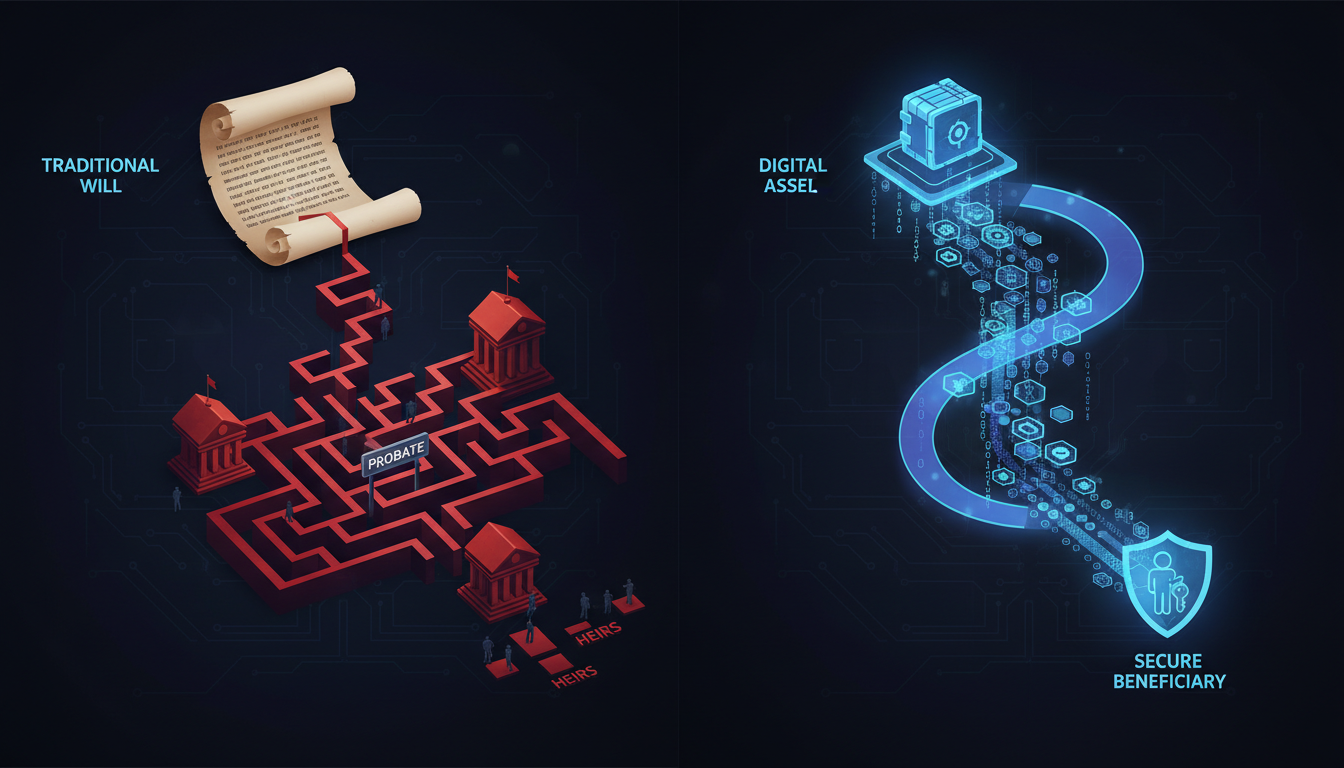
Testamentary Trusts vs. Living Trusts: The Structural Breakdown
The central planning choice is whether the trust is created and funded during life or established under a will after death. Neither structure is automatically right for every family. Testamentary trusts can make sense for guardianship arrangements involving minor children, simple estates, or jurisdictions where probate is relatively inexpensive and manageable.
| Architectural Feature | Testamentary Trust (Will-Based) | Living Trust (Inter Vivos) |
|---|---|---|
| Creation Event | Generally comes into existence under the will after death and through the applicable probate process. | Created during the grantor’s lifetime and potentially funded before death. |
| Tax Jurisdiction | May have continuing tax connections based on governing law, domicile, administration, trustees, assets, and other state-specific facts. | May reduce probate-related complications, but tax treatment still depends on situs, administration, trustee connections, and applicable law. |
| Court Involvement | The will and trust instructions are ordinarily implemented through probate, with possible court supervision. | Properly funded assets generally pass outside probate, although some assets and disputes may still require court involvement. |
| Digital Asset Friction | Executors and trustees may face platform restrictions, authentication barriers, and delayed access. | Can simplify authority and continuity when accounts, instructions, and access procedures are coordinated in advance. |
The Silent Threat: Digital Wealth and the Pour-Over Distinction
To see the operational consequences, return to Sarah’s situation. Marcus owned private crypto wallets, recurring SaaS revenue accounts, and interests in fractional real-estate platforms. His documents identified some assets, but he had not consistently transferred ownership, documented access, or named the appropriate successor for each account.
A pour-over will is not itself a flaw. It is a common companion to a revocable living trust: it directs assets left outside the trust into it at death. The catch is that those assets usually must pass through probate before they can be transferred. In other words, the problem is the unfunded living trust and the resulting probate process—not the pour-over provision, which serves as a safety net.
Digital property adds another layer. A will or trust may establish legal authority, but an executor or trustee may still need to satisfy an exchange’s terms of service, digital-access laws, authentication requirements, and security controls. Advance instructions and a secure inventory can reduce delay without attempting to bypass those safeguards.
Making the Plan Operable Across State Lines
Good estate planning combines legal documents with accurate ownership records and a practical continuity process. A digital legacy platform such as Cipherwill can help organize account information, successor instructions, and encrypted access details alongside—not in place of—proper trust drafting, titling, and professional advice.
The goal is not to promise that a platform eliminates tax or probate. It is to make the plan usable: the right people can locate the right information, follow the required legal process, and preserve access to digital property when a grantor or account holder is unavailable.
Avoid the Minefield: Common Mistakes in Cross-Border Wealth Transfer
Even sophisticated investors can overlook practical details that matter after a move or a change in family circumstances.
- The Stationary Will Mistake: Moving from a state such as California or New York without reviewing an older will’s fiduciary appointments, governing-law language, and dispositive provisions.
- The Custodial Abandonment: Opening new brokerage accounts in a low-tax state but failing to register appropriate assets under the living trust or confirm the intended owner.
- The Posthumous 401(k) Disruption: Using a generic trust designation without coordinating beneficiary forms and distribution rules, potentially creating avoidable income-tax consequences such as those discussed in inherited 401(k) tax traps.
- The Two-State Nexus: Naming a trustee or co-trustee whose residence, administration activities, or relationship to the trust may create additional state filing or tax questions.
- Digital Invisibility: Assuming that mentioning a cryptocurrency exchange account in a will automatically gives a fiduciary access. Legal authority and platform security procedures still have to be coordinated.
A Practical Implementation Checklist
Review the plan while you are able to make decisions, especially after a move, marriage, divorce, birth, major liquidity event, or change in fiduciaries.
- Review Domicile and Governing Law: Confirm your current domicile, the likely probate forum, and whether the documents’ choice-of-law and fiduciary provisions still fit.
- Establish or Update the Trust: If an inter vivos trust is appropriate, execute it with qualified counsel and make its administration provisions consistent with your circumstances.
- Fund the Trust Correctly: Retitle eligible real estate, investment accounts, and bank accounts, while coordinating assets—such as retirement plans—that generally transfer by beneficiary designation.
- Build a Digital Inventory: Record financial accounts, software subscriptions, cloud storage, business interests, and digital-asset instructions. Use a secure system such as Cipherwill to organize encrypted successor access, and do not store sensitive credentials in an ordinary will.
- Check Fiduciaries and Beneficiary Forms: Review successor-trustee locations, insurance and retirement designations, and transfer-on-death instructions. Ask counsel about potential state filing and tax consequences before finalizing them.
Frequently Asked Questions (FAQ)
Question: What makes a trust testamentary?
Answer: Its terms are contained in a will and become operative only after the testator’s death. The probate process generally identifies the valid will, appoints the personal representative, and implements the trust instructions.
Question: Does signing a will in one state determine where the estate is probated?
Answer: Usually no. The decedent’s domicile at death is a major factor in selecting the primary probate forum. Real property and other assets may also require proceedings or filings elsewhere, and a disputed domicile can complicate the analysis.
Question: What did Chase Manhattan Bank v. Gavin establish?
Answer: Under the facts of that case, the Connecticut Supreme Court upheld taxation of undistributed income from a Connecticut resident testamentary trust despite out-of-state trustee and beneficiary connections. It demonstrates why trust residency and taxation must be analyzed under the specific state statute and facts.
Question: Is a living trust automatically free from state income tax?
Answer: No. A living trust may avoid probate for properly transferred assets, but income-tax treatment can still depend on grantor status, trustee activities, administration, governing law, asset location, and beneficiary circumstances.
Question: What is the purpose of a pour-over will?
Answer: It is a backup document that directs assets omitted from a living trust into that trust at death. Those omitted assets may still require probate first, so the provision should support—not replace—careful lifetime funding.
Question: What should I do after moving to another state?
Answer: Ask an estate-planning attorney licensed in the new state to review domicile evidence, wills, trusts, powers of attorney, property titles, fiduciaries, and beneficiary forms. Also update the inventory and access instructions for digital assets.
Question: Can a testamentary trust ever be a sensible choice?
Answer: Yes. It may be appropriate for a straightforward estate, a trust designed to protect a minor child, or a jurisdiction with an efficient probate system. The decision should reflect the family’s goals, assets, administration needs, and tax advice.
Question: How can families prepare digital assets for succession?
Answer: Identify the assets, confirm the governing account terms, document lawful instructions, and arrange secure access for the appropriate fiduciary. A digital legacy platform can help maintain the inventory and deliver instructions, but it does not replace legal authority or platform-required verification.
By Cipherwill Editorial Team, Reviewed by Cipherwill Review Board, Trust & Security Review Team
Editorial contributor: Samarjeet Vohra
Review contributor: Reyansh Mehta