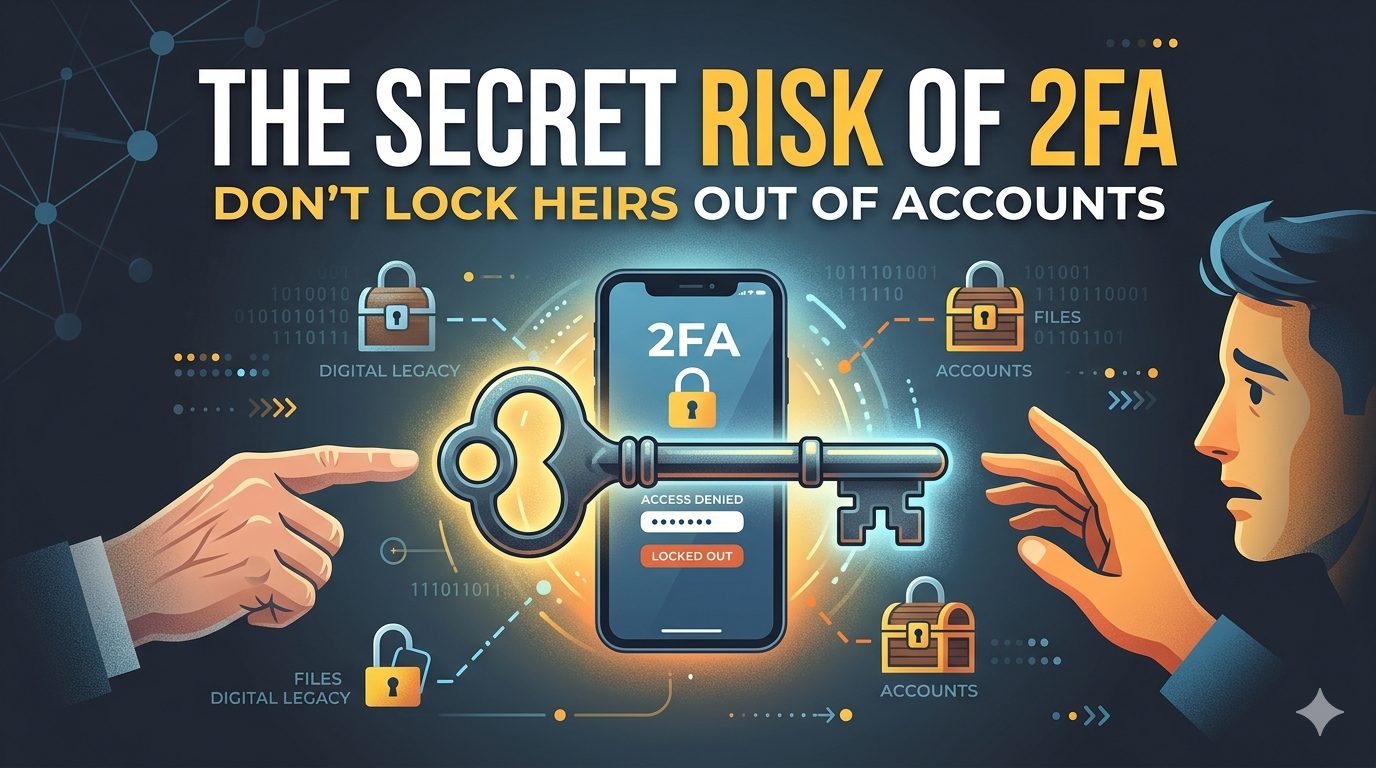
Recent data suggests that nearly 90% of internet users now rely on two-factor authentication (2FA) to secure their most sensitive data, yet few realize that the same shield protecting them from hackers can permanently lock out their own families after they pass away. For many heirs, the grieving process is compounded by the frustration of staring at a login screen requesting a code from a deactivated phone number or a hidden security key. This guide addresses the technical and legal complexities of digital estate planning 2FA risks, providing a roadmap to ensure your legacy remains accessible to those who need it most.
By Cipherwill Editorial Team, Digital Legacy Research Desk Reviewed by Cipherwill Review Board, Trust & Security Review Team Last reviewed: March 2026 Editorial contributor: Iraan Qureshi Review contributor: Ishani Debroy
The Irony of Security: When 2FA Becomes a Digital Wall
Security protocols are designed to keep unauthorized people out, and in the eyes of an automated security system, an executor or a grieving spouse is often classified as an "unauthorized person." This creates what experts call a digital wall. While 2FA is essential for modern life, it generally does not have a "death clause" built into the protocol.
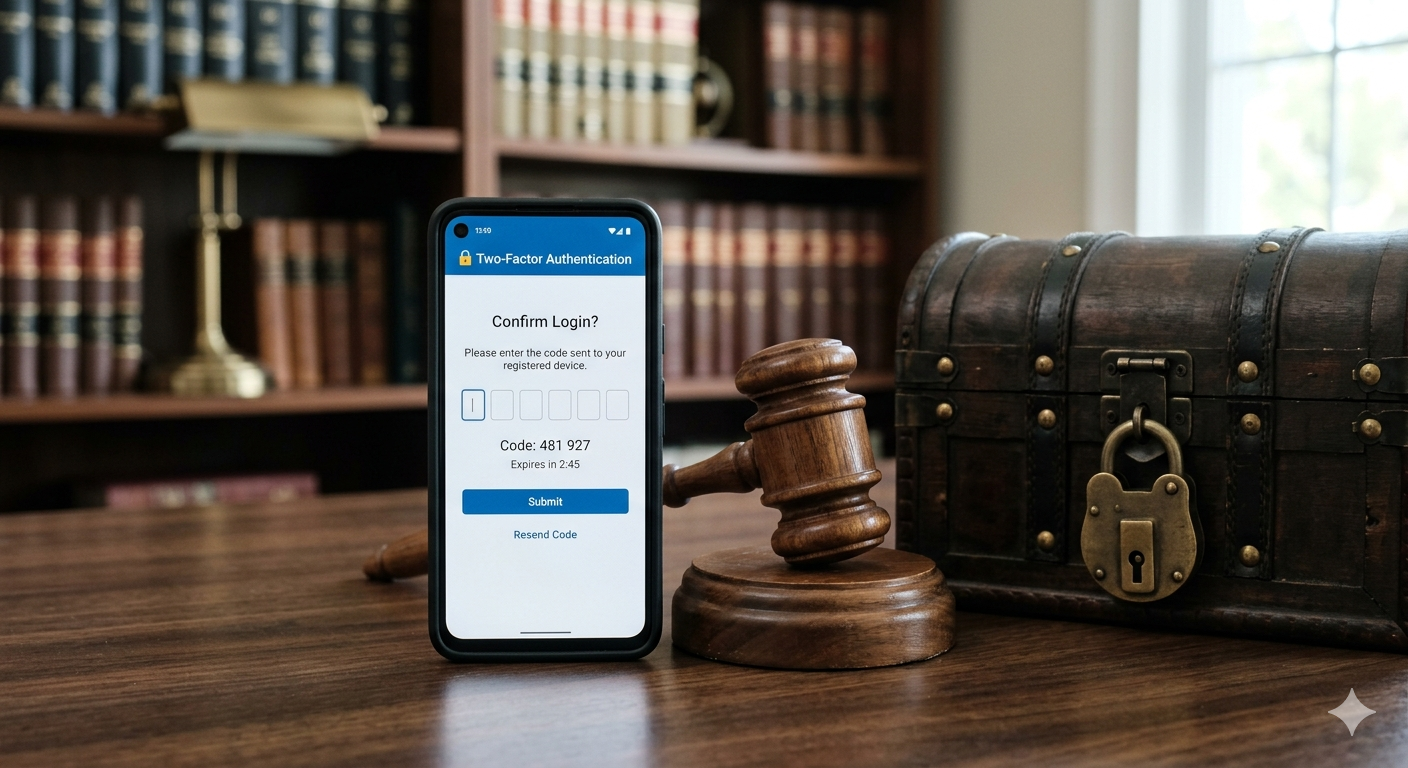
Why SMS verification may fail after a death
The most common form of 2FA is the SMS text code. While convenient, it is often the most fragile link in inheritance planning. When a person passes away, their mobile phone contract is frequently one of the first things canceled to reduce monthly expenses.
Once that SIM card is deactivated, a "single point of failure" may be triggered. Many platforms do not allow a user to change a recovery phone number without first receiving a code on the old number. If the family has already closed the account, they may lose access to bank accounts, photo storage, and email forever. This highlights the cost of ignoring digital asset planning.
The 'Brick' Effect: Physical security keys and no backup
For the security-conscious, physical hardware keys like YubiKeys are the gold standard. However, these devices can become "bricks" in the hands of heirs. If a security key is hidden in a desk drawer without instructions or a backup "seed phrase," it becomes a physical barrier that no lawyer can easily bypass.
Unlike a physical safe that a locksmith can eventually drill open, encrypted digital accounts protected by hardware keys are often mathematically impossible to breach. According to Purdue Global Law School, failing to provide these "keys to the kingdom" can lead to a total loss of digital property.
High-Stakes Access: Beyond Just Social Media
Digital inheritance is no longer just about who gets a social media profile. It now involves physical safety, intellectual property, and significant financial assets.
Smart homes and the risk of physical lockout
Imagine a scenario where a family is living in a home where the thermostats, front door locks, and security cameras are all tied to a deceased parent's 2FA-protected Apple or Google account. If the account locks due to suspicious login attempts after death, the heirs could be physically locked out of their own home's utility management.
Managing smart home access after death requires proactive "admin" sharing. If the primary account holder is the only one with "Owner" status, the smart home system may need a factory reset to be recovered, potentially wiping out thousands of dollars in custom configurations and security history.
AI training data and subscription-based intellectual property
A new frontier in estate planning is subscription-based AI data inheritance. Many creators today use AI tools that learn from their specific style, voice, and data. These "models" are stored in the cloud. If a creator passes away, the question of who owns the rights to the AI that can generate work in their style becomes a legal hurdle.
Without 2FA-resilient access, this valuable intellectual property might be deleted due to inactivity or non-payment of a subscription. Heirs need to know who can access your online life in an emergency to keep these digital assets alive.
Crypto wallets and the technical trustee requirement
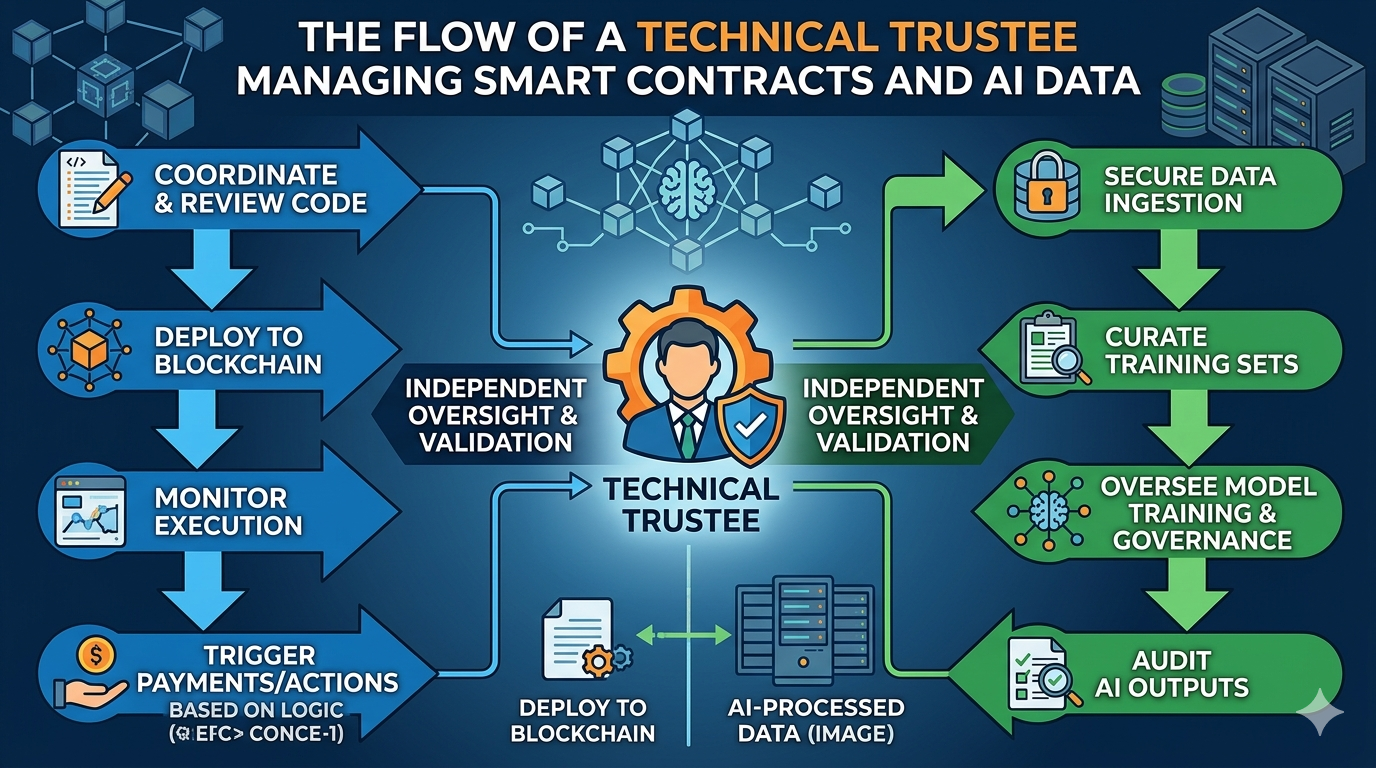
Cryptocurrency is perhaps the most 2FA-intensive asset. Whether it is a centralized exchange or a self-custody wallet, the security layers are unforgiving. This is where a "technical trustee" becomes vital.
A technical trustee is someone who understands how to manage 2FA, cold storage, and multi-sig wallets. They work alongside a traditional executor to ensure that the "digital gold" isn't lost to a forgotten password or a lost 2FA app. As noted by Florida State University’s Institute for Successful Longevity, taking steps now to ensure access is the only way to prevent total asset evaporation.
The Post-Mortem Identity Crisis
When we die, our digital identity lives on. This creates risks that go beyond simple account access.
Deepfake rights and personal brand protection
We are entering an era where personal brand deepfake rights post-mortem are a genuine legal concern. If a famous YouTuber or influencer dies, their likeness can be recreated with AI. If the family cannot access the accounts that control the official "verified" status of that person, bad actors could use deepfakes to scam followers or tarnish the person's reputation. 2FA is the first line of defense in protecting a digital legacy from being hijacked by "digital grave robbers."
Managing managed service providers (MSPs) for business owners
For small business owners, 2FA often protects the keys to the entire company. If a founder dies, the Managed Service Provider (MSP) might be legally barred from granting access to the family without specific court orders or 2FA bypass codes. This can freeze payroll, stop client communications, and kill a business in days. Succession planning must include a "Master Key" protocol that allows a designated successor to take over the 2FA-protected admin accounts.
Scenario: The "SIM Swap" Tragedy
Consider the case of "Arthur," a freelance designer with a significant amount of Bitcoin and a successful digital shop. Arthur used SMS-based 2FA for everything. When Arthur passed away in early 2026, his family immediately notified the mobile carrier to stop the bill.
The number was released back into the pool of available numbers. A month later, a hacker "parked" on that number, realized it was linked to Arthur’s old accounts, and triggered password resets. Because the hacker had the "new" phone number, they received the 2FA codes and drained Arthur's accounts before the family even finished probate. This is why using a dead mans switch to trigger a will or a digital vault is often safer than relying on a phone number.
How to Build a 2FA-Resilient Estate Plan
Building a plan that survives 2FA requires a shift in how we think about "keys." It is no longer about a physical key under a doormat; it is about digital continuity.
Appointing a technical trustee for complex assets
A traditional executor might be great at selling a house but lost when it comes to a password manager or an encrypted cloud drive. A technical trustee for digital assets is a specific role you can name in your will or digital trust. This person is tasked with:
- Maintaining the hardware keys.
- Ensuring 2FA apps are backed up.
- Managing the transition of "Owner" status on smart devices.
The 'Master Key' approach to digital succession
The most effective way to manage 2FA inheritance is to use a password manager with an "Emergency Access" or "Legacy" feature. Instead of sharing every individual 2FA code, you grant one person the ability to request access to your entire vault. If you don't deny the request within a certain timeframe (e.g., 7 days), they are let in. This bypasses the need for them to have your physical phone in their hand at the moment of your passing.
Comparison: 2FA Methods and Inheritance Difficulty
| 2FA Method | Risk Level | Inheritance Difficulty | Best Practice |
|---|---|---|---|
| SMS/Text | High | Hard (Phone plans expire) | Move to an App-based system immediately. |
| Authenticator App | Medium | Medium (Requires phone access) | Export "Cloud Backup" or share the "Secret Key." |
| Hardware Key | Low (Security) | Very Hard (Physical loss) | Keep a second "Backup Key" in a safe deposit box. |
| Backup Codes | Zero | Easy (If found) | Print them out and store them with your physical will. |
Practical Step-by-Step: Securing Your Digital Legacy Today
- Audit Your 2FA: List every account that requires a second step to log in. Don't forget bank accounts, which often have unique rules. Understand what happens to joint bank accounts when one owner dies versus individual accounts.
- Download Backup Codes: Almost every service (Google, Microsoft, Facebook) provides a list of 10-12 "One-Time Use" backup codes. Print these. They are the only way to bypass 2FA if the phone is gone.
- Set Up Legacy Contacts: Use the built-in tools on Apple (Digital Legacy) and Google (Inactive Account Manager). These allow you to designate who gets access after a period of inactivity.
- Use a Password Manager with Emergency Access: Ensure your "Technical Trustee" is added as an emergency contact in your vault.
- Document Your Smart Home: Create a "Home Manual" that includes the administrative login for the router, smart locks, and security hub.
Digital Asset Continuity Checklist
| Item | Action | Where/How |
|---|---|---|
| Legacy contacts | Replace ex-family beneficiary | Account security/recovery settings |
| Shared devices | Sign out unknown sessions | Device/session management page |
| Password vault | Revoke emergency access | Vault sharing and emergency settings |
| Smart home admin | Remove old home members | Home app member list and roles |
| Cloud folders | Remove old collaborators | Share settings in cloud drive |
Original Practical Insight: The "Burner Phone" Strategy
A non-obvious but highly effective strategy for high-value digital estates is the "Legacy Phone." Instead of using your personal daily-use phone for 2FA on your most critical financial or crypto accounts, use a dedicated, cheap smartphone that stays in a home safe.
Keep this phone on a low-cost, prepaid "pay-as-you-go" plan that only needs a small top-up once a year to keep the number active. Include the PIN for this phone in your physical will. This ensures that even if your personal phone is lost or your main contract is canceled, the "Master 2FA" device remains functional and accessible to your heirs. This strategy can mitigate the risk of account lockouts during the probate period.
Caveats and Limits
It is important to remember that digital estate planning is not a "set it and forget it" task.
- Platform Changes: Tech companies change their terms of service frequently. A "Legacy Contact" feature that works in March 2026 might be discontinued in the future.
- Legal Variability: Some states and countries have passed the Revised Uniform Fiduciary Access to Digital Assets Act (RUFADAA), but others have not. Your 2FA plan must comply with local privacy laws.
- Encryption Limits: No amount of legal paperwork can force a company like Apple to break the encryption on a locked iPhone. If you don't provide the passcode, the data is gone. As noted by Fox News, failing to prepare can leave families with no recourse.
FAQ
- What happens to my 2FA accounts when I die?
Most accounts remain locked. If 2FA is active and no one has your phone or backup codes, the account may become permanently inaccessible, even with a death certificate.
- Can my family access my Google account if I have 2FA enabled?
Only if you have set up the "Inactive Account Manager" or if they have your physical device and its passcode. Google rarely grants access to heirs through legal requests alone due to privacy policies.
- How do I transfer ownership of my smart home devices after death?
You should add your spouse or a trusted heir as a "Co-Owner" or "Admin" in the home app (like Google Home or Apple HomeKit) while you are alive. This prevents a total system lockout.
- What is a technical trustee and why do I need one for my digital estate?
A technical trustee is a person with the skills to handle digital security, such as 2FA, encryption keys, and crypto. You need one because traditional executors may not understand how to navigate these technical barriers.
- Can heirs inherit AI model training data and subscriptions?
This is a gray legal area. Generally, heirs can inherit the *rights* to the data, but they need the 2FA-protected login credentials to actually retrieve or manage the subscriptions.
- How do I ensure my family isn't locked out of my bank accounts by 2FA?
Ensure your bank has a "Pay on Death" (POD) beneficiary on file. Additionally, provide your executor with the backup codes for your banking 2FA or use a shared password manager.
- What are the risks of using physical security keys for estate planning?
The main risk is physical loss. If the key is the only way into an account and it is lost or destroyed, the account is likely gone forever. Always have a secondary key or backup codes stored safely.
- How can I protect my deepfake and digital likeness rights post-mortem?
Include specific instructions in your will regarding your "Right of Publicity." Ensure your heirs have access to your official social media accounts to monitor and report unauthorized uses of your likeness.
Conclusion
The secret risk of 2FA is that it works too well. By securing our lives today, we may be inadvertently locking our loved ones out of our legacies tomorrow. The transition from a living digital identity to a managed digital estate is fraught with technical "traps" like expiring SIM cards and unrecoverable hardware keys. As discussed in Cardozo Law Review, the legal framework for fiduciary access is still catching up to these technical realities.
To protect your family, you must act now. Move away from SMS-based 2FA for critical accounts, print your backup codes, and appoint a technical trustee who understands the digital landscape. Your digital life is an asset; don't let a six-digit code be the reason it disappears forever. The risk of permanent data loss is high, but the opportunity to secure a seamless transition is available through proactive planning.
Freshness note: This guide was last updated in March 2026 based on current platform policies and legal standards.
About the Author and Reviewer
By Cipherwill Editorial Team, Digital Legacy Research Desk Reviewed by Cipherwill Review Board, Trust & Security Review Team Last reviewed: March 2026 Editorial contributor: Iraan Qureshi Review contributor: Ishani Debroy
Legal and Accuracy Caution
Legal and Accuracy Caution: The laws governing digital assets, AI likeness, and posthumous privacy are evolving rapidly and vary significantly by jurisdiction. Platform terms of service and corporate policies are subject to change without notice. This guide provides general information and should not be construed as specific legal or financial advice. Always consult with a qualified professional in your specific region regarding digital estate planning.