Building a crypto estate plan requires accepting one uncomfortable truth: handing your seed phrase to a traditional estate lawyer breaks the fundamental, trustless architecture of decentralized finance. A legal document cannot compel the Bitcoin network to release funds, and storing private keys in a law firm's filing cabinet invites catastrophic theft or permanent loss. If you pass away without a secure, verifiable transfer method, your digital wealth is effectively burned forever. To execute a digital asset transfer safely, you need a programmable dead man’s switch—an automated system that transfers custody of your decentralized wealth to beneficiaries only after prolonged inactivity, ensuring zero exposure while you are alive.
The "Treasure Map" Trap: Marcus's Dilemma
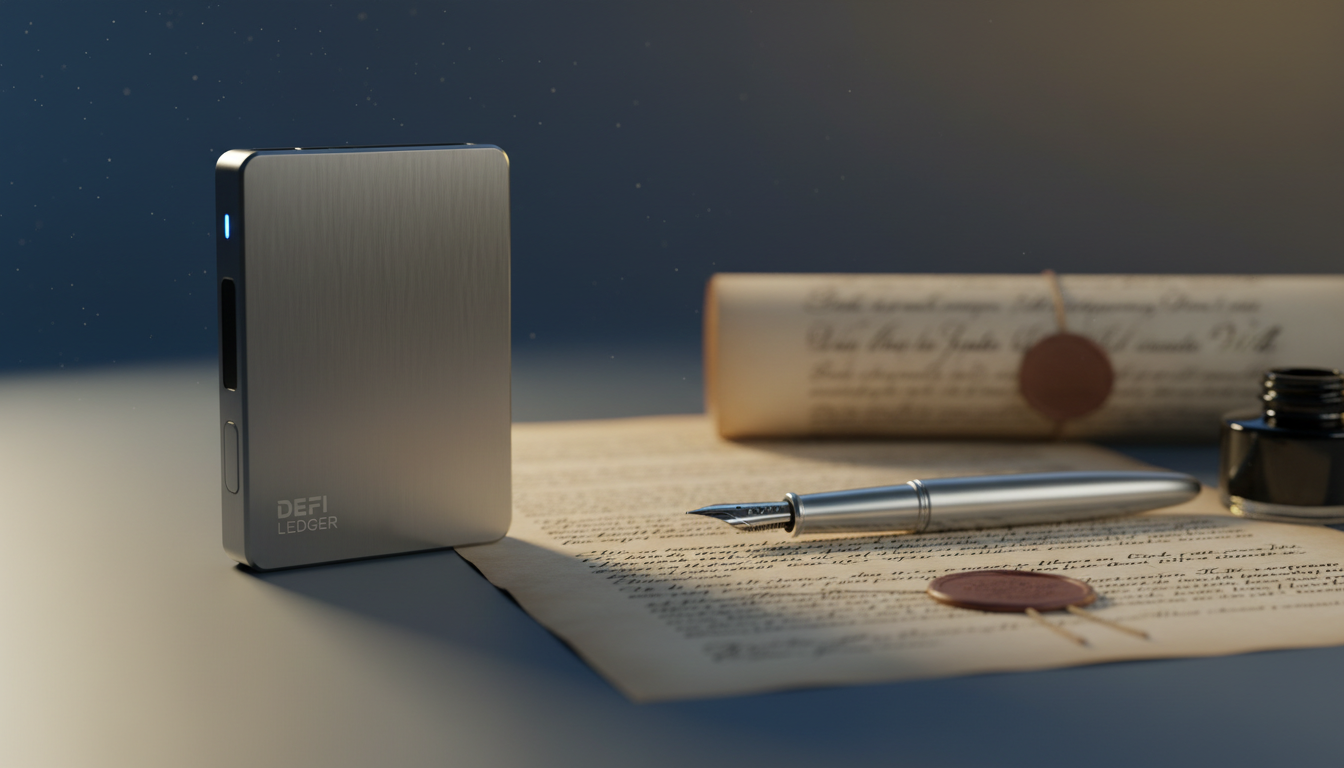
Consider Marcus, an early Ethereum adopter managing a substantial portfolio through self-custodial hardware wallets and various Decentralized Finance (DeFi) staking contracts. Sitting across from his traditional estate attorney at a heavy mahogany desk, Marcus tried to explain how his digital holdings worked. The lawyer’s solution was standard procedure: write down the 24-word recovery phrase on a piece of paper, seal it in an envelope, and attach it to the will.
Marcus immediately identified a fatal flaw. Wills undergo a process called probate, which makes the contents of the estate publicly accessible. If his recovery phrase was logged, or even if an unscrupulous clerk intercepted the envelope prior to execution, his entire net worth could be drained in seconds. Furthermore, his lawyer lacked any understanding of network gas fees or RPC endpoints. If Marcus died, handing his grieving wife a Ledger device and a cryptic list of words was less of an inheritance and more of a technical nightmare wrapped in emotional distress.
The Illusion of Legal Authority: RUFADAA vs. Cryptography
Many people falsely believe that writing digital assets into a will guarantees their transfer. This fundamental misconception stems from a failure to understand the difference between legal permission and cryptographic capability.
Why Legislation Falls Short in Web3
To bridge the gap between traditional law and digital reality, the Uniform Law Commission drafted the Revised Uniform Fiduciary Access to Digital Assets Act (RUFADAA). This framework successfully grants an executor the legal authority to manage email accounts, social media, and even centralized crypto exchange accounts (like Coinbase or Kraken) after your death. Because centralized platforms are businesses, they comply with court orders and will eventually liquidate or transfer an account to an heir once a death certificate is verified.
However, self-custodied cryptocurrencies operate under a different reality. If your Bitcoin is held on a secure hardware wallet, a judge’s signature is utterly powerless. There is no customer service desk to call, no compliance officer to override the security protocol, and no master key. As noted in the Fidelity Investments wealth planning guidelines, explicitly including the physical location and private key within your primary legal estate document exposes your heirs to profound, unnecessary risks.
"Cryptography respects mathematics, not judicial decrees. A court order grant of fiduciary access is functionally useless without the physical knowledge to execute the transaction on-chain."
Common Mistakes in Crypto Inheritance
When attempting to build a digital asset transfer strategy without professional systems, investors routinely stumble into the same operational hazards. Attempting to balance accessibility with security often results in strategies that accomplish neither.
- The Bank Safety Deposit Box Paradox: Storing a seed phrase on metal in a bank vault seems secure, but bank policies frequently lock out non-account holders immediately upon learning of a death. The probate process required to unlock the box can take months, during which crypto markets may crash.
- Physical Seed Splitting: Physically cutting a 24-word recovery phrase in half and giving 12 words to a lawyer and 12 words to a sibling is fundamentally different from true cryptographic Shamir's Secret Sharing (which is explicitly designed to remain mathematically secure). Physical seed splitting mathematically degrades the security and entropy of the wallet and dramatically increases the likelihood of human error (e.g., losing one half destroys the whole).
- The "My Spouse Will Figure It Out" Assumption: Leaving fragmented instructions scattered across password managers and desk drawers places an immense operational burden on grieving loved ones, exposing them to phishing scams and irreversible transaction errors.
- Single Points of Custodial Failure: Handing full, unencrypted access to an allegedly trusted third party during your lifetime. Friendships degrade, lawyers retire, and businesses fold.
What Happens to Bitcoin When You Die? The Infrastructure Reality
The ultimate fate of your crypto assets depends almost entirely on where they occupy space at the exact moment of your passing. The operational realities branch into two distinctly rigid paths.
Path A: Centralized Exchanges (CEX)
- Assets are subject to lengthy corporate bureaucratic freezes.
- Beneficiaries must provide extensive legal documentation, including death certificates and Letters Testamentary.
- Some platforms may force the immediate liquidation of altcoins into fiat, triggering massive, poorly timed taxable events for the estate.
Path B: Self-Custody and DeFi Protocols
- Assets simply go dormant forever. The blockchain registers no change in status.
- Smart contracts containing staked assets or collateralized debt positions will continue operating until they are either liquidated by market volatility or reach maturity.
- Without intervention, thousands of Bitcoin become permanent, undiscoverable "ghosts" on the network.
The Solution: Programmable Crypto Dead Man's Switches
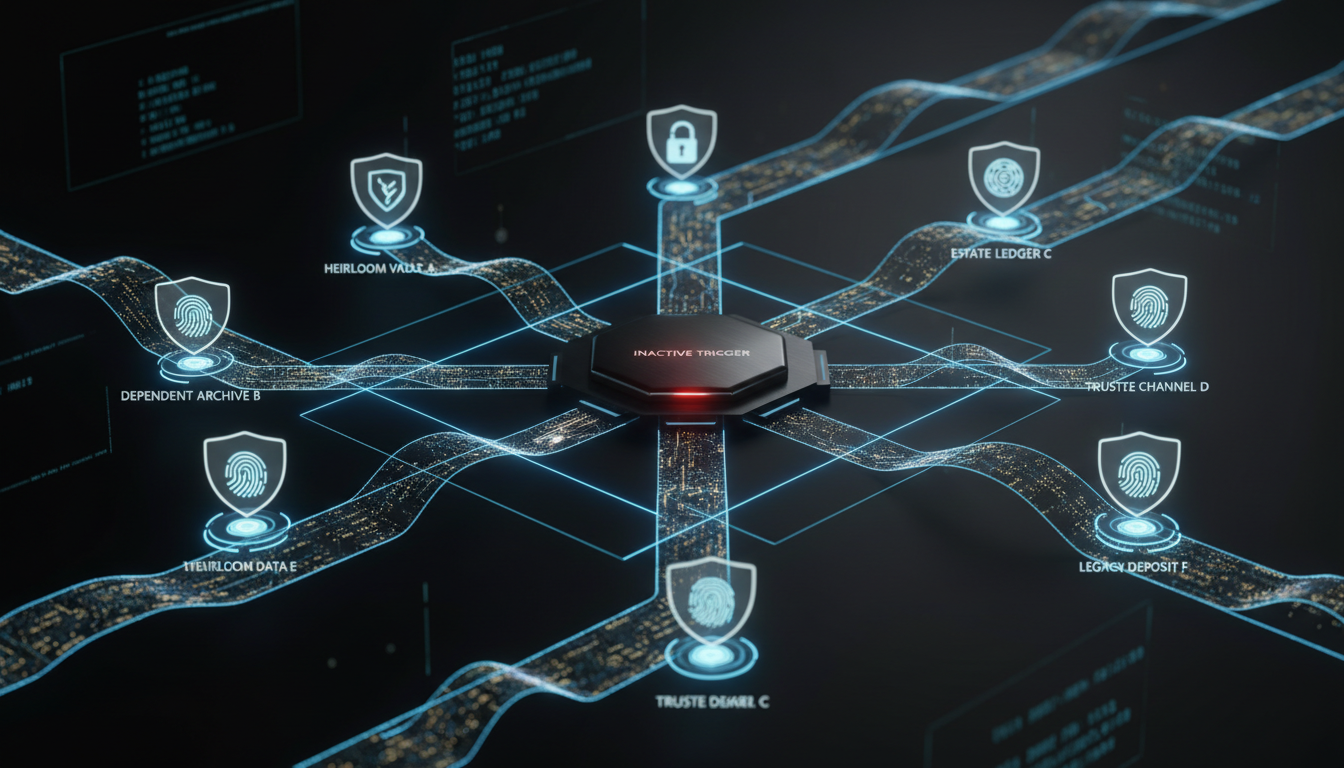
To remove human error and legal friction from the equation, sophisticated operators utilize a crypto dead man switch. This is an automated software architecture that monitors your vital status passively—usually through recurring proof-of-life check-ins, email clicks, or application engagements.
If you fail to trigger the required check-ins over a predefined period (such as 30, 60, or 90 days), the protocol automatically decrypts and dispatches your securely stored private instructions to designated beneficiaries. Instead of exposing your keys to an intermediary today, the keys are mathematically encrypted into a time capsule that cannot be opened until the execution conditions are met.
Why the Trustless Execution Model Wins
This operational capability acts as a perfect bridge. By utilizing digital inheritance platforms like Cipherwill, you keep absolute, uncompromised control of your assets while you are alive. Your legal will simply references the existence of the switch—ensuring no critical cryptographic data enters the public domain, effectively shielding your estate from bad actors.

Meaningful Comparison: Traditional Will vs. Cryptographic Dead Man's Switch
While a traditional will is essential for physical assets like real estate or equity, it fails technically at delivering decentralized data. A cryptographic switch is specifically engineered to handle sovereign wealth transfers without requiring permission from a state-sanctioned intermediary.
| Infrastructure Feature | Traditional Estate Lawyer & Will | Cryptographic Dead Man's Switch |
|---|---|---|
| Execution Speed | Months to years, hindered by probate courts. | Immediate and programmable upon trigger condition. |
| Privacy of Holdings | Often becomes a public court record. | Absolute privacy via end-to-end encryption mechanics. |
| Risk of Intermediary Theft | High. Firms and executors can duplicate the key paper. | Zero. Keys remain obscured via cryptography. |
Breaking Down the Implementation Protocol
Securing your legacy requires deliberate configuration. Follow this operational framework to build an estate plan that successfully survives you.
- Take Comprehensive Inventory: Document the location of physical hardware wallets, centralized exchange applications, and DeFi protocols where liquidity is locked.
- Write an Operation Walkthrough: Do not just pass on a key. Write a localized step-by-step operational guide. Explain how to connect the ledger, what a bridge is, and how to verify transaction gas safely.
- Configure a Time-Locked Vault: Place your seed phrase and operational instructions into a secure dead man's switch. Encrypt the data so the host server physically cannot inspect it.
- Set the Inactivity Parameters: Establish tiered trigger timelines. An email ping missing for 30 days might issue a warning text message, while 60 days of total radio silence triggers full protocol release to heirs.
- Bridge with Traditional Legal Counsel: Instruct your lawyer to note in your regular will that your "digital legacy instructions are housed within an automated vault system and will be delivered to the executor independently." Keep the actual keys out of the legal paperwork.
Quiet Relief: Scenario Execution
Marcus spent a Saturday afternoon completing his setup. He compiled a concise, empathetic document explaining to his wife exactly how to access the decentralized applications without fear of making a terminal mistake. He loaded the encrypted packet into his customized digital switch protocol, locking the conditions behind a rigorous 45-day inactivity barrier.
To confirm system reliability, Marcus executed a mock trigger a few weeks later. The platform successfully transmitted the preliminary alert to his secondary email, validating that the sequence functioned precisely as designed. For the first time in years of investing, Marcus closed his laptop without the lingering anxiety that his family could lose everything to a simple hardware failure or a sudden tragedy. The process was entirely out of human hands—and safer for it.
Digital Wealth Inheritance Security Checklist
To ensure you have not overlooked specific asset classes, use this final audit structure before locking your automated switch:
- Confirm all PIN codes to local hardware devices are included.
- Ensure 2FA app recovery codes (like Google Authenticator) are accessible to heirs to pass exchange roadblocks.
- Provide clear instructions on avoiding predatory smart contracts during recovery.
- Consolidate multiple small wallets to reduce the technical complexity for your executor.
- Review your dead man's switch trigger mechanism semi-annually to ensure the contact information of your beneficiaries is up to date.
Frequently Asked Questions
Question: What happens to a hardware wallet if the owner dies unexpectedly?
Answer: The funds remain permanently locked on the blockchain. Without the PIN or the 24-word recovery phrase, neither the hardware manufacturer nor a government agency can force access. If no dead man's switch or secure handoff exists, the crypto is essentially burned and lost forever.
Question: Can a court order a centralized exchange to release my crypto?
Answer: Yes. Under laws like the Revised Uniform Fiduciary Access to Digital Assets Act (RUFADAA), an executor with proper probate documents can compel central entities like Coinbase to release funds. However, the process is notoriously slow and may enforce unexpected liquidations.
Question: Is it safe to leave my crypto seed phrase in my official legal will?
Answer: Absolutely not. A legal will typically becomes public record during probate. Anyone inspecting the public records could view the seed phrase, load it into a physical device, and drain your funds long before your executor gains formal jurisdiction.
Question: How exactly does a crypto dead man’s switch know when to execute?
Answer: It typically relies on verifiable inactivity timers. By monitoring your failure to respond to periodic encrypted pings via email, SMS, or application logins over a set threshold (e.g., 60 days), the software rationally concludes you are incapacitated and triggers the release protocol.
Question: What happens if my dead man's switch provider goes out of business?
Answer: Premium inheritance platforms employ specialized backup parameters, open-source fallback triggers, or cascade-encryption smart contracts that ensure data can be unlocked locally if servers fail. Always clarify your provider’s long-term operational guarantees before entrusting them with estate logic.
Question: Can I test a dead man's switch without actually exposing my keys?
Answer: Yes. Reputable systems allow you to undergo simulated executions. You can establish dummy vaults with trivial instructions, allow the inactivity timer to lapse, and watch the system deliver the test payload securely to your secondary addresses.
Question: Does a dead man's switch replace my traditional estate lawyer?
Answer: No. The switch provides the technical mechanism to transfer decentralized wealth, while your lawyer ensures your traditional assets (houses, equities) are structured correctly. A comprehensive plan utilizes both; the lawyer handles legalities, and the switch handles the keys.
By Cipherwill Editorial Team, Reviewed by Cipherwill Review Board, Trust & Security Review Team
Editorial contributor: Samarjeet Vohra
Review contributor: Tavish Bhonsle