
The Harsh Reality of Your Digital Afterlife
When you die, your online accounts do not automatically transfer to your family or executors. Instead, tech giants default to locking down your digital footprint to protect user privacy, actively blocking your family from accessing your emails, financial dashboards, cryptocurrency, and personal photos. The exact legal framework governing this is the Revised Uniform Fiduciary Access to Digital Assets Act (RUFADAA), which dictates that without explicit advance consent, all asset contents are sealed.
The assumption that a traditional paper Will and a death certificate are the golden keys to resolving your estate is a dangerous modern myth. In reality, surviving family members are thrust into a complex administrative maze characterized by relentless corporate legal teams, conflicting state laws, and unforgiving cybersecurity protocols. The time to plan your digital inheritance is not in a lawyer's office during probate; it is right now, while you control the encryption keys and legal directives.

The Incident: How Sarah Was Locked Out of Her Life
To understand the operational severity of digital lockouts, consider Sarah. Three weeks after her husband Mark passed away suddenly, she sat at her dining table attempting a mundane task: paying the mortgage. Because Mark managed the household finances, the automated mortgage payments were deducted from an external account she could not access.
When Sarah contacted the bank with Mark’s legally binding Will and official death certificate in hand, a representative informed her that transferring control required an email verification code sent to Mark’s primary email address. This should have been a minor speed bump for a legally recognized executor.
Instead, it became a four-month legal nightmare.
When Sarah submitted court-approved Letters Testamentary to Mark’s email provider, the tech giant's legal department rejected the request. They cited federal privacy statutes, asserting that while Sarah was the executor of the physical estate, Mark never provided "explicit digital consent" for her to read his electronic communications. The bank account remained inaccessible, late fees accumulated, and Sarah’s emotional grief was compounded by financial paralysis. She was effectively walled off by a corporate interpretation of privacy laws.
The Lobbying War: UFADA vs. RUFADAA
Why are technology companies legally allowed to deny access to court-appointed fiduciaries? The answer lies in a fierce legislative lobbying battle surrounding digital assets.
In 2014, recognizing the growing problem of digital lockouts, the Uniform Law Commission drafted the Uniform Fiduciary Access to Digital Assets Act (UFADA). This original bill gave executors the exact same operational rights over digital property that they held over physical property. Under UFADA, if your executor had the legal right to walk into your physical house and read the letters on your kitchen counter, they possessed an equal right to log into your email provider and read your electronic inbox.
The Big Tech Intervention
The tech industry strongly opposed UFADA. Lobbying groups representing social media networks and massive email providers argued that granting automatic fiduciary access violated user privacy, contradicting their specific Terms of Service (TOS). Furthermore, they correctly argued it conflicted with elements of the Stored Communications Act, which restricts tech companies from disclosing the contents of communications without explicit user consent.
Due to massive lobbying pressure, UFADA was killed across nearly every state legislature. It was swiftly replaced by a compromise bill: RUFADAA, or the Revised Uniform Fiduciary Access to Digital Assets Act.
RUFADAA fundamentally shifted the burden of proof. It declared that privacy is the default state after death. Unless a user provides affirmative, explicit consent, fiduciaries are legally barred from seeing the substance of a digital account.
"Under RUFADAA, an executor’s power no longer guarantees access to content. Unless the deceased specifically opted in, tech platforms are under no legal obligation to hand over emails, documents, or personal messages to grieving families, and they consistently choose not to."
The Three Tiers of Digital Privacy: A Fiduciary’s Options
RUFADAA establishes a strict hierarchy of authority that technology custodians use to determine who gets into your accounts. It is crucial to understand that your generic Last Will and Testament sits at the bottom of this hierarchy.
| Hierarchy of Legal Authority | Impact on Your Heirs |
|---|---|
| 1. Online Tool Directives Platform-specific legacy settings (e.g., Apple Legacy Contact, Google Inactive Account Manager). | These settings hold the absolute highest legal authority under RUFADAA. They will override anything written in your Will. |
| 2. Specific Will Provisions A Will containing specific clauses granting RUFADAA powers to access digital assets. | If no online tools are used, a Will explicitly mentioning RUFADAA grants access. Generic probate documents do not qualify. |
| 3. Platform Terms of Service The standard boilerplate contract you agree to when signing up. | If neither of the above exists, the Terms of Service dictate terms. Most platforms state accounts are non-transferable and terminate at death. |
Furthermore, RUFADAA makes a sharp distinction between a "catalog of electronic communications" and the "content of electronic communications." Without express consent, tech companies will only give your heirs the catalog—they will hand over a spreadsheet showing who emailed you and when, but they will explicitly redact the subject lines and the bodies of the emails, leaving your family trying to solve a puzzle with half the pieces missing.
The Dangerous Legal Loophole: Committing Fraud by Accident
Many families, frustrated by these bureaucratic walls, resort to what feels like a logical workaround: using the deceased’s known passwords to log in quietly. This is an understandable instinct but a potentially disastrous operational error.
Accessing someone else's account using their credentials post-mortem technically violates platform Terms of Service. Under aggressive interpretations of the Computer Fraud and Abuse Act (CFAA), logging into a system where authorization has been effectively terminated by death constitutes "unauthorized access," which is formally classified as a cybercrime.
While federal prosecution of a grieving widow is highly unlikely, tech companies do not need federal prosecutors to ruin your estate closing. Modern behavioral security algorithms log device IP addresses, typical login hours, and typing cadences. When an unauthorized relative attempts to log into a broker account from an unrecognized network three weeks after public obituary records are published, fraud detection systems trigger instantly.
The account is immediately frozen. The login credentials are burned. Any subsequent attempt to reclaim the funds will now require the family to explain to an anti-fraud department why they attempted unregulated access. This can extend estate hold times from months into years.
The Two-Factor Authentication Black Hole
Let us observe another common modern failure point. David inherited a sizable cryptocurrency portfolio from his father. The password to the overarching digital exchange account was safely written down and secured in a physical safe.
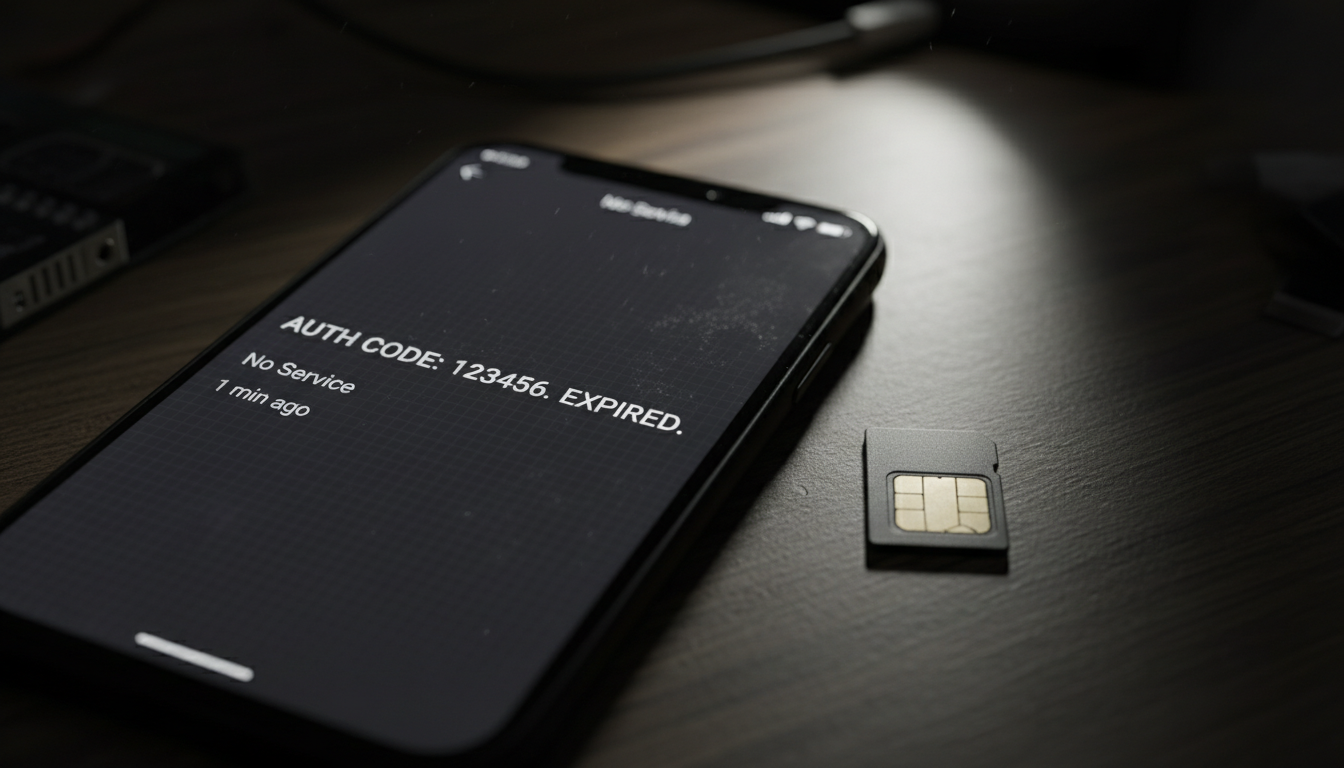
When David attempted to log into the exchange to stabilize the volatile assets, the system correctly accepted the password. It then prompted David for a mandatory 6-digit Two-Factor Authentication (2FA) SMS code sent to his father’s registered cellular device. The problem? As an act of administrative housecleaning, the family had dutifully called the telecom provider two weeks prior to cancel the deceased's expensive mobile phone plan.
The phone number was disconnected. The SMS bridge was destroyed. The telecom provider had already recycled the number to an unknown stranger in another state.
Because David could not bypass the hardware-bound 2FA prompt, he was forced into a grueling manual identity verification process with an offshore cryptocurrency exchange that lacked customer service hotlines, dragging out over several months while the market value of the inherited assets experienced severe fluctuations.
To prevent this compounding disaster, you must proactively manage family plan access and maintain secondary multifactor recovery codes separate from a primary mobile device.
Common Digital Estate Planning Mistakes
The intersection of grief and technical complexity often leads to critical unforced errors. Most families fail to recognize that traditional legal preparation is fundamentally incompatible with cloud infrastructure. Avoid these specific mistakes:
- Leaving Master Passwords in Open Paper Files: Passwords written on legal pads grow obsolete rapidly. Furthermore, these lists frequently exclude critical contextual information like secondary 2FA authenticator locations.
- Assuming Biometrics Surpass Legal Authority: Holding a deceased person’s thumb to a disabled primary device will not circumvent cloud-level server wipes or server-side expiration tokens if the core device was recently rebooted.
- Closing Financial Infrastructure Prematurely: Canceling credit cards that fund critical cloud storage subscriptions is a massive operational blunder. Without ongoing payments, the big tech inheritance trap ensures irreplaceable family media libraries face automatic algorithmic deletion.
- Ignoring the "Custodial Asset" Distinctions: Understanding that downloading movies or software carries mere licensing rights, not ownership rights, saves grieving heirs from wasting hours trying to petition companies to transfer un-transferable digital property.
A Proactive Blueprint to Secure Legitimate Access
To successfully bridge the divide between restrictive corporate privacy policies and your family's eventual operational needs, you must abandon defensive, reactive strategies. Instead, construct a proactive transition framework that honors legal reality.
Executing a digital estate plan requires moving your credential dependencies outside of standard unencrypted silos. Rather than hoping your executor can out-maneuver tech conglomerates post-mortem, ensure your data is accessible by design. Implement the following actionable path:
- Audit the Liability Footprint: Maintain a living checklist of high-priority accounts containing liquid assets, critical business information, auto-renewing liabilities, and irreplicable family memories.
- Update Legal Frameworks: Work with an estate planner registered with the ACTEC Foundation to ensure your Last Will securely invokes RUFADAA powers specifically demanding full "access to the content of electronic communications."
- Decouple Essential 2FA Devices: Extract physical security dependency away from single-point-of-failure devices like SIM cards. Shift core financial 2FA toward hardware keys or shared family authenticators.
- Establish a Secure Execution Vault: Remove tech lobbying roadblocks by setting your most vital access information into a system engineered to execute upon your passing.
Bypassing the Lockouts Entirely
If relying on legislative compromise and corporate goodwill is unacceptable to your risk profile, you need a mechanism that inherently sidesteps probate delays. Cipherwill solves this architectural dilemma by offering a robust digital legacy platform. Unlike a static piece of paper, a dedicated digital vault allows you to securely organize, encrypt, and structure your life’s digital infrastructure.
You retain total control during your lifetime, but through verified life-status mechanisms, Cipherwill guarantees your trusted beneficiaries receive immediate, legally clear access directly to the critical data they need after you pass. By authorizing this transfer in advance, you immediately neutralize the tech company’s primary legal defense. The access becomes undeniably authorized, preserving your legacy without subjecting your heirs to corporate crossfires.
Immediate Digital Legacy Planning Checklist
Take operational control today using this structural breakdown. Leave nothing to chance or assumption.
- Activate the native legacy settings inside Google and Apple architectures.
- Extract backup disaster recovery codes for cryptocurrency hardware wallets.
- Include explicit RUFADAA clauses naming your fiduciary as possessing "full content access" inside your physical estate documents.
- Do not cancel primary mobile phone numbers until all corresponding two-factor authentication channels have been successfully migrated.
- Consolidate core account recovery instructions into an encrypted digital vault that requires no corporate intermediary manipulation.
Frequently Asked Questions
Question: Do email accounts automatically get deleted when you die?
Answer: No, companies do not receive uniform notifications of deaths. Accounts sit idle until they violate inactivity policies, generally between entirely dormant periods of one to two years, after which their automated sanitation protocols will permanently purge the data reservoirs.
Question: Can an executor legally use my passwords to log into my accounts?
Answer: Typically, no. It directly violates almost all platform Terms of Service to log into an account using someone else's credentials. While unlikely to lead to prison, it risks invoking aggressive corporate digital fraud lockouts against your estate's remaining assets.
Question: What exactly is RUFADAA?
Answer: The Revised Uniform Fiduciary Access to Digital Assets Act is legislation dictating who legally can control digital assets. It firmly dictates that privacy defaults over family inheritance unless the deceased left explicit, legally sound consent granting an executor comprehensive administrative access.
Question: How can I prevent tech platforms from deleting my photos?
Answer: You must either utilize native platform beneficiary features, such as Apple's Legacy Contact tool, or transfer the media off proprietary cloud servers and consolidate them within highly secured storage designed specifically for multi-generational inheritance transitions, ensuring ongoing financial obligations are cleared.
Question: Do family plans share access equally after death?
Answer: Usually not. If the primary host of a family subscription passes away and their core credit card on file is subsequently deactivated by the estate, the entire family plan infrastructure inevitably collapses, disconnecting secondary family members from connected resource accounts rapidly.
Question: Does a physical Will automatically unlock my social media?
Answer: Absolutely not. A standard paper Will fails against digital infrastructure limits. Tech companies mandate that Wills must explicitly cite RUFADAA powers to request account content access, and even then, companies strictly demand corresponding judicial court orders to verify the instructions.
Question: What happens to unrecovered two-factor authentication codes?
Answer: If your physical cellular device is deactivated before an authorized relative migrates your secondary security checks, the accounts remain impenetrable. The loss of SMS delivery creates permanent verification dead ends that customer service call centers cannot legally bypass over the phone.
Question: Why do companies fight family access to accounts?
Answer: They are shielding themselves from monumental liability. Handing an inbox over to a grieving family member can expose highly classified medical conditions, private occupational secrets, or contentious personal information, leaving companies open to immense exposure via the Stored Communications Act definitions.
By Cipherwill Editorial Team, Reviewed by Cipherwill Review Board, Trust & Security Review Team
Editorial contributor: Iraan Qureshi
Review contributor: Tavish Bhonsle