
A successful family wealth transfer requires moving complex assets across generational lines without destroying the trust of surviving heirs. The financial industry currently faces an unprecedented $84.4 trillion transition of capital, according to foundational research by Cerulli Associates. Yet, traditional estate planning relies entirely on sterile legal mechanics to execute highly emotional transfers. Drafting a standard revocable living trust is no longer enough to stop an inheritance conflict when technological landscapes and family values clash. To pass down assets efficiently in the modern era, families must combine strict legal authority with rigorous operational transparency. The true threat to a legacy is rarely taxation; it is the informational vacuum left behind when a matriarch or patriarch assumes a basic legal document will explain fraught financial decisions to a divided family.
Wealth is inherently an operational tool. Taking ownership of a sprawling portfolio requires not just the legal right to the capital, but an intimate understanding of why the portfolio was structured that way, how to access its digital perimeters, and what values the original creator intended to preserve. When capital is transferred without context, families fragment under the pressure of assumption, entitlement, and unexpected administrative friction.
The Anatomy of a Generational Dispute
Consider the operational reality of Arthur, a 68-year-old entrepreneur who built a regional logistics company. Over four decades, Arthur accumulated $12 million in commercial real estate, $3 million in self-custody cryptocurrency, and various private equity positions. He has three adult children: Marcus, Elena, and David. Marcus works in the family business and expects to inherit the commercial real estate portfolio to expand operations. Elena, an environmental researcher, views cryptocurrency as fundamentally flawed and intends to liquidate any inherited tokens immediately to fund ecological non-profits. David is entirely detached from the financial sector and simply hopes for immediate, passive liquidity to support his growing family.
Arthur recognizes these ideological divides. If he executes a traditional pour-over will that splits his estate blindly into thirds, he mathematically guarantees a family war. Marcus will bitterly resent Elena if she forces a sale of the commercial facilities to secure her third of the cash. Elena will view Marcus's attempt to monopolize the real estate as a power grab. David will feel alienated by the resulting legal standoff, which could freeze the estate in probate litigation for years.
This concrete scenario illustrates why modern wealth transitions break down. The legal declaration of ownership solves the transfer of title, but it completely ignores the psychological fallout of the transfer. Heirs are increasingly inheriting structures they do not understand, governed by philosophies they do not agree with.
The Operational Divide: Digital Assets and Federal Limitations
The generational handoff is further complicated by the strict, often unforgiving architecture of modern technology. For decades, executors could walk into a physical bank branch with a death certificate and letters testamentary to legally seize control of checking accounts and investment portfolios. Today, the process is obstructed by federal privacy laws and decentralized technology that do not care about court orders.
While legislation like the Revised Uniform Fiduciary Access to Digital Assets Act (RUFADAA) grants legal fiduciaries the theoretical right to manage and access a deceased person's digital property, it does not magically bypass algorithmic security constraints. Technology platforms are bound by laws like the Stored Communications Act (SCA), which prohibits them from disclosing the private contents of electronic communications without the deceased user's explicit, prior digital consent.
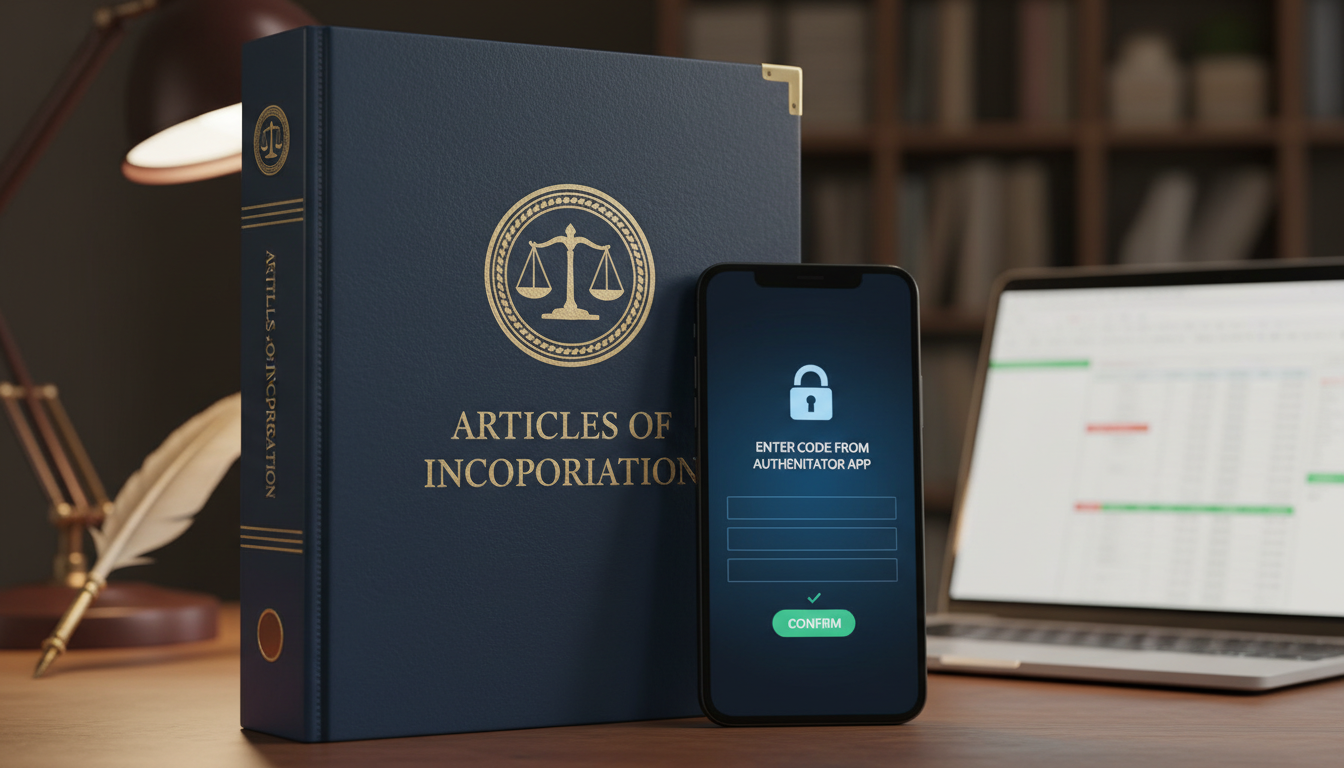
An executor might hold all the legal authority in the world, but if they cannot bypass a multi-factor authentication (MFA) prompt sent to a deactivated hardware key, the underlying capital remains entirely inaccessible. This authentication cliff is an uncommon risk that standard estate planning attorneys frequently overlook when drafting boilerplate documentation.
Comparing Wealth Transfer Ideologies: Fair vs. Equal
One of the most destructive misconceptions in legacy planning is the assumption that an equal mathematical division of assets is the most ethical approach. In highly illiquid or complex estates, enforcing a strict proportional split often bankrupts the system it was meant to sustain. This leads directly to litigation. For a deeper analysis on how symmetrical formulas fail nuanced families, review our operational guide on why a 50/50 inheritance can accidentally disinherit your child.
The Symmetrical Split
When patriarchs or matriarchs divide everything equally, they often force beneficiaries into unwanted business partnerships. Returning to Arthur's scenario, giving all three children equal shares in the logistics company forces Marcus to manage operations while Elena and David act as minority shareholders demanding dividend payouts instead of reinvesting in the company. The resulting friction destroys the business's operational agility.
The Strategic Allocation
Strategic transfer prioritizes the alignment of the asset with the capability and interest of the heir. Marcus receives the logistics company and the commercial real estate. Elena and David receive equivalent value derived from Arthur's life insurance policies, liquid stock portfolios, and cryptographic assets. While the asset categories differ entirely, the net financial impact is equitable, and more importantly, their operational lives do not forcefully intersect in a boardroom after Arthur's passing.
Common Mistakes That Spark Inheritance Conflicts
Even sophisticated families repeatedly fall into predictable traps that transform mourning periods into legally hostile environments. Removing friction requires avoiding these primary errors:
- Ruling From the Grave: Also known as dead-hand control, this occurs when grantors lock capital behind highly restrictive, draconian trust clauses that fail to account for a changing macroeconomic environment, infuriating beneficiaries who lack flexibility.
- The Illusion of Institutional Continuity: Assuming a traditional wealth manager or single chosen executor will smoothly manage the transition. If that individual is incapacitated or slow to act, digital accounts expire, market positions liquidate, and real estate degrades.
- Hiding the Estate's Complexity: Parents often obscure the true size or complexity of their net worth. When heirs are suddenly handed massive tax liabilities, offshore corporate structures, or cryptographic sovereign wealth without prior education, they panic and often sue the estate out of sheer confusion.
- Joint Tenancy Mismatches: Attempting to use shared bank accounts as a makeshift wealth transfer mechanism, which drastically increases the risk of early depletion and accidental disinheritance in complex family trees.
The Transparency Threshold Framework
To prevent post-mortem conflict, wealth originators must systematically migrate their heirs from complete ignorance to total operational readiness over time. Implementing a structured transparency framework ensures beneficiaries are not overwhelmed, yet are fully equipped to govern the capital when the time comes.
- Phase I: Philosophical Alignment. Begin by explaining the underlying philosophy of the family wealth rather than the exact dollar amount. Discuss thoughts on philanthropy, capital preservation, risk, and debt. Allow younger generations to express their counter-narratives safely.
- Phase II: Structural Introduction. Introduce the legal and operational vehicles that hold the wealth. Do not reveal account balances, but explain the existence of specific corporate entities, foundational trusts, and holding companies. Demystify the architecture.
- Phase III: The Fiduciary Assembly. Bring the beneficiaries into rooms with the estate attorneys, tax planners, and technical fiduciaries. Transition the relationship from a parental decree to a professional onboarding. Establish who takes over digital authentication and operational workflows.
- Phase IV: Contextual Preservation. Document the explicit, personal reasoning behind every major allocation decision precisely so it can be reviewed after death without relying on rumors or assumptions.
Comparing Structural Mechanisms for Wealth Handoffs
Families must recognize the specific, limited functions of different estate instruments. A common critical failure is demanding a standard will to perform the job of a dynamic digital trust. The table below illustrates the precise boundaries of these mechanisms.
| Transfer Mechanism | Primary Legal Function | Contextual & Digital Capability |
|---|---|---|
| Traditional Last Will & Testament | Provides baseline instructions to a probate judge regarding asset destinations. | Zero inherent digital capability. Completely public in probate court. Extremely poor at explaining personal reasoning. |
| Revocable Living Trust | Bypasses public probate, transferring assets directly via a designated ongoing entity. | Excellent legal shield, but fails to provide agile access to modern decentralized assets or handle two-factor authentication tokens. |
| Secure Digital Vault (Platform Infrastructure) | Does not replace the trust, but operationally powers its execution through secure credential handoffs. | Bridges the gap by pairing legal documents with encrypted personal videos, context notes, and direct digital credential access. |

The Antidote: Encrypting the "Why" Alongside the Wealth
The most effective defense mechanism against familial litigation is providing indisputable context. If a beneficiary understands exactly why they received a specific asset, and they hear the logic directly from the wealth creator, it dismantles suspicion and paranoia. This is a primary institutional failure that law firms struggle with: they draft text, they do not preserve humanity.
To pass down assets efficiently in this landscape, sophisticated wealth creators rely on platforms that securely pair operational instructions with emotional closure. This is where Cipherwill acts as the critical bridge separating a tense probate battle from a peaceful legacy transition. Rather than leaving grieving children with purely sterile legal decrees and dead-end financial passwords, users establish a secure infrastructure holding their authentic voice. They can embed private video messages for individual heirs, outline the exact philosophical reasoning behind uneven allocations, and transfer cryptographic seeds and digital access pathways automatically upon death verification.
When the inevitable transition occurs, the surviving family isn't left in the dark. A brief scene illustrates the difference: Instead of Marcus and Elena sitting in an attorney’s office screaming over Arthur’s estate, they log securely into their designated portals. Marcus watches a private, time-locked video where Arthur explains why the logistics company needs a singular leader, expressing profound pride in his son’s work. Simultaneously, Elena opens her encrypted manifest, reading Arthur’s personal letter acknowledging her environmental values and detailing how her specific liquid allocations were structured to empower her philanthropic pursuits. The dispute dies before it can even spark because the context eliminates the ambiguity.
The Beneficiary Readiness Checklist
To guarantee the estate remains resilient through the shock of grief, review this operational checklist with your designated fiduciaries well before an emergency strikes.
- Authentication Mapping: Verify that executors have a clear, legal path to bypass or inherit primary email accounts and two-factor authentication devices required to unlock financial applications.
- Liquidity Stress Test: Ensure the estate has enough immediate cash liquidity accessible outside of probate to cover basic maintenance, funeral costs, and immediate property taxes without selling illiquid assets at a massive loss.
- Jurisdictional Review: Confirm that non-domestic digital assets and offshore structures are recognized and transferable under the legal frameworks of your primary residence.
- Contextual Archiving: Audit whether there are written or video explanations defending all substantial estate deviations away from a standard equal split to prevent claims of undue influence in court.
- Beneficiary Separation (Blended Nuance): Ensure that assets intended for stepchildren are entirely ring-fenced logically and legally, eliminating the possibility of biological heirs inadvertently overriding transfer instructions.
Navigating Blended Family Complexities
Second marriages and blended families present the highest mathematical probability of inheritance conflict. Generational wealth transfer in these scenarios frequently pits a surviving spouse against the biological children from a prior marriage. A common and devastating mistake is relying on simplified financial structures, like joint tenancy with rights of survivorship, assuming the surviving spouse will "do the right thing" and eventually pass the wealth along to the previous children.
"A legacy is not merely the transfer of a balance sheet; it is the purposeful transmission of the values that built the capital originally. When you fail to transfer the philosophy, the balance sheet soon destroys itself."
Legally, the surviving spouse owes no fiduciary duty to stepchildren once they assume full ownership of a shared account. To insulate children from accidental disinheritance and protect spousal support simultaneously, assets must be categorically siloed using explicit trust mechanisms (such as QTIP trusts) and immutable digital smart vaults. For families facing these specific complex boundaries, exploring the joint bank account myth regarding blended families is a critical preliminary step toward asset security.
Frequently Asked Questions
Question: What is the most common cause of inheritance conflicts within families?
Answer: The primary catalyst for inheritance disputes is a lack of communication regarding asymmetrical asset division. When children discover unequal inheritance distributions after death without any prior explanation, the emotional shock rapidly translates into suspicion of undue influence and aggressive probate litigation.
Question: Can a traditional will independently prevent beneficiaries from disputing the distribution?
Answer: No. While a traditional will provides legal instructions, it does not stop angry heirs from formally contesting the document in probate court. Adding contextual evidence, such as video messages and personal letters alongside the will, drastically reduces the psychological friction and legal vulnerability of the estate.
Question: How does the Uniform Fiduciary Access to Digital Assets Act (UFADAA) impact modern estates?
Answer: The UFADAA framework allows individuals to legally grant their fiduciaries permission to manage their digital assets, including emails and cloud accounts. However, it requires explicit online consent provisions, meaning standard legacy wills often fail to meet the strict digital thresholds required by technology companies.
Question: What must families prepare before passing down cryptocurrency to the next generation?
Answer: Passing down cryptographic assets requires both the legal transfer of ownership and the operational transfer of custody. Creators must leave a secure transition path for hardware seed phrases, centralized exchange credentials, and multi-factor authentication devices to prevent permanent loss of funds on the blockchain.
Question: How should wealth creators handle leaving assets to stepchildren in a blended household?
Answer: Assets designated for stepchildren should be explicitly isolated using specific trust structures rather than leaving them in joint spousal accounts. Direct beneficiary designations and independent digital access vaults ensure that capital transfers seamlessly without relying on the goodwill of a surviving spouse.
Question: Is an equal split of an estate always the fairest method for beneficiaries?
Answer: Rarely. While equal division sounds equitable, dividing illiquid assets like a singular family business or an agricultural estate among multiple feuding children often leads to operational paralysis and forced liquidations. Fair transfer focuses on aligning specific asset types with an heir’s capabilities and lifestyle.
Question: Can leaving video messages or context notes legally support my primary inheritance documents?
Answer: While video messages do not generally replace a legally bound will or trust, they serve as powerful contextual evidence of the creator's mental capacity, authentic intent, and freedom from coercion. This emotional defense frequently prevents beneficiaries from initiating formal legal disputes.