Digital Estate Planning for High-Net-Worth Families
The Catastrophic Gap Between Legal Ownership and Operational Control
High-net-worth families, enterprise founders, and operational managers are discovering a critical, often irreversible flaw in modern succession planning. The crisis rests in a fundamental disconnect between theoretical legal ownership and practical operational control. You may possess an ironclad paper will drafted by top-tier legal counsel, transferring every asset you own to your spouse or children. While these traditional documents are absolutely essential for establishing the legal foundation and undisputed ownership of an estate, a static legal document cannot execute purely operational access. It effectively becomes paralyzed the moment your executor hits a biometric lock, an expired single sign-on (SSO) session, or a mandatory hardware token prompt. For estates diversified across offshore banking entities, encrypted enterprise data vaults, and decentralized assets, the standard legal probate framework frequently collapses. Those investigating how to protect complex, decentralized wealth are turning to programmable inheritance—a dynamic family continuity strategy designed to bypass the friction of probate courts by automatically transferring cryptographic keys, authentication protocols, and operational workflows.
The underlying issue is structural. Estate laws were built over centuries to manage the transfer of dirt, timber, real estate, and physical commodities. Our current legal mechanisms are heavily optimized for assets you can touch, seize, and hand over to an executor with a physical decree. Modern wealth does not exist in physical safes; it exists as fragmented encrypted data dispersed across multi-cloud environments, proprietary ledgers, and zero-trust private server networks.
Administrative Freezing: When the Estate Shuts Down
The tragedy of traditional estate planning is most visible in execution failures rather than legal disputes. Marcus, a 54-year-old managing partner of a private equity syndicate with significant personal holdings in offshore trading accounts and self-custodied digital assets, unexpectedly passes away, initiating a standard post-mortem administrative delay scenario.

His wife, Elena, is the appointed executor of his estate. Legally speaking, she establishes undisputed ownership and controls everything. Operationally, she is locked behind an impenetrable wall of cryptography. The core of their liquid net worth and business operational capital is gated behind physical YubiKeys securely locked in a remote corporate office, time-sensitive authenticator app codes tied to a specific device, and deeply encrypted enterprise drives requiring active continuous verification.
When Elena attempts to access their primary holding accounts to cover immediate business continuity payroll expenses and standard estate administrative costs, she hits an unyielding wall. The institution flags the login attempt from an unrecognized IP address, immediately enforcing a mandatory two-factor authentication (2FA) request to a device sitting powerless on Marcus's office desk.
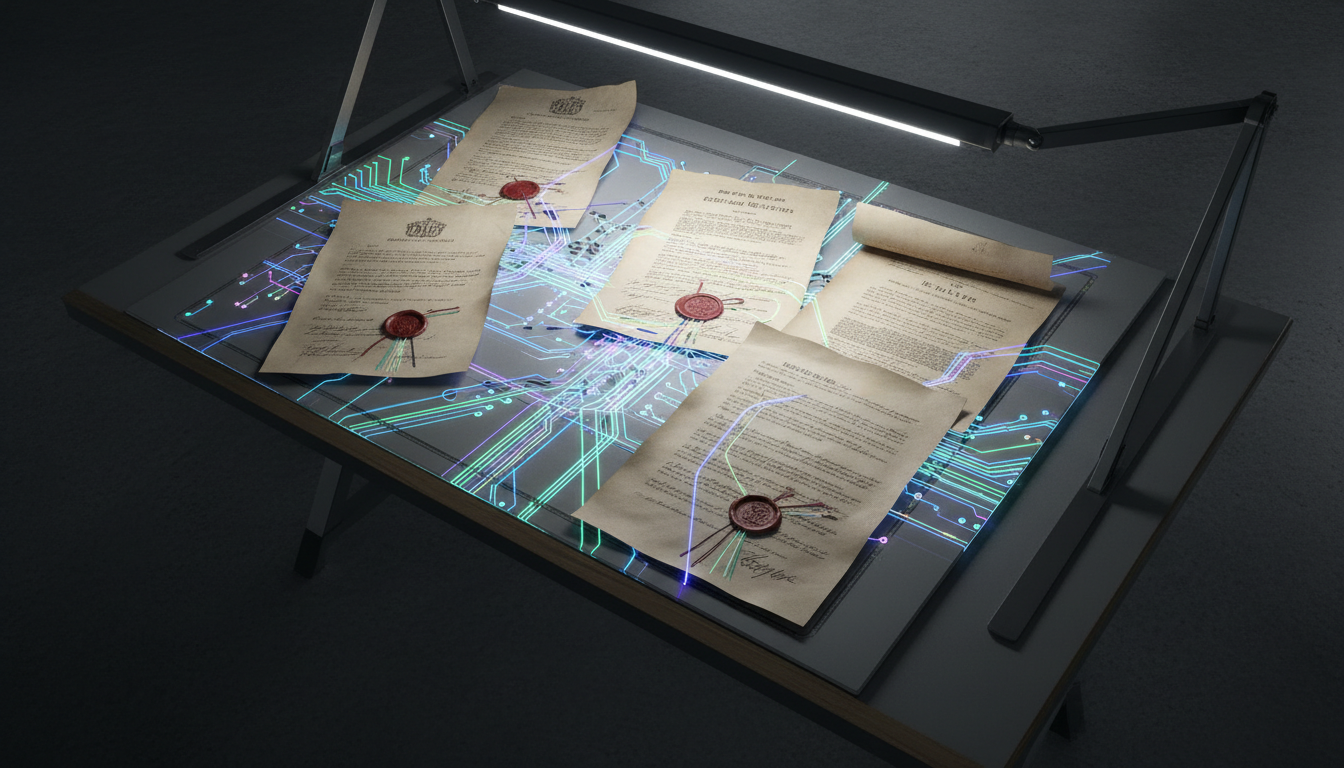
Elena possesses legally certified letters testamentary. The financial institution's automated security infrastructure does not care. A routing node cannot read a wax stamp. The security protocols interpret her login as a hostile breach. The accounts lock. The capital stops flowing. This scenario illustrates extreme administrative freezing—a state where wealth is legally secured but contextually paralyzed, forcing families into agonizing bureaucratic tailspins just to keep the lights on.
The Legal Illusion: RUFADAA and The Limits of a Paper Will
Many executors mistakenly believe that securing a probate court order functions like a master key to the digital kingdom. This is a profound miscalculation. A court document grants a fiduciary the right of access, but global technology companies and encryption algorithms govern the reality of access.
To address this friction, lawmakers introduced crucial, yet deeply flawed, updates. The Revised Uniform Fiduciary Access to Digital Assets Act (RUFADAA), drafted by the Uniform Law Commission, establishes the legal framework for how executors, trustees, and agents interact with digital assets. While pioneering, RUFADAA explicitly categorizes digital inheritance into a restrictive hierarchy. Crucially, the act defers first to a platform's internal "online tool" (such as automated conditional account managers). If none exists, it relies on specific directives in a will.
However, even with explicit RUFADAA consent encoded in traditional estate planning documents, fiduciaries collide with strict federal privacy legislation. Most enterprise-grade tech companies heavily enforce the Electronic Communications Privacy Act (ECPA). They will readily provide an executor with an empty "catalog" of metadata—a list showing that the deceased sent an email or owned an account—but they overwhelmingly refuse to release the actual data payload or provide root access without extended, expensive litigation.
"Possession of a court order under RUFADAA simply grants you the right to beg a compliance department. It does not grant you the cryptographic ability to move the capital or bypass the encryption logic that defends it."
The CFAA Paradox: When Guessing Passwords Becomes a Crime
Faced with prolonged legal battles under RUFADAA limitations, many fiduciaries attempt a dangerous shortcut: manual logins. Armed with an old password notebook found in a desk drawer, the surviving spouse simply types in the credentials pretending to be the incapacitated asset owner.
This operates in direct violation of platform Terms of Service. More alarmingly, unauthorized access potentially breeches the federal Computer Fraud and Abuse Act (CFAA). Defined by the U.S. Department of Justice, intentionally accessing a computer without authorization, or exceeding authorized bounds, triggers civil and potential criminal liabilities. Modern banking fraud detection protocols are hyper-sensitive to anomalous device behaviors, mouse-movement cadences, and session locations. When a platform detects an anomaly and cross-references a recently issued public death certificate against the active session, algorithms permanently suspend the account.
Comparing Traditional Estate Models versus Programmable Succession
To comprehend the architectural shift necessary for modern wealth continuity, we must directly contrast the outdated legalistic model against encrypted conditional automated workflows.
| Core Attribute | Traditional Estate Planning Model | Encrypted Continuity System |
|---|---|---|
| Execution Mechanism | Manual (requires lawyers, court filing, letters testamentary) | Automated (programmable logic driven by predefined conditions) |
| Access Transfer | Delivers legal permission to request external approval | Delivers direct cryptographic operational payloads seamlessly |
| Time to Liquidity | 6 to 18 months natively mired in the probate system | Immediate per the timeline matrix verified at trigger event |
| Secrecy & Privacy | Public record following standard open court probate processes | Zero-knowledge end-to-end encryption preserving total privacy |
Overlooked Vulnerabilities: The Fragility of Digital Probate
The friction goes far beyond just guessing login passwords. Implementing a proper family continuity engine requires understanding deeply specialized operational vulnerabilities that traditional counsel routinely ignores.
- Hardware Temporal Decay: Physical security tokens (YubiKeys), biometric hardware ledgers (Trezor/Ledger), and designated authentication devices degrade offline. Firmware goes out of date, batteries expand, and isolated hardware becomes bricked resulting in permanent lockout of associated accounts.
- SIM-Swapping Vulnerabilities Post-Mortem: When the central asset owner passes away, mobile network providers frequently terminate or reassign standard cellular accounts due to auto-pay defaults. Malicious actors scan obituaries and public records to initiate immediate post-mortem SIM swaps, compromising unmigrated financial systems.
- Enterprise SSO Blind Spots: High-net-worth founders route their organizational wealth management through enterprise identity pillars (like Microsoft Entra ID or Okta). If the founder is fundamentally removed, global token revocation events often trigger across the organizational architecture, locking fiduciaries and surviving operational staff out simultaneously.

The Solution: Constructing Programmable Inheritance
Programmable inheritance functionally decouples asset transfer from the slow bureaucratic engine of localized estate law, binding it instead to mathematically secure contingency timelines. Rather than mapping ownership via paper declarations, one embeds absolute operational continuity using dynamic encrypted workflows.
By leveraging a digital inheritance platform like Cipherwill, family offices construct secure frameworks using zero-knowledge encryption mechanics. You do not store plain-text passwords or secret 12-word seed phrases waiting for a data breach; instead, the continuity system orchestrates asymmetric encryption handshakes across decentralized nodes.
- Condition Verification: Using multi-signature logic and verified dead man switches, the continuity engine determines if an incapacitation event has genuinely occurred. It requires failure to respond via secure, multi-channel check-ins configured ahead of time.
- Cascade Delivery Systems: Upon passing verification thresholds, access keys, sensitive instructions, recovery phrases, and programmable multi-factor workflows systematically distribute to assigned beneficiaries.
- Time-Locked Decryption: Private keys decrypt payloads specifically formulated for executors directly on their local processing environments, maintaining a zero-knowledge pipeline from start to finish.
This architecture effectively eliminates reliance on centralized cloud providers, tech corporate compliance departments, or overwhelmed local probate clerks. The asset transition happens cryptographically, guaranteeing rapid execution alongside family continuity logic.
Critical Missteps in Digital Estate Administration
While moving toward comprehensive digital frameworks provides unparalleled resilience, many families stumble during initial execution by clinging to deeply ingrained behavioral habits derived from web2 security practices.
- Consolidating in Commercial Password Managers: Traditional password managers secure daily operations well but structurally fail the inheritance test. Establishing "emergency access" in a consumer password manager creates a hyper-centralized single point of failure easily exploitable by insider threats or malware during vulnerable transitional periods.
- The Fireproof Safe Illusion: Engraving cold-storage recovery keys onto titanium plates and leaving them in physical safes heavily underestimates social engineering. Untrained heirs retrieving titanium seed phrases possess no contextual defense against highly sophisticated phishing rings specifically targeting grieving families of wealth.
- Ignoring Conditional Authentication: Multi-factor authentication protocols increasingly rely on device biometric enforcement (FaceID, Windows Hello). Merely handing down written credentials guarantees failure because passing down biometric authentication is biologically impossible.
A Framework for Operational Contingency
Building an automated family continuity system demands rigorous organizational hygiene. The ultimate goal is creating independent operational redundancy. Execute this essential checklist when upgrading your succession strategy to programmable inheritance standards.
- Phase 1: Architecture Mapping. Rigorously index exactly which digital vaults, decentralized wallets, and foreign sovereign entities require device-dependent authentication.
- Phase 2: Establish Programmable Timelines. Configure automated status checks. Program precisely customized time horizons governing how and when conditional access is granted based on non-response triggers.
- Phase 3: Fiduciary Integration. Legally embed specific clauses invoking the full powers granted by RUFADAA to your technical systems. Specify expressly that your estate relies upon decentralized continuity tools for primary fiduciary authorization.
- Phase 4: Simulated Dry Runs. Treat succession planning like corporate disaster recovery. Schedule bi-annual fire drills confirming that heirs conceptually understand and gracefully possess the requisite factors to intercept decrypted payloads safely.
Executing a Seamless Financial Recovery
Contrast Marcus's catastrophic operational failure with an encrypted continuity framework acting correctly in real time. In this alternate systemic reality, Marcus's sudden passing does not freeze the family balance sheet. Instead, his failure to answer encrypted localized status triggers activates his pre-arranged digital timeline.
Elena does not attempt to breach his laptop. She does not argue fruitlessly with remote financial compliance departments, nor does she pay thousands to local lawyers drafting immediate intervention requests. Instead, a cascading programmable protocol securely decrypts and distributes operational master keys to Elena's authenticated digital vault.
The transfer process operates with mathematical certainty, untangled from subjective human intervention or outdated common law interpretations. Operational leverage remains uninterrupted, preserving familial dignity and structural capital wealth seamlessly across generations.
Frequently Asked Questions
Question: What exactly is programmable inheritance?
Answer: Programmable inheritance is a modern estate planning framework utilizing encrypted conditional-access systems to automatically transfer operational control of wealth to beneficiaries. Instead of relying dynamically on static paper documents, executed legal judgments, and slow probate motions, it rapidly fulfills predefined workflows based securely on established verifiable continuity timelines.
Question: How does RUFADAA actually impact my paper last will and testament?
Answer: RUFADAA dictates exactly how fiduciaries interact legally with technical platforms. Crucially, the act elevates platform-specific "online tool" configurations and explicit continuity system authorizations above general blanket statements found within standard historical paper wills, mandating that tech providers only act on precise legal consent to permit asset access.
Question: Does a family continuity system replace traditional specialized estate counsel?
Answer: Absolutely not. High-level encrypted continuity systems operate alongside superior estate law to ensure efficient execution. Traditional trust documents define explicit underlying ownership and legally shield your capital from intense wealth taxation. Programmable environments directly orchestrate the actual technological operational key transfer needed daily.
Question: Why can't I just quickly relay my passwords and physical hardware keys to my executor proxy?
Answer: Simply handing over written passwords structurally breaches the federal Computer Fraud and Abuse Act (CFAA) while violating core service agreements with banking platforms. Fraud parameters flag these unfamiliar proxy logins following death, immediately enforcing account suspension statuses that completely block the active capital distribution process indefinitely.
Question: What identifies and characterizes administrative freezing in probate courts?
Answer: Administrative freezing defines a paralyzing state wherein beneficiaries hold total legal rights granted appropriately through probate decree yet face comprehensive lockout from accessing funds digitally. It occurs essentially anytime severe encrypted platform requirements, zero-trust tokenizations, and active two-factor authenticators functionally block legitimate recognized execution efforts.
Question: How do conditional access workflows stop devastating unauthorized data breaches?
Answer: Conditional access workflows heavily deploy end-to-end asymmetric cryptography logic natively integrated via zero-knowledge architectures. Therefore, your passwords and access directives never reside on centralized breachable enterprise servers; they remain securely fragmented, unlocking safely only when verified dead man switch parameters meet specific predetermined operational milestones.
Question: What happens directly to authenticator app codes when a business owner suddenly dies?
Answer: Time-based one-time password (TOTP) codes natively live secured strictly inside localized device enclaves securely. If an executor cannot bypass fundamental physiological security parameters (fingerprints, FaceID) on the sole device, those necessary codes remain effectively permanently inaccessible, rendering related high-security platforms functionally impenetrable and lost.
Question: Can asymmetric encryption robustly transfer heavily decentralized off-chain web3 assets?
Answer: Yes, asymmetric encryption serves as the absolute backbone architecture designed specifically targeting decentralized ecosystem requirements. By structuring programmable continuity layers, seed phrases effectively distribute heavily encrypted payloads matching the private execution keys exclusively allocated to designated heirs precisely upon complex predetermined failure verifications.
Question: How exactly does execution timeline methodology functionally impact wealth continuity distribution strategies?
Answer: Execution timelines actively force continuity platforms into rigorous systematic checks evaluating primary owner responsiveness constantly. Should multi-factor check-in cadences natively fail over multiple consecutive threshold triggers, the system mathematically accepts incapacitation conditions seamlessly, advancing operational decryption cycles natively unlocking restricted wealth portfolios immediately.
Question: What makes extreme reliance exclusively upon consumer central password managers completely unsafe regarding estate administration?
Answer: Mainstream consumer password platforms functionally configure central administration nodes optimizing for active high-frequency daily operations strictly. Utilizing them carelessly for post-mortem estate administration forces hyper-centralized vulnerabilities, routinely exposing multi-generational asset portfolios simultaneously to singular devastating unauthorized credential extraction phases frequently targeting distressed executing families.
By Cipherwill Editorial Team, Reviewed by Cipherwill Review Board, Trust & Security Review Team
Editorial contributor: Vedant Kulshreshtha
Review contributor: Ishani Debroy