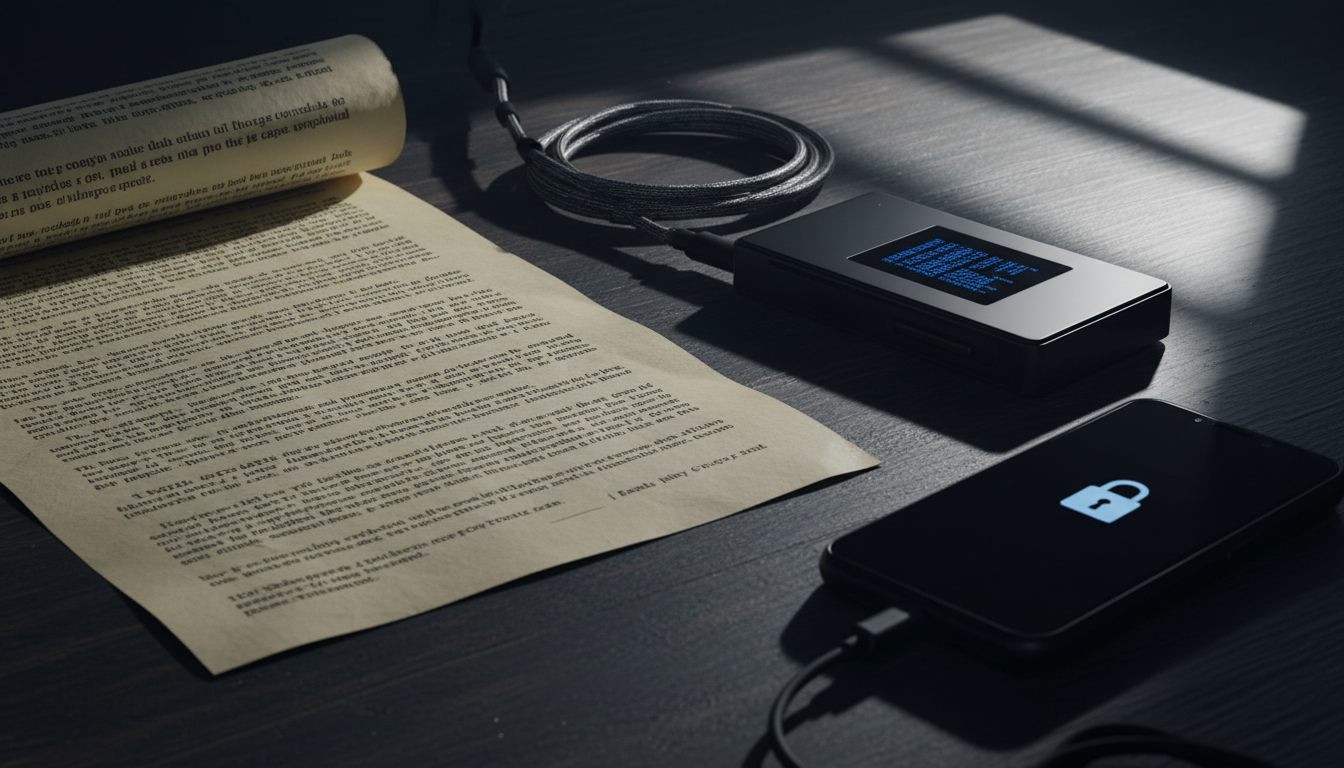
The ‘At Your Own Risk’ Problem: Why Downloadable Wills May Not Meet Modern Families’ Needs
TL;DR: A downloadable will can record your wishes, but it may not give your family a practical way to manage passwords, digital accounts, cryptocurrency, or other online assets. A complete plan combines valid estate documents, current information, secure access instructions, and advice suited to your state.
This article is general educational information, not legal, tax, financial, or cybersecurity advice. Estate rules differ by state and by asset type. Speak with a qualified attorney and other appropriate professionals before making or changing your plan.
Julian’s Paper Plan Meets a Digital Life
Consider Julian, a 42-year-old freelance interface designer. He spent a Saturday afternoon organizing his affairs. He paid $19 for a digital template, named his beneficiaries, appointed his younger sister Clara as executor, printed the document, and placed it in a labeled folder.
Julian felt relieved. He believed he had created a useful legal safety net. Much of his property, however, existed online. He used a password manager, protected his business accounts with hardware security keys, held investments at an online brokerage, and stored some savings in a self-custodied digital wallet.
Seven months later, Julian died unexpectedly. Clara found the signed document, but she soon encountered a separate practical problem. She needed Julian’s email to locate account records and stop recurring expenses. His laptop requested a fingerprint. Access from another device required a code sent to his locked phone. The will expressed Julian’s wishes, but it did not provide the information or process needed to manage every account.
This example does not mean every downloadable will is invalid or useless. It shows the difference between documenting intent and planning for access. In a digital-first household, both parts deserve attention.

What “At Your Own Risk” Usually Means
Many websites that sell inexpensive legal templates explain that they provide software or forms, not individualized legal advice. Their terms may also place responsibility for accuracy, signing, witnessing, and updates on the customer.
That distinction matters. A will may need to meet specific state requirements, including rules about witnesses, notarization, language, and later amendments. A generic form may be a starting point, but it cannot account for every family situation or asset. An attorney can help determine whether a document fits your circumstances.
Digital assets add another layer. Banks, email providers, cloud services, and social platforms have their own privacy rules and account-recovery processes. A signed will may support an executor’s legal authority, but it may not replace those providers’ required steps.
A will can state who should receive an asset. It may not, by itself, explain how that person can locate, verify, or lawfully access the asset.
The Revised Uniform Fiduciary Access to Digital Assets Act (RUFADAA), adopted in many states with local variations, addresses fiduciary access to some digital records and property. It does not create one universal login process, and it does not guarantee access to every account. Your estate documents and provider instructions should be reviewed together.
Why Paper Documents Do Not Cover Every Digital Asset
A legal claim and practical access are related, but they are not the same. An executor may have authority to administer an estate while still needing account-specific verification, records, keys, or provider approval.
Four common gaps
- Authentication: Accounts may require an authenticator app, biometric check, hardware key, or recovery code. Those methods can be difficult to use after the account holder dies.
- Privacy rules: Providers may require specific consent, court documents, or an established recovery process before releasing information. Requirements vary by service and jurisdiction.
- Self-custodied assets: A cryptocurrency wallet may depend on a private key or recovery phrase. Without the correct information, the asset may not be recoverable, even when ownership is clear.
- Ongoing charges: Hosting, software, storage, and membership fees may continue while an estate is being organized. A current account inventory can help an executor identify and review them.

A Practical Digital Estate Planning Checklist
A useful plan starts with an inventory and a safe way to keep it current. The following checklist can help you identify gaps in your arrangements:
- List bank, brokerage, insurance, retirement, business, email, cloud, social, subscription, and cryptocurrency accounts.
- Record where your executor can find account details and recovery instructions without placing sensitive information in an ordinary, unsecured file.
- Review password-manager emergency access, backup codes, trusted contacts, and device-recovery options.
- Store cryptocurrency recovery information with a method that balances availability, privacy, and protection from theft or accidental loss.
- Check whether your will, trust, power of attorney, and provider settings address digital assets under the laws that apply to you.
- Set a regular review date so changes to accounts, devices, passwords, and family circumstances are reflected in the plan.
Common Mistakes to Avoid
The disadvantages of DIY estate planning often come from maintenance and access gaps rather than from the idea of preparing a plan yourself. These mistakes are common:
- Keeping only a paper list: Account details can become outdated after a password, device, or provider changes. Use a secure process that can be reviewed and updated.
- Sharing passwords casually: Leaving credentials in plain text or sending private keys by ordinary email can expose them to theft. Follow each provider’s terms and use appropriate secure-storage practices.
- Assuming one document controls everything: A will, trust, beneficiary designation, power of attorney, and account recovery setting may each play a different role. They should work together.
- Ignoring business and subscriptions: Freelance accounts, domains, cloud services, and recurring payments need clear ownership and shutdown instructions.
Comparing Common Planning Approaches
No single tool replaces legal advice or careful communication. This comparison shows where different approaches may help and where they may leave work for the family.
| Planning approach | What it can help with | Questions to ask |
|---|---|---|
| Downloadable form | Captures basic wishes at a low cost and can prompt an initial conversation. | Does it meet local signing rules? Who will review it? How will digital assets be handled? |
| Attorney-led plan | Can address state law, family circumstances, trusts, taxes, and fiduciary authority. | How will the legal documents connect to account settings and secure information storage? |
| Secure digital vault or continuity tool | Can help maintain current instructions and protect sensitive access information. | What encryption, recovery, verification, and beneficiary controls does it use? |
| Combined approach | Pairs legal documents with a current inventory and a practical access process. | Who reviews the plan, and how often is it tested or updated? |
Where Cipherwill Fits
A legal document remains an important part of many estate plans. It is not always the best place to store passwords, recovery phrases, or detailed account instructions. A separate, secure continuity tool can complement the legal plan by helping keep that information organized and current.
Platforms such as Cipherwill are designed for this supporting role. Cipherwill’s Time Capsule Encryption is intended to protect sensitive information until designated conditions and verification steps are met. In plain terms, the service helps users prepare encrypted instructions and decide how trusted beneficiaries may receive them later.
Users should still review provider terms, understand the recovery process, and consult legal and security professionals where appropriate. No platform can guarantee access to every account, correct an invalid will, or recover a private key that was never saved.
Frequently Asked Questions
Question: Can an online will template be legally valid?
Answer: It may be, depending on the document, how it was completed and signed, and the law of the relevant jurisdiction. Validity does not necessarily mean that it provides every instruction an executor needs for digital accounts. An attorney can assess your situation.
Question: Why can’t a will simply unlock an online account?
Answer: Providers may use multi-factor authentication, biometric checks, privacy rules, and account-specific recovery procedures. A will can support an executor’s authority, but the provider may require additional documentation or steps.
Question: What is RUFADAA?
Answer: RUFADAA is a model legal framework concerning fiduciary access to certain digital assets and records. States may adopt and modify it, so the rules are not identical everywhere. It generally makes documented user intent important, but it does not guarantee access to every service.
Question: Should I keep cryptocurrency recovery information on paper?
Answer: Some people use paper or another offline method, but each method has trade-offs. Paper can be lost, damaged, copied, or stolen. Choose a secure approach that trusted people can locate when needed, and review it when your wallet or security setup changes.
Question: How can I make my plan easier for an executor to follow?
Answer: Create a current account inventory, explain where important documents are stored, identify professional contacts, and provide lawful recovery instructions. Keep highly sensitive credentials in a secure system rather than in ordinary email or an exposed note.
Question: What should I do first?
Answer: Start with an inventory of assets and accounts, then review your will and related documents with a qualified professional. Next, choose a secure way to maintain access instructions and tell your executor where to find the plan.
By Cipherwill Editorial Team, Reviewed by Cipherwill Review Board, Trust & Security Review Team
Editorial contributor: Myra Senapati
Review contributor: Nivaan Khattar