The primary design directive of a biometric passkey or hardware authenticator is to mathematically prove the user is alive, physically present, and holding a specific pre-registered device. Because of this uncompromising architecture, two-factor authentication (2FA) and localized hardware credentials have created a catastrophic administrative blockade for digital inheritance. When you pass away, the very systems designed to keep hackers out will permanently lock your heirs out of your financial accounts, cryptocurrency wallets, and operational software.
Solving this requires transitioning from localized security habits to surviving cryptographic relationships, ensuring your executor can bypass biometric checkpoints without compromising your daily operational posture. Without dedicated infrastructure in place, a perfectly drafted legal will means nothing against a zero-trust login prompt.
The Anatomy of a Lockdown: When Shared Passwords Offer Zero Access
To understand the severity of the modern digital access barrier, we must look at how standard inheritance operations fail under the weight of active cyber security.
Marcus was a meticulous systems architect. Before he unexpectedly passed away, he had prepared a traditional physical safe containing his master password list, assuming his younger brother David would simply log into his accounts to settle his affairs.
Days after the funeral, David sat down with Marcus's laptop and the master password document. He entered the exact, correct credentials for Marcus's primary cryptocurrency exchange and his high-yield savings account. Immediately, the screen blurred and rendered a prompt: "Check your authenticator app for a 6-digit code."
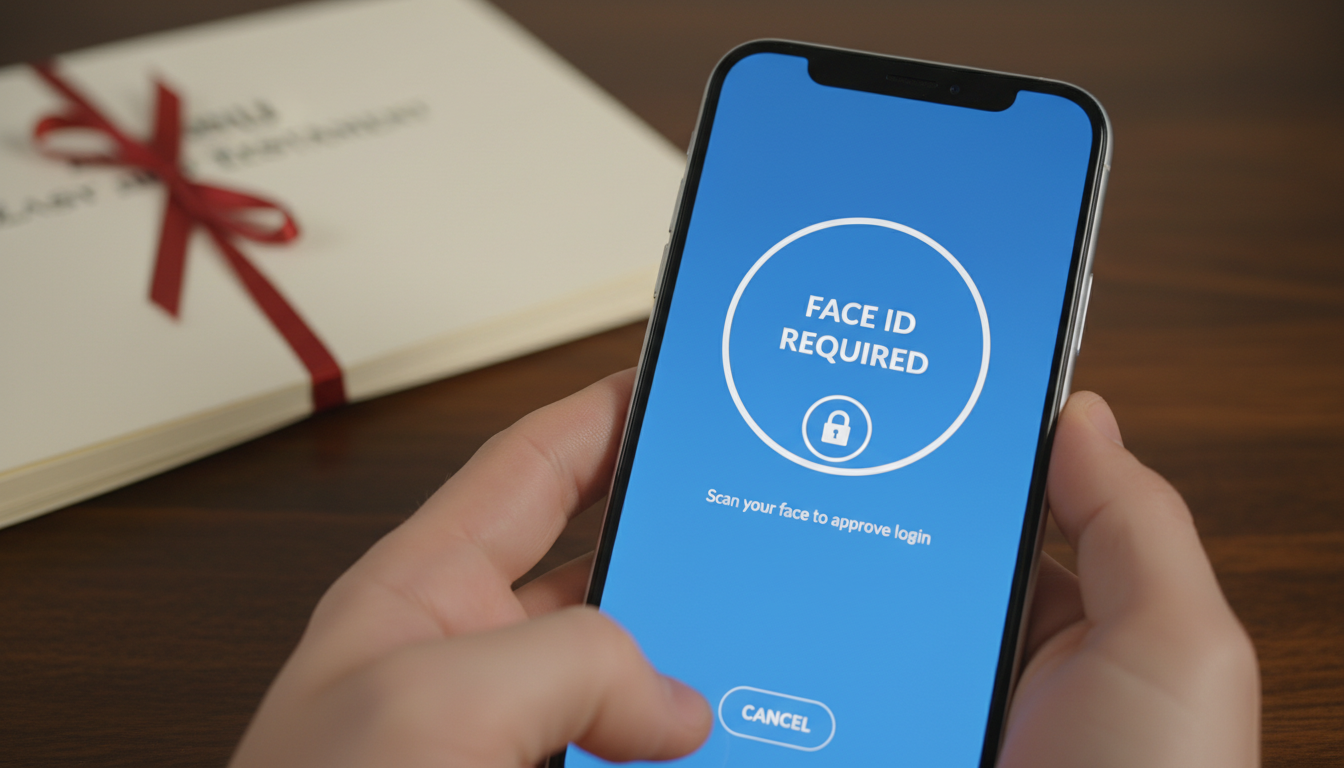
David picked up Marcus's iPhone, but the screen demanded Face ID followed by a custom alphanumeric passcode. The password Marcus had carefully written down was useless. Under modern zero-trust architecture, identifying the user's password is only half of the authentication equation. The estate administration hit a dead end in exactly fourteen seconds. This specific failure to map authentication dependencies is one of the most costly mistakes that lock your crypto after death.
Overlooked Operational Realities in Modern Cryptography
The fundamental disconnect between traditional estate planning and modern digital reality stems from a misunderstanding of how new authentication technologies work. We are rapidly moving away from shared secrets (like a master password) and moving toward localized, device-bound asymmetric cryptography.
The Problem with Device-Bound Passkeys
According to the technical specifications defined by the FIDO Alliance, passkeys replace traditional passwords with cryptographic key pairs. Your public key is registered with the banking or social platform, while your private key is deeply embedded and permanently encrypted within the hardware of your device—such as an iPhone's Secure Enclave or a laptop's Trusted Platform Module (TPM).
These credentials mathematically cannot be exported or written down on a piece of paper. You cannot hand a passkey to a lawyer. Unless the heir possesses the specific hardware device and the biological metric (fingerprint or face map) or device PIN required to unlock the enclave, the cryptographic challenge cannot be answered.
Why RUFADAA Fails in Real Time
A common misconception among legacy financial advisors is that state law provides a skeleton key to digital platforms. Drafted by the Uniform Law Commission in 2015, the Revised Uniform Fiduciary Access to Digital Assets Act (RUFADAA) was intended to bridge probate law and Silicon Valley.
Under RUFADAA, a court-appointed fiduciary holds the legal right to request access to digital assets. However, this legislation does not compel a technology company to bypass active Multi-Factor Authentication layers or grant live, operational access to platforms. Tech conglomerates, operating under the Stored Communications Act (18 U.S.C. Chapter 121), prioritize user privacy over executor convenience.
If your executor submits legal paperwork to inherit an email address, the provider's legal department might eventually send a dormant ZIP file containing historical data six months later. They will not, under any circumstances, hand over live session tokens to bypass a 2FA-secured exchange containing liquid capital.
Structural Comparison: Traditional Estate vs. Digital Estate
To comprehend the paradigm shift, we must compare the expected legal process against the actual technological barriers families face today.
| Operational Phase | Traditional Probate Estate | Modern Digital Estate |
|---|---|---|
| Proof of Authority | Letters Testamentary signed by a judge. | Possession of a cryptographic hardware token or SIM card. |
| Time to Access | Weeks to months depending on the court. | Milliseconds if planned; impossible if unplanned. |
| Points of Failure | Misfiled paperwork or disputed wills. | A deactivated telecom plan resetting the SMS pipeline. |
Common Mistakes That Guarantee Beneficiary Lockout
When auditing access strategies, security professionals frequently uncover configurations that unknowingly sabotage family transitions. Avoid these critical structural errors:
- Single-Device Authenticator Silos: Using Time-Based One-Time Password (TOTP) apps like Google Authenticator without enabling cross-device cloud sync or securing the initial export QR codes. If the primary phone is bricked or locked by biometric requirements, the TOTP sequences are permanently lost.
- Ignoring Backup Codes: Storing recovery backup codes on the very same laptop that becomes inaccessible after death. Backup codes must be isolated from the primary hardware ecosystem.
- The Telecom Cost-Cutting Error: Executors blindly terminating cellular postpaid contracts to minimize estate expenses, failing to realize they just destroyed the SMS routing mechanism necessary to reset bank passwords.
The "Dead SIM" Trap: A Crucial Scene
The operational fragility of legacy planning is most evident in the telecom layer.
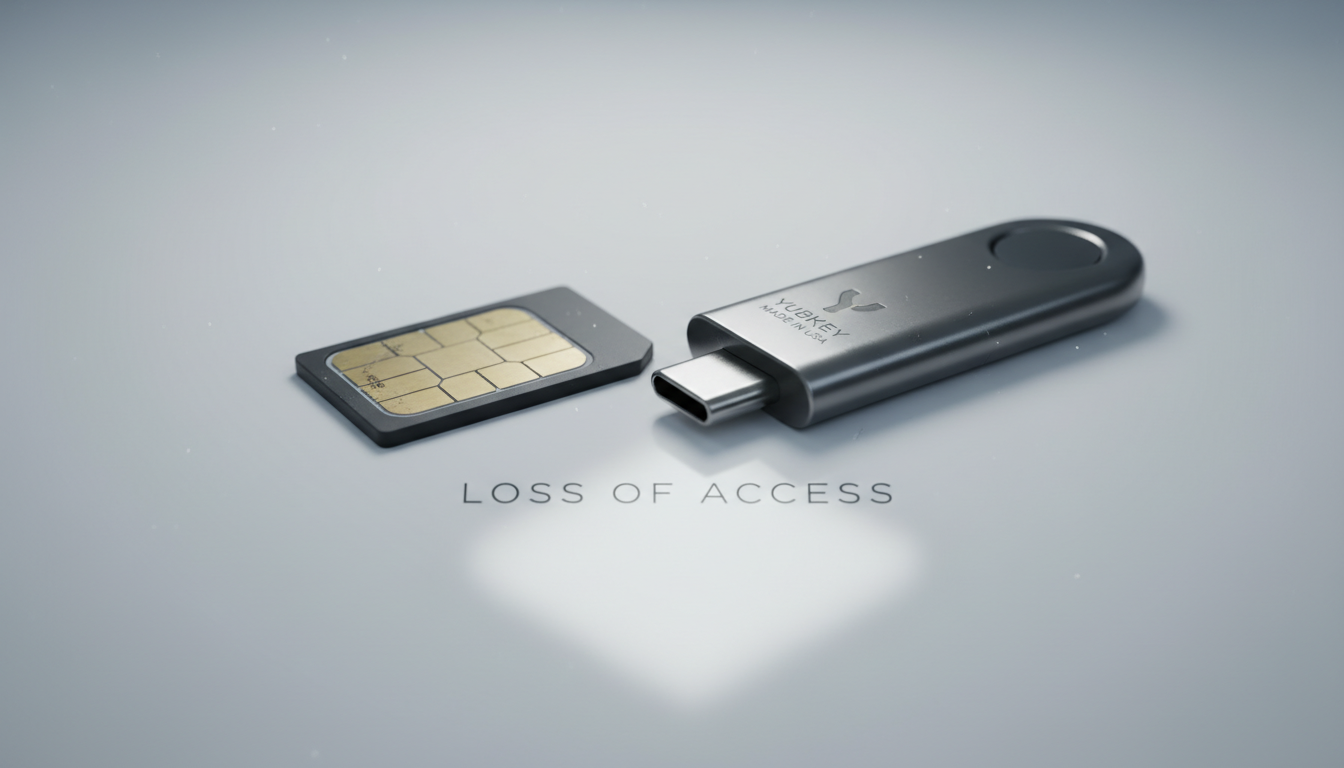
Six months into settling Marcus's estate, the family attorney advised David to start canceling Marcus’s recurring monthly expenses to stop depleting the estate checking account. Among the canceled subscriptions was Marcus's cell phone plan. Three days later, David located a secondary brokerage account containing corporate stock. He attempted to initiate a password reset. The brokerage demanded a verification code sent via text to Marcus’s registered phone number.
The code vanished into the digital void. When David contacted the telecom provider, he was informed that canceled accounts immediately release numbers back to the pool, and Federal Communications Commission regulations prevent them from illegally routing consumer SMS packets to unauthorized receivers, even executors. A seemingly prudent, cost-saving administrative action locked five figures in a permanent security freeze.
A Framework for Inheritance-Ready Security
To transition securely from a standard single-user setup to an inheritable digital estate, you must proactively manage how authentication secrets will be distributed. Follow this baseline checklist to audit your vulnerability:
- Map Dependencies: Catalog which platforms rely on WebAuthn passkeys versus generic SMS texts.
- Hardware Redundancy: Register secondary YubiKeys or hardware tokens to all critical financial accounts. Place the redundant key in a secure, offline physical vault reserved for legacy planning.
- Executor Directives: Explicitly forbid executors from terminating telecom lines or internet service provider accounts until the digital estate is unequivocally settled.
- In-Platform Legacy Tools: Properly configure native contingency tools like Google's Inactive Account Manager to delegate trust automatically.
The Failure-to-Recovery Path: Engineering a Seamless Transfer
Implementing an inheritance architecture that doesn't trigger fraud alerts or biometric lockouts requires methodical execution. Here is the operational path for securing 2FA access for beneficiaries:
- Locate Root Verification: Identify the specific Authenticator app handling your TOTP sequences (Authy, Microsoft Authenticator, 1Password, or Raivo). Ensure it has an encrypted export function.
- Generate Static Bypasses: Create static, one-time-use backup codes for enterprise endpoints and cryptocurrency exchanges. These bypass live 2FA requirements and rely purely on physical possession of the secret text string.
- Isolate Secrets Cryptographically: Store these master recovery strings off your primary devices. Do not keep them in Apple Notes or unencrypted text files susceptible to malware.
- Establish a Transfer Mechanism: Utilize a trustless cryptographic distribution protocol that holds these secrets securely while you are alive, and only releases them following mathematical confirmation of absence.
How Cipherwill Solves the Multi-Factor Paradox
The modern dilemma dictates that if you give your executor your 2FA seeds while you are alive, you compromise your daily security model. If you wait until you die, they are irreparably locked out. The ultimate solution requires taking human delay out of the equation securely.
By utilizing an encrypted inheritance platform like Cipherwill, individuals can solve this physical blockade through advanced Dead Man's Switch architecture. Rather than relying on outdated legal constructs to compel tech companies to bypass their own security walls, you engineer a direct transfer of access.
Crucial bypass codes, hardware pin codes, and TOTP recovery seeds are encapsulated inside time-capsuled encryption. The platform continuously verifies your active presence. Only upon prolonged inactivity—and after exhausting multiple cascading check-in layers—does the protocol automatically release the decentralized decryption keys to your verified beneficiaries. They inherit the exact 2FA administrative privileges necessary to access funds and memories, rendering the passkey trap completely neutralized.
Frequently Asked Questions
Question: Do passkeys replace passwords entirely after I die?
Answer: Passkeys are designed to replace passwords by linking authentication strictly to physical hardware or biological metrics. When you die, passkeys operate exactly as intended: they prevent access to anyone who isn't physically you, making digital inheritance extremely difficult without secondary bypass methods or backup hardware.
Question: What happens to SMS 2FA if my phone plan is canceled during probate?
Answer: If an executor terminates your cellular contract, the SIM card immediately disconnects. Any automated text messages sent to verify logins will bounce. In many regions, telecom providers legally recycle the phone number, meaning your family permanently loses the ability to intercept essential access codes.
Question: Does RUFADAA force Google and Apple to unlock my phone?
Answer: No. RUFADAA governs legal authority, but it does not circumvent federal privacy laws like the Stored Communications Act or force hardware manufacturers to break device-level encryption. The fiduciary can request stored digital records, but they will not receive a master passcode bypass for Apple or Android devices.
Question: How do I include my authenticator app in my will?
Answer: You should not list TOTP secrets directly in a public will, as wills become public record during probate. Instead, use a secure digital inheritance platform or a referenced physical safe to store the exported QR codes or manual seed strings required to reconstitute the authenticator app on a new device.
Question: Can I leave my Face ID or fingerprint in my digital estate?
Answer: Biological metrics cannot be transferred. Hardware systems securely enclose biometric data to prevent extraction. Therefore, any account strictly constrained to biometric recognition must have a secondary fallback pathway, such as an alternative email verification or a master bypass PIN, explicitly provided to your executor.
Question: Why is Google Authenticator risky for my legacy?
Answer: Historically, Google Authenticator did not offer cloud synchronization, turning a single mobile device into a catastrophic point of failure. While recent updates allow account-linked backups, failing to manage that specific Google Account's recovery means all linked tokens across dozens of services could be destroyed simultaneously.
Question: Are backup codes more reliable than SMS verification for my heirs?
Answer: Yes. Unlike SMS routes that depend on external corporate infrastructure, continuous telecom billing, and active cell towers, a static one-time backup code guarantees access as long as the physical or digitally encrypted string remains intact and is accurately provided to the intended beneficiary.
By Cipherwill Editorial Team, Reviewed by Cipherwill Review Board, Trust & Security Review Team
Editorial contributor: Vedant Kulshreshtha
Review contributor: Reyansh Mehta