Securing a digital legacy requires more than just a traditional paper will, as modern encryption and two-factor authentication (2FA) can permanently lock heirs out of valuable accounts. As of March 2026, research into blockchain forensics suggests that a significant portion of the global Bitcoin supply may be permanently inaccessible due to lost private keys, a problem that extends to encrypted cloud storage and professional software environments. This guide addresses the technical access gap-the pain felt by families who have the legal right to an asset but lack the passwords to reach it-and provides a comprehensive framework for implementing a fail-safe mechanism.
By Cipherwill Editorial Team, Digital Legacy Research Desk Reviewed by Cipherwill Review Board, Trust & Security Review Team Last reviewed: April 2026 Editorial contributor: Vedant Kulshreshtha Review contributor: Ishani Debroy
Legal and Accuracy Caution: The laws governing digital assets, AI likeness, and posthumous privacy are evolving rapidly and vary significantly by jurisdiction. Platform terms of service and corporate policies are subject to change without notice. This guide provides general information and should not be construed as specific legal or financial advice. Always consult with a qualified professional in your specific region regarding digital estate planning.
How to Implement a dead man's switch for digital assets
The transition from physical to digital record-keeping has created a unique crisis in estate management. While a physical safe can be opened by a locksmith, a 256-bit encrypted hard drive or a hardware security key cannot be bypassed by traditional legal authority alone. This technical barrier often leaves beneficiaries in a state of financial and emotional limbo, unable to settle accounts or retrieve sentimental data.
The Technical Barrier to Digital Inheritance
A traditional will is often a matter of public record once it enters probate. Listing sensitive credentials directly in such a document can be a security risk, as it exposes private keys or passwords to anyone involved in the legal process. Furthermore, by the time a will is typically read and executed, many automated platform policies may have already flagged an account as inactive, potentially triggering data deletion or permanent lockout.
Standard legal documents may lack the technical specificity required for digital inheritance planning. Even if a court grants legal access, it does not provide the technical access necessary to decrypt files. Without the actual decryption keys or 2FA devices, the legal right to an asset may be practically unenforceable.

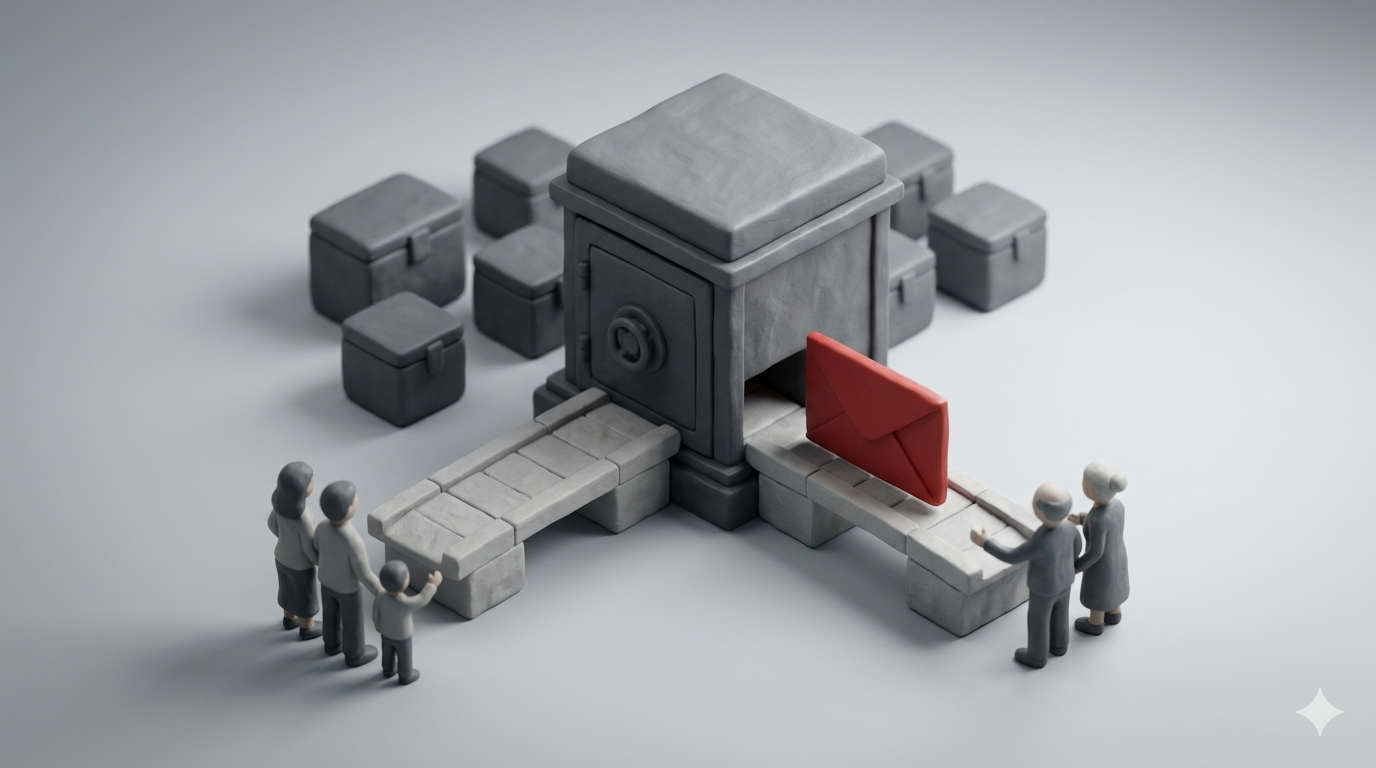
A dead man's switch for digital assets acts as a technical fail-safe. Rather than waiting for a legal representative to act, the system monitors your activity. If you stop checking in for a predetermined period, it assumes an emergency has occurred and sends pre-stored recovery information to your designated beneficiaries.
How an Automated Inactivity Trigger Functions
The concept of a dead man's switch originated as a safety device in the transport industry, designed to stop a vehicle if the operator became incapacitated. In the context of digital assets, it serves as a proactive notification system.
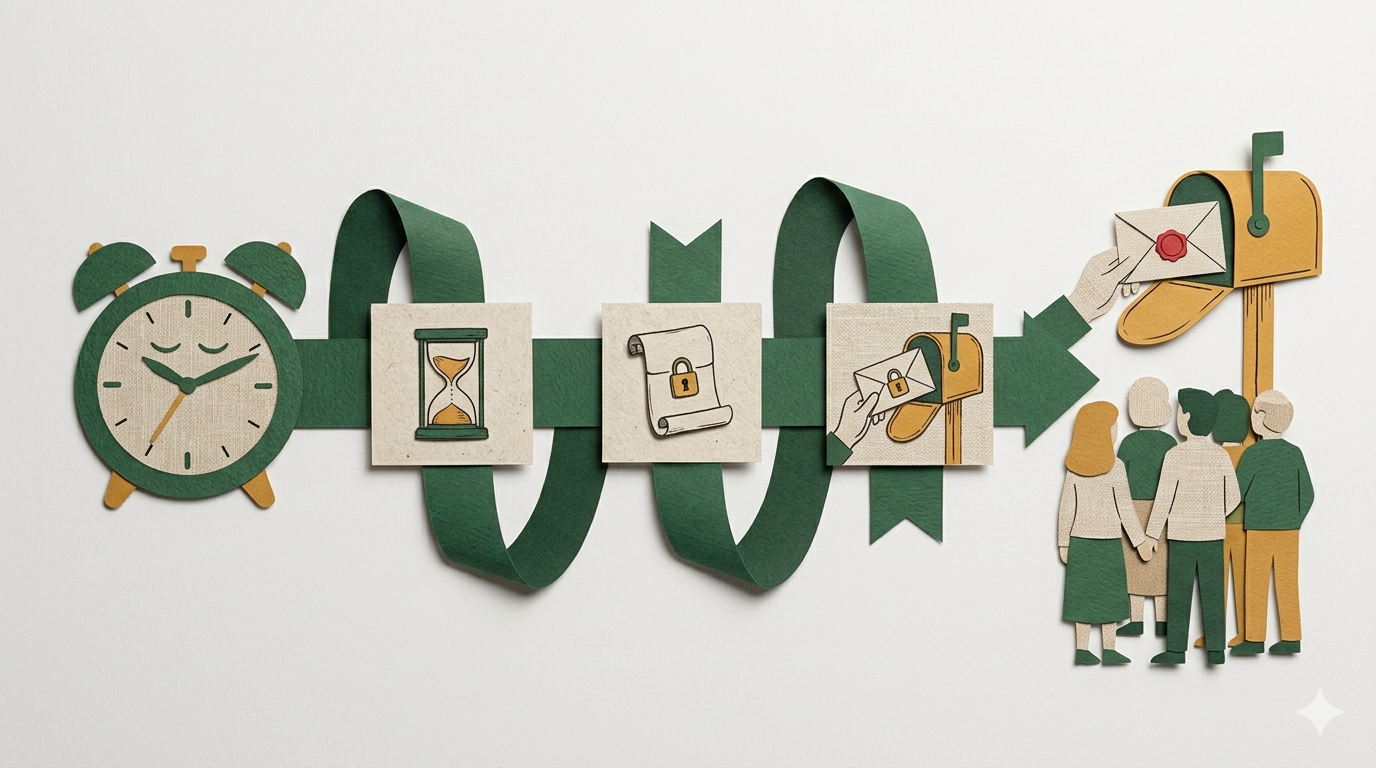
The logic follows a simple "if-this-then-that" protocol. You set a timer-for example, 60 or 90 days. You must log in or interact with the service periodically to reset that timer. If the timer reaches zero, the system executes your pre-defined instructions. This is a form of automated asset transfer that ensures information is delivered while it is still actionable.
To ensure these critical messages are not lost, the system must adhere to trustworthy email standards such as SPF, DKIM, and DMARC to prevent the notification from being filtered as spam.
Scenario: A Freelance Creative Director with Encrypted Client Files
Consider the case of an anonymized freelance creative director who manages high-value video assets for corporate clients. These files are stored on an encrypted Network Attached Storage (NAS) system. They also hold professional software licenses and have pending invoices in a project management tool.
If this professional were to suddenly become unavailable, their family might face legal liabilities from clients unable to retrieve their property. By setting up a dead man's switch, the freelancer ensures that an automated message is sent to their spouse and a trusted business partner. This message contains the location of the "Master Key" for the NAS and the login credentials for the billing software, allowing for a secure credential handover and a smooth professional transition. This prevents the business from stalling and protects the estate from potential breach-of-contract claims.
Securing Sensitive and Biometric Data
Digital estates now encompass more than just financial accounts; they include sensitive genetic data and smart home security footage.
Recovering Encrypted Backups
Many users follow the "3-2-1" backup rule: three copies of data, on two different media, with one copy offsite. However, if those copies are encrypted, they are useless to heirs without the password. A dead man's switch can provide encrypted backup access by delivering decryption "seed phrases" or passwords only after the user has been inactive for a significant duration.
DNA Profiles and Privacy
Services holding genetic data often have strict privacy policies that make posthumous access difficult. Including these in your digital planning ensures that family members can either preserve or delete this sensitive information according to your specific wishes, rather than leaving it to the discretion of a corporate entity.
Comparison: Dead Man's Switch vs. Traditional Methods
| Feature | Traditional Will | Password Manager (Legacy) | Dead Man's Switch |
|---|---|---|---|
| Speed of Access | Slow (Weeks/Months) | Medium (Requires Death Cert) | Fast (Based on Inactivity) |
| Privacy | Low (Public Record) | High | Very High |
| Ease of Update | Difficult (Requires Legal) | Easy | Easy |
| Trigger Mechanism | Manual/Legal | Manual/Request-based | Automated |
| Verification | Court/Probate | Company Discretion | User Inactivity |
Step-by-Step: Setting Up Your Digital Fail-Safe
- Inventory Your Assets: List your most critical digital accounts, including cryptocurrency wallets, cloud storage, and social media.
- Choose Your Recipient: Select a "Digital Executor"-someone who is tech-savvy enough to follow the instructions you send.
- Select a Dead Man’s Switch Service: Use a dedicated platform like Cipherwill that allows for encrypted backup access and secure delivery.
- Draft Clear Instructions: Instead of just sending a password, write a guide. For example: "The USB drive in the office safe contains the master vault; the code is your birthday."
- Set Your Inactivity Period: Choose a timeframe that covers a long vacation but is short enough to be useful, typically between 30 and 90 days.
- Test the System: Most services allow you to run a "drill." Ensure the email is delivered correctly and that all links or instructions are clear.
Practical Checklist for Digital Asset Protection
| Asset Category | What to Include in the Switch Email | Recommended Action |
|---|---|---|
| Cryptocurrency | Seed phrase location or partial key | Use a multi-sig or "social recovery" setup |
| Social Media | Instructions for "Legacy Status" | Nominate legacy contacts within the apps |
| Cloud Photos | Decryption password for backups | Ensure 2FA recovery codes are included |
| Financial/Bills | List of recurring subscriptions | Use a password manager with an emergency kit |
| Business Data | Admin credentials for SaaS/Domains | Document the "Handover" process |
Caveats and Limits of Automated Systems
While a dead man's switch is a robust tool, it is not a "set it and forget it" solution.
- Accidental Triggers: If you are in a remote area without connectivity, your switch might trigger. It is essential to choose a service that provides multiple warnings via SMS and secondary emails before the final execution.
- Security Risks: Storing plain-text passwords for bank accounts is generally discouraged. Instead, store "hints" or keys to an encrypted vault.
- Legal Standing: In many jurisdictions, a dead man's switch may not have the same legal weight as a notarized will. It should be viewed as a technical bridge rather than a total legal replacement. Some legal experts suggest that a trust may be a better option for certain high-value assets depending on local laws.
Original Practical Insight: The "Tiered Trigger" Strategy
A non-obvious risk in digital inheritance involves Decentralized Autonomous Organizations (DAOs) and high-volatility assets. If you are a "signer" on a multi-sig wallet, your heirs may need to act within a very narrow window to prevent a liquidation or a missed governance vote.
Standard probate takes months, and most dead man's switches are set to 30 days. For high-stakes digital assets, consider a tiered switch:
- Tier 1 (7 Days): Notifies a trusted business partner or co-signer to handle urgent operational matters.
- Tier 2 (30-60 Days): Notifies family members for long-term estate matters and personal legacy items.
This prevents a one-size-fits-all delay from causing financial loss in fast-moving digital markets. Some users in the developer community have even explored using smart contracts to automate these transfers directly on the blockchain.
FAQ
- What happens to my digital assets if I don't have a dead man's switch?
Without a plan, assets often enter a state of technical inaccessibility. Platforms may eventually delete accounts due to inactivity, and encrypted data can remain permanently unreadable.
- Is an automated email secure enough for sensitive passwords?
Sending plain-text passwords via email can be risky. Best practice is to use the email to deliver a "key" that unlocks an encrypted file or provides the location of a physical backup.
- How do I prevent a dead man's switch from triggering accidentally?
Choose a service that sends multiple reminders across different channels (Email, SMS, App notifications) over several days before the final trigger.
- Can a dead man's switch legally replace a traditional will?
Generally, no. A will handles legal ownership, while the switch handles technical access. You often need both for a complete digital inheritance planning strategy.
- Who should I choose as the recipient of my digital inheritance email?
Choose someone who is trustworthy, likely to outlive you, and possesses the technical skills to follow the instructions provided.
- Can I use a dead man's switch for YouTube AdSense revenue?
Yes. By providing the login for the administrative account or the linked banking info, you can help ensure heirs continue to receive passive income from your content. Some resources provide further guidance on how to manage a digital legacy across various platforms.
Conclusion: Mitigating the Risk of Digital Loss
The risk of digital asset loss is a modern reality that requires a proactive solution. A dead man's switch for digital assets provides the critical link between your encrypted life and your heirs' ability to manage it. By setting up an automated inactivity trigger, you ensure that your family is not left locked out during an already difficult time.
The opportunity here is to create a seamless transition that preserves both financial value and personal history. Failing to act can result in the permanent disappearance of assets that took a lifetime to build. Start by inventorying your most sensitive accounts today; the small step of setting up an automated fail-safe can be the difference between a preserved legacy and a permanent loss. As noted in recent discussions on digital asset inheritance, while a switch is a powerful technical tool, it should always be part of a broader, professionally reviewed estate plan.
*Freshness Note: This guide was last updated and reviewed in April 2026 to reflect current standards in email security and digital estate law.*
About the Author and Reviewer
By Cipherwill Editorial Team, Digital Legacy Research Desk Reviewed by Cipherwill Review Board, Trust & Security Review Team Last reviewed: April 2026 Editorial contributor: Vedant Kulshreshtha Review contributor: Ishani Debroy
Legal and Accuracy Caution
Legal and Accuracy Caution: The laws governing digital assets, AI likeness, and posthumous privacy are evolving rapidly and vary significantly by jurisdiction. Platform terms of service and corporate policies are subject to change without notice. This guide provides general information and should not be construed as specific legal or financial advice. Always consult with a qualified professional in your specific region regarding digital estate planning.