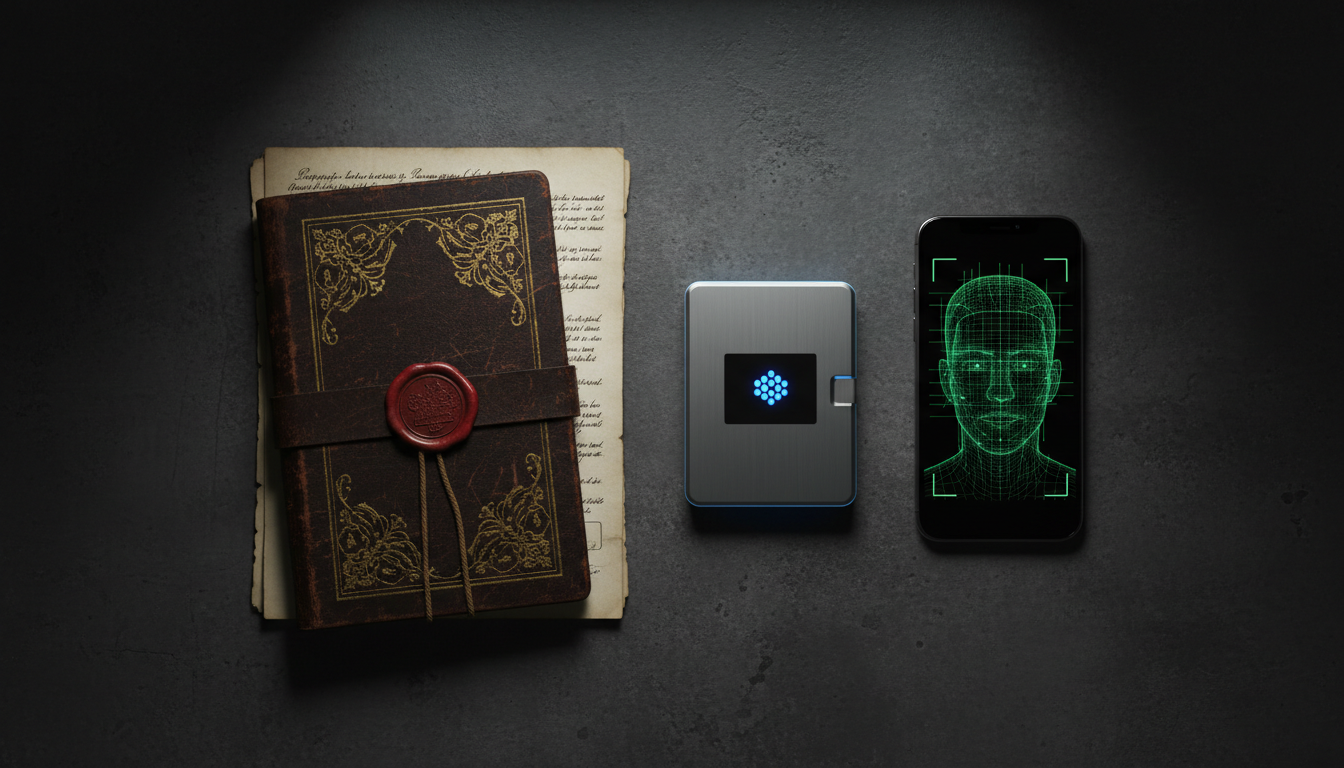
Digital Estate Planning: Why Traditional Wills Fail Digital Wealth
A will can identify who should inherit an asset. It cannot, by itself, unlock a hardware wallet, approve a sign-in, or recover an encrypted server. That distinction matters as wealth moves into cryptocurrency accounts, cloud platforms, online businesses, and digital intellectual property.
A sound digital estate plan therefore needs two connected parts: legal instructions that establish authority and practical arrangements that preserve access. The will remains important, but it is only one part of the system.
Marcus’s Estate: A Common Access Failure
Marcus, a 45-year-old software founder, had a conventional estate plan prepared by a law firm. His brother David was named executor. After Marcus died unexpectedly, David presented the required court documents to the bank and gained access to the checking accounts.
The harder problem was elsewhere. Marcus also held cryptocurrency on an exchange, ran his company through a Google Workspace account, and stored source code on a private server. The exchange required a code sent to Marcus’s locked phone. The company account depended on an authenticator app. The server required an SSH key saved on an encrypted drive.
David had legal authority, but no reliable route to the credentials, recovery codes, or devices. The estate’s value was not lost because the will was invalid. It was at risk because the access plan was incomplete.

What a Will Can—and Cannot—Do
For bank accounts, property, and other institutionally held assets, an executor can usually present probate documents and follow the provider’s claims process. The legal document supplies evidence of authority.
Digital assets add another layer. An executor may still need to:
- identify every relevant account, wallet, device, domain, and service;
- meet the provider’s identity and account-recovery requirements;
- access passwords, recovery codes, hardware keys, or private keys; and
- keep businesses running while ownership and tax matters are resolved.
A blockchain will not transfer a self-custodied wallet because a court order says it should. Likewise, a cloud provider cannot necessarily reset an account without satisfying its own procedures. Legal authority and technical capability must be planned together.
RUFADAA: Important Permission, Not a Master Key
In the United States, the Uniform Law Commission’s framework for the Revised Uniform Fiduciary Access to Digital Assets Act (RUFADAA) addresses how fiduciaries may manage certain digital property and electronic communications. Adoption and details vary by state, so an estate attorney should confirm the rules that apply.
The framework generally establishes an order of priority. A provider’s valid online tool may control first, followed by instructions in an estate document, and then the provider’s terms of service. The exact result depends on the asset, the account agreement, state law, and the type of information requested.
- Permission: RUFADAA can help a fiduciary request access or manage an account.
- Privacy: Providers may distinguish between account content, metadata, and communications.
- Technical limits: The law does not reveal a lost seed phrase, defeat encryption, or reverse an irreversible blockchain transaction.
For practical planning, the statute is a legal foundation. It should be paired with accurate inventories, provider-specific instructions, and secure recovery arrangements.
The MFA Cascade
Strong security can create a single point of failure after death or incapacity. A primary email account may control password resets for a password manager, exchange, domain registrar, cloud account, and business software. If access depends on one phone, authenticator app, or hardware security key, losing that item can affect the entire estate.
NIST digital identity guidance supports strong authentication, but security controls still need recovery paths. A recovery plan should preserve protection during the owner’s lifetime without making the executor guess which device, code, or backup is required.
The goal is not to weaken security. It is to give the right person a controlled, documented way to use it when the owner can no longer do so.
Traditional Estate Planning Compared with Digital Access Planning
The comparison below describes the roles each approach can play. “Digital inheritance infrastructure” is a general category, not a claim that every platform provides every capability.
| Operational component | Traditional estate planning | Digital access planning |
|---|---|---|
| Primary function | Sets legal instructions, names fiduciaries, and addresses distribution. | Maps accounts and creates a secure, documented route to required systems. |
| Access method | Relies on probate, provider review, and institutional procedures. | May use recovery codes, delegated roles, backup devices, controlled disclosures, or key-sharing arrangements. |
| Self-custodied assets | Can state who should inherit, but cannot create a missing private key or seed phrase. | Requires a carefully secured recovery and transfer method designed for the specific wallet or custody model. |
| Business continuity | Provides authority to administer the estate and business interests. | Documents operational dependencies such as domains, billing, code repositories, administrators, and hosting. |
| Privacy | May become accessible through probate, depending on jurisdiction and court practice. | Can keep credentials separate from the will and disclose only the information each recipient needs. |

Six Mistakes to Avoid
- Putting live passwords in a will: Credentials can change, and the will may be exposed during probate. Keep sensitive data in a separate, protected system.
- Treating legal designation as account access: Naming a beneficiary does not supply a password, recovery code, or private key.
- Relying on one device: A phone or hardware key should not be the only route to the primary email, password manager, or financial accounts.
- Ignoring business dependencies: Domains, hosting, billing cards, cloud administrators, and code repositories need named owners and backup procedures.
- Giving one person unrestricted secrets: Sharing a full seed phrase or master password without safeguards creates a serious theft risk. Consider controlled access and professional advice.
- Failing to review the plan: Update the inventory after major changes to accounts, devices, custody arrangements, or beneficiaries.
A Practical Digital Estate Checklist
A useful plan does not require recording every secret in one place. It requires enough information for a trusted person to locate the right systems and follow the right process.
- Inventory assets: List exchanges, wallets, domains, devices, email accounts, cloud services, subscriptions, intellectual property, and digital businesses.
- Map dependencies: Record which accounts rely on a primary email, authenticator, phone number, hardware key, or payment method.
- Create recovery routes: Store backup codes and device-recovery instructions separately from the device they protect.
- Use least privilege: Give an executor, family member, or business partner only the access needed for that role.
- Coordinate legal documents: Ask an estate attorney about state law, RUFADAA, powers of attorney, trusts, beneficiary designations, and tax consequences.
- Set review dates: Test the plan periodically and revise it whenever the digital estate changes.
Some families use a password manager, sealed instructions, professional custody services, or a purpose-built digital inheritance platform to organize this information. For readers comparing approaches, Cipherwill’s editorial and security resources offer one example of how a service can fit into a broader legal and operational plan. Any platform should be evaluated for its security model, recovery process, jurisdiction, and ability to support the assets involved.
Technology Supports the Plan; It Does Not Replace It
A digital inheritance service may help encrypt instructions, separate information among recipients, or release data after defined verification steps. Those features can reduce operational risk, but they do not replace a will, trust, power of attorney, tax advice, or provider-specific rules.
Cipherwill is one example of a platform designed to help people organize and transfer sensitive digital information. It should be considered alongside other options and used as part of a coordinated plan—not as a substitute for legal advice or careful security practices.
The central lesson is simple: a modern estate plan must connect legal authority with practical access. Paper documents still establish intent and fiduciary roles. Digital procedures help ensure that the people responsible for carrying out that intent can locate, protect, and use the relevant assets.
Frequently Asked Questions
Can I include passwords in my will?
It is usually a poor practice. A will may become part of a public probate record, and credentials become stale. Keep secrets separate, protected, and referenced by clear instructions in the estate plan.
Does RUFADAA apply to cryptocurrency?
It may address a fiduciary’s authority over certain digital property, but it cannot create access to a self-custodied wallet. State adoption, the custody arrangement, and the provider’s terms all matter.
What should a business executor receive first?
Usually, a documented route to business-critical systems: domain registration, billing, cloud hosting, email administration, code repositories, accounting, and customer support. The exact list depends on the business.
How often should a digital estate plan be reviewed?
Review it at least annually and after a major change, such as opening an exchange account, replacing a device, changing a password manager, moving a wallet, or adding a business platform.
By Cipherwill Editorial Team, Reviewed by Cipherwill Review Board, Trust & Security Review Team
Editorial contributor: Iraan Qureshi
Review contributor: Tavish Bhonsle