
If you want your body transformed into a memorial diamond, reduced into fertile soil, or placed within a deep-space orbital module, simply telling your relatives is entirely insufficient. To legally ensure unique burial and cremation wishes are respected by resistant or conservative family members, you must legally reassign your state’s "Right of Disposition" to a sympathetic, designated agent and pre-fund the chosen service. Without binding funeral instructions deliberately drafted outside standard testamentary wills, immediate family members hold complete legal authority to abandon your alternative burial wishes and opt for a traditional funeral instead.
The cultural shift toward sustainable and highly personalized legacy sendoffs has heavily collided with rigid legal frameworks built for the nineteenth century. While thousands of individuals now curate specific digital and physical departures, the operational reality of enforcing those plans remains largely misunderstood. Overcoming familial objections requires understanding the vast legal gap between a casual expression of intent and an enforceable, legally capitalized directive.
The Illusion of Verbal Consent: Elena’s Disposition Crisis
Consider the operational reality behind a modern legacy failure. Elena, a 34-year-old climate researcher, knew precisely what she wanted for her final footprint. Over a holiday dinner, she explicitly told her conservative parents she did not want a traditional casket burial. Instead, her final wish was to undergo Natural Organic Reduction (NOR)—commonly known as human composting—at a certified facility, with a portion of her ashes ultimately crystallized into a memorial diamond for her daughter.
Her parents nodded politely, viewing the conversation as a morbid abstraction. However, when Elena passed away unexpectedly in a transit accident three years later, the abstraction became an immediate logistical crisis. The facility in Washington State required a signed authorization, precise chain-of-custody transportation, and immediate upfront funding. Overwhelmed by grief and fundamentally opposed to the concept of soil reduction, Elena’s parents simply refused.
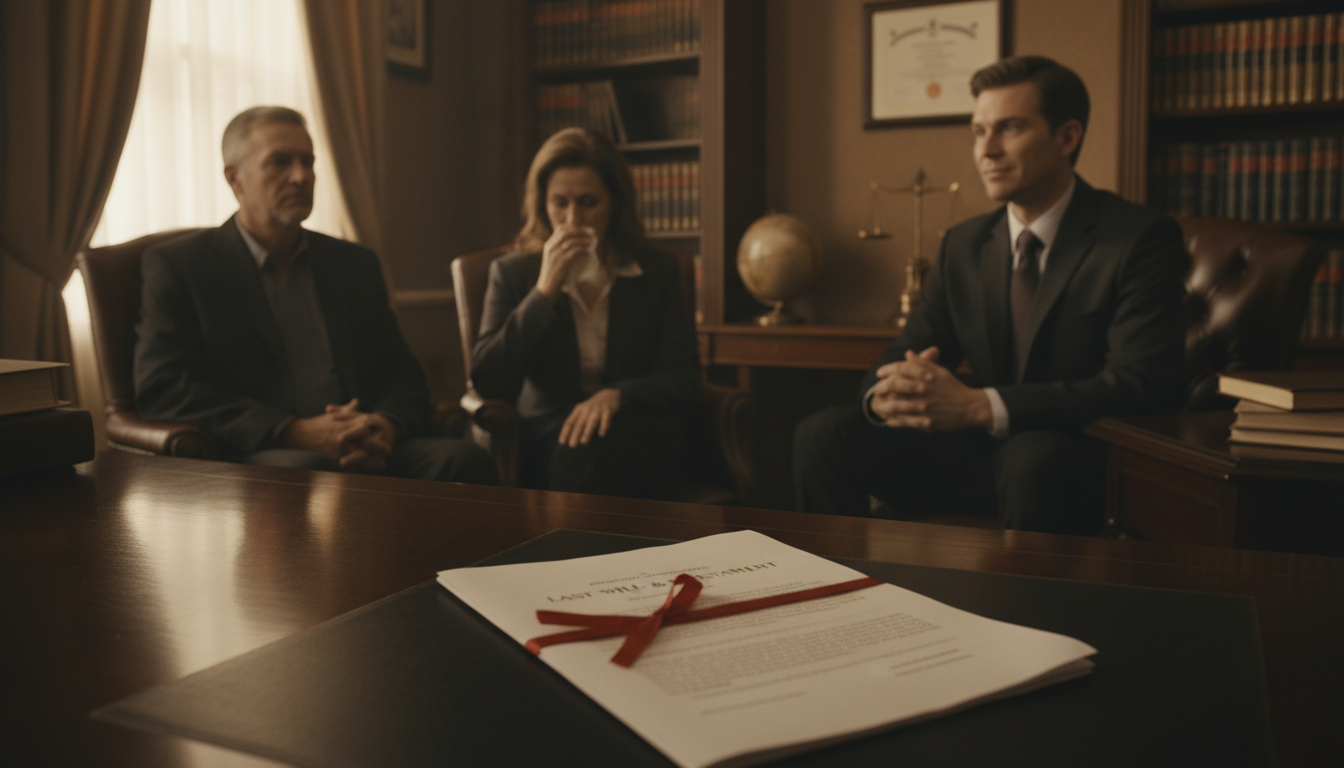
In the funeral director's office, Elena’s sister attempted to intervene, presenting a handwritten letter Elena had left outlining her eco-conscious wishes. The director, bound by state compliance, had to decline. Because Elena had no surviving spouse, her parents automatically held the supreme legal authority. Elena’s handwritten note was merely an "expression of intent." Her family legally bypassed her wishes, signing a contract for a traditional embalming and metal casket burial.
The Legal Reality: Who Actually Owns Your Remains?
This exact scenario unfolds daily across the country because of a legal concept known as the Right of Disposition. State statutes strictly govern who possesses the legal right to control funeral arrangements and body disposal. According to the National Funeral Directors Association (NFDA) guidelines, which reflect the regulatory baseline in nearly all U.S. jurisdictions, the hierarchy of authority follows a rigid, descending order.
Usually, the legal control immediately defaults to a surviving spouse, followed by adult children, then parents, and lastly, siblings. Funeral homes face immense liability—up to the loss of their operating licenses—if they act on a deceased’s unverified alternative wishes over the direct objections of the legal next of kin.
Many people mistakenly believe federal consumer protections can force a provider’s hand. While the Federal Trade Commission (FTC) Funeral Rule (16 CFR Part 453) guarantees robust consumer protections—such as mandatory itemized pricing and prohibitions against forced package purchases—it applies exclusively to the commercial transaction between the buyer and the funeral provider. It does not empower the FTC, nor the funeral director, to referee family disputes or enforce a deceased individual's undocumented final wishes against the designated next of kin.
Comparing Uncommon Sendoffs and Their Constraints
Securing an alternative legacy requires an intimate understanding of the financial and logistical roadblocks associated with your specific choice. Below is a realistic assessment of non-traditional disposition methods that frequently cause familial friction.
| Disposition Method | Average Cost | Operational & Legal Constraints |
|---|---|---|
| Memorial Diamond Ashes | $3,000 – $20,000+ | Requires roughly 1/2 cup of cremated remains. Family must authorize releasing ashes to a third-party laboratory; high risk of non-compliance if unfunded. |
| Natural Organic Reduction | $5,000 – $7,000 | Legal only in select states (e.g., Washington via SB 5001, Colorado, NY). Requires immediate, cross-state specialized transport if dying elsewhere. |
| Deep Space Burial | $2,500 – $12,500+ | Strict payload launch schedules. If probate freezes funds, window to pay aerospace provider closes before the next scheduled rocket launch. |
| Ocean Reef Memorial | $4,000 – $8,000 | Mixing cremains with concrete. Requires EPA permitting typically handled by the provider, but relies on family cooperation to initiate. |
Why Standard Wills Always Fail Final Wishes
One of the most dangerous misconceptions in legacy planning is trusting a Last Will and Testament to dictate burial mechanics. A standard will is a remarkable instrument for distributing financial assets, but it operates on a fundamentally incompatible timeline for physical disposition.
When an individual passes, a funeral home requires decisions within 24 to 48 hours. However, the deceased's legal will is typically locked in a safe deposit box or held by an attorney, who may not be notified immediately. Furthermore, wills must undergo probate—a lengthy court process holding no immediate sway over urgent mortuary decisions. By the time a probate judge officially reads your desire to have your ashes compressed into a memorial diamond, your family has likely already authorized an earth burial, completely nullifying your intentions.
How to Operationally Enforce Binding Funeral Instructions
To prevent familial interference and legal gridlock, you must sever the default chain of command. If Elena had understood disposition laws, she could have sidestepped her parents' legal authority completely through specific binding mechanisms.
The Decision Framework for Binding Directives:
- Execute a Designated Agent Form: Over a majority of U.S. states allow you to sign a standardized document naming a "Designated Agent for Body Disposition." This legal document completely supersedes the standard next-of-kin hierarchy. By appointing a likeminded friend or progressive relative, that person wields sole legal power over your remains.
- Establish Pre-Funded Contracts: Relatives frequently use financial feasibility as an excuse to abandon unusual final wishes. Establishing an irrevocable pre-need contract directly with a specialized firm removes the financial burden from the family, legally locking in the exact service.
- Centralize Actionable Credentials: Having a pre-funded space burial means nothing if your appointed agent does not know the vendor, lacks the contract number, or cannot log in to the required digital portals to authorize payload integration.

Programmable Inheritance: Bridging Legal Intent and Execution
The ultimate failure point in unconventional burials is the information gap. How does your Designated Agent access the exact laboratory instructions for your memorial diamond ashes when you pass away? This is where digital inheritance infrastructure provides the necessary operational enforcement.
A robust platform like Cipherwill solves the exact timing problem that renders traditional wills useless. By utilizing a programmable inheritance framework, you can digitally vault your Designated Agent authorization, vendor receipts, and exact procedural checklists. Upon your passing, Cipherwill’s automated mechanisms deploy these critical assets directly to your agent.
Unlike a paper will trapped in a lawyer's filing cabinet, programmable inheritance ensures the specific instructions, prepaid contracts, and logistical contacts hit your agent's inbox hours after death, equipping them to legally contest resistant relatives before mortuary decisions finalize.
The platform also enables users to write sensitive posthumous messages, delivering a recorded video or letter directly to conservative family members. Experiencing the deceased directly articulate *why* they chose human composting drastically reduces the psychological friction and legal threats often directed at the designated agent. Understanding how this timeline works ensures that all encrypted data deciphers precisely when the legal window for disposition opens.
Common Mistakes When Planning Unique Sendoffs
Attempting to orchestrate memorial diamond ashes or a digital legacy cremation without rigorous operational planning guarantees failure. Avoid these fatal missteps:
- Underestimating Chain of Custody: If your goal is a memorial diamond, the extraction laboratory requires pristine carbon. If your family accidentally authorizes a high-temperature cremation without consulting the diamond lab’s specific temperature requirements, the carbon may burn off entirely, making the diamond impossible to grow.
- Shipping Violations: Only the United States Postal Service (USPS) is legally permitted to ship cremated remains domestically. Using FedEx or UPS to transport ashes to a niche provider will result in the package being held indefinitely, causing massive emotional distress.
- Overlooking Interstate Limitations: Natural Organic Reduction is highly regulated. Dying in Texas but requesting soil reduction in Washington State introduces massive transport fees and legal biohazard documentation that grieving families will almost certainly reject if not pre-arranged.
- Hiding the Plan: Storing unique directives in a bank safe deposit box often means the paperwork surfaces months after the funeral. Secure cloud transmission is a non-negotiable operational necessity.
The Ultimate Alternative Burial Checklist
To remove the burden of a digital scavenger hunt from your family's grief and ensure your alternative legacy proceeds with total transparency, follow this strict operational sequence:
- Research state-specific disposition documentation and verify if your residency allows for "Designated Agent" assignment.
- Select an agent outside your immediate family if you anticipate profound religious or cultural objections to your wishes.
- Sign and notarize the Assignment of Disposition form while of sound mind.
- Consult with the specific service provider (memorial diamond lab, space flight aerospace company) to prepay and secure a binding pre-need contract.
- Vault the digital receipt, lab instructions, and a personal explanatory video inside a secure digital vault with a dead-man's switch timeline.
- Distribute digital access credentials to your designated agent, explicitly outlining their legal power.
Frequently Asked Questions
Question: Can my family cancel my pre-paid alternative burial plan?
Answer: Generally, no. If you have established an irrevocable pre-need contract with a funeral provider, state laws protect the financial trust. However, if you failed to appoint a designated agent, the legal next-of-kin might heavily pressure the provider to alter the disposition method entirely, creating a complex legal battle over the asset funds.
Question: Are memorial diamonds recognized as legal disposition?
Answer: A memorial diamond is technically an algorithmic post-cremation process, not a primary legal disposition. You must first undergo standard cremation, which legally requires authorization from the rightful next-of-kin. Once ashes are returned, the family or designated agent must authorize their secondary transport to the laboratory.
Question: Does the FTC Funeral Rule force funeral homes to follow my verbal wishes?
Answer: No. The FTC Funeral Rule governs price transparency, preventing deceptive commercial practices by funeral homes. It does not dictate who holds the legal right to sign the authorization forms. If a deceased's verbal intent conflicts with the next-of-kin's written directive, the funeral home must follow the living legal authority.
Question: Why is putting funeral instructions in a standard will dangerous?
Answer: A Last Will and Testament is a probate document. By the time legal authorities, attorneys, and the state review the document, standard funerals and dispositions have usually already occurred. Binding funeral instructions must be standalone documents accessible immediately upon death.
Question: Can I appoint a friend instead of my spouse to handle my remains?
Answer: In many states, yes. You can use a standardized legal form to designate an agent for body disposition. When properly signed and notarized, this document legally bypasses the conventional hierarchy of control, blocking your spouse or parents from overriding your exact burial instructions.
Question: How do space burials manage the weight of cremated ashes?
Answer: Deep space and orbital burials do not send the entire volume of cremated remains. Aerospace providers typically require 1 to 7 grams of ashes per payload capsule. The remainder of the ashes must be disposed of or kept by the family through traditional terrestrial means.
Question: Is human composting legal everywhere?
Answer: No. Natural Organic Reduction is only legal in a growing subset of states, such as Washington, Colorado, New York, and California. If you die in an unauthorized state, your body must be securely transported across state boundaries, invoking strict logistical timelines and supplementary costs.
By Cipherwill Editorial Team, Reviewed by Cipherwill Review Board, Trust & Security Review Team
Editorial contributor: Iraan Qureshi
Review contributor: Nivaan Khattar