When you die, your digital assets—ranging from family photos stored in the cloud to email accounts, cryptocurrency wallets, and financial logins—do not automatically transfer to your next of kin. Instead, if you fail to establish a robust digital asset inheritance plan, technology platforms treat your passing as a prolonged period of account inactivity. Under the stringent terms of service implemented by major tech corporations, inactive accounts are systematically and permanently deleted after 12 to 24 months. This automated data purge results in the eradication of decades of memories and irrevocable financial access, leaving grieving families staring at a devastating 'Data Not Found' error instead of securing your legacy.
The digital ecosystem operates without empathy or patience. While physical assets like real estate or jewelry undergo a heavily regulated probate process that protects the inheritance rights of family members, digital assets reside on private corporate servers. For a technology giant managing petabytes of data, maintaining the encrypted files of deceased users represents an unnecessary server cost and an ongoing security liability. Consequently, the default corporate resolution for mortality is simple: automated erasure.
The Silent Stopwatch: Expanding on the Big Tech Data Purge
Many people operate under the assumption that presenting a government-issued death certificate to a technology provider will function as a universal skeleton key, instantly granting family members full administrative access to an account. In reality, a death certificate is frequently the exact trigger that initiates platform lockdown protocols. To comply with localized privacy regulations and shield themselves from liability, major tech platforms have implemented aggressive sunset policies for inactive data.
The severity of this reality becomes apparent when tracking exactly what happens to digital assets when you die under different corporate umbrellas. From Google's official user policy to internal developer guidelines at Apple, the corporate objective leans heavily toward permanent deletion rather than seamless familial transfer.
| Platform Ecosystem | Inactivity Trigger & Ultimate Account Fate |
|---|---|
| Google (Workspace, Drive, Photos, Gmail) | Deletes the entire account and its contents irrevocably after 24 months of consistent inactivity across Google services. |
| Yahoo Mail & Services | According to Yahoo's terms of service, accounts dormant for 12 months face permanent deactivation, wiping all historical inbox data. |
| Apple (iCloud, Apple ID) | Data remains encrypted. Without previous legacy authorization or complex court orders overriding terms, Apple will not bypass Activation Lock or hand over decryption keys. |
| Meta (Facebook & Instagram) | Accounts can be deleted entirely or memorialized if a death certificate is provided. Memorialized accounts lock out all future administrative access. |

Marcus’s Ledger: The Human Cost of a Digital Lockout
The intersection of grief and bureaucracy is unforgiving. To understand the operational friction of digital probate, we can examine a distressingly common scenario. Marcus, a 42-year-old software architect, constructed an incredibly secure financial and digital life. He utilized randomized, complex passwords for his banking portals, enabled multi-factor authentication across his digital footprint, and kept his family's decade-long media archives locked safely behind a commercial cloud server. When Marcus passed away suddenly in a car accident, his sophisticated cybersecurity posture transformed immediately into an impenetrable wall separating his wife, Elena, from their shared legacy.
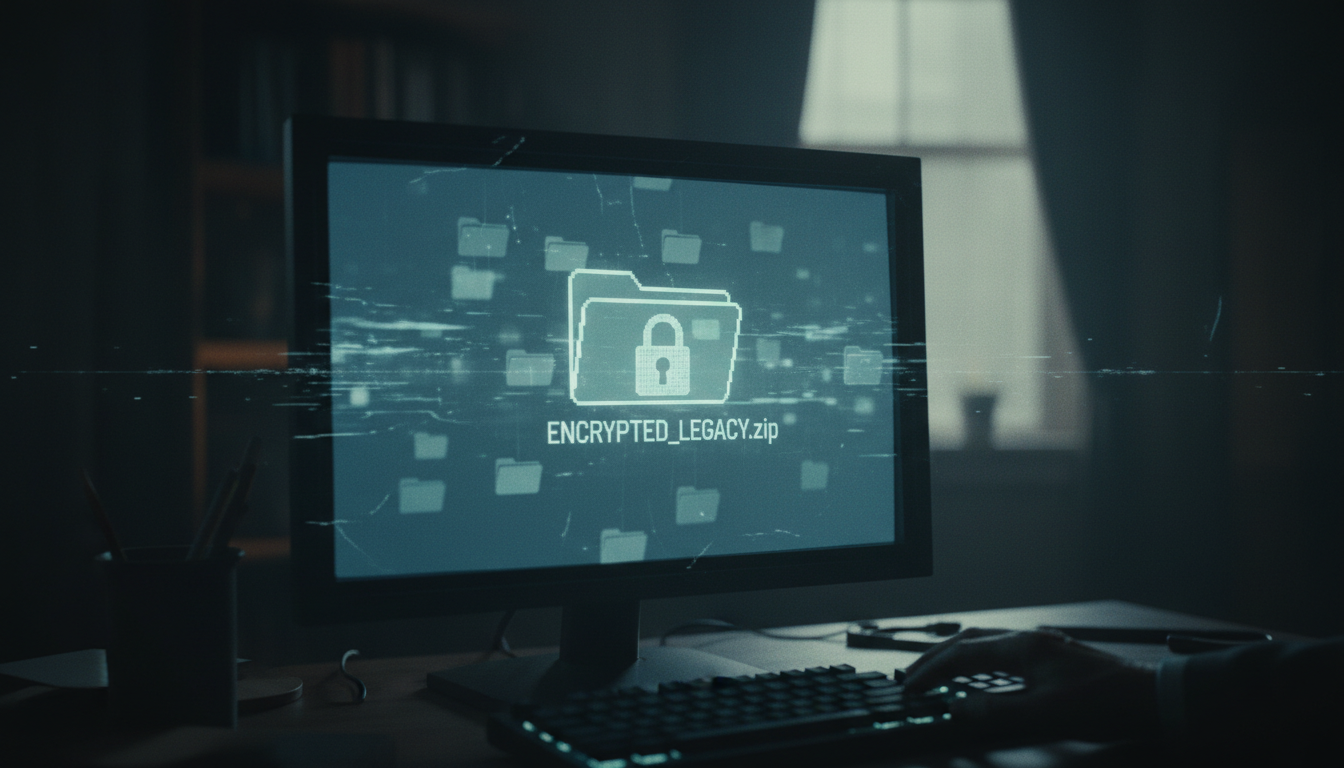
Elena sits in the dim light of her home office, sliding a certified, notarized copy of Marcus’s death certificate across her desk. She scans the document, expecting it to carry weight. On her computer monitor, a customer service chat window from Marcus’s cloud provider blinks with a sterilized, automated response: "For privacy reasons governed by our user agreement, we cannot grant login access, bypass encryption, or transfer ownership of the requested account to a third party." Elena realizes a horrifying truth: the clock is already ticking. In exactly 24 months, the automated server sweep will erase the only existing copies of their daughter’s early developmental milestones and family vacations.
Her attempts to navigate the labyrinth of corporate privacy walls only yield compounding technical hurdles. Weeks later, Elena finally locates a hidden external hard drive in Marcus's office containing thousands of dollars in cryptocurrency assets. She connects the device to her laptop and initiates the login sequence she discovered scribbled in a notebook. Instantly, she hits another wall: the system requires a two-factor authentication (2FA) token. The on-screen prompt coldly reads: "An authorization code has been sent to your mobile device ending in 492." She glances at the empty desk beside her. The estate attorney had rightfully advised her to disconnect Marcus’s cellular phone plan three weeks prior to minimize ongoing estate expenses. The instant that carrier line went dead, the SMS bridge to his financial legacy was severed permanently.
Marcus’s story highlights a systemic flaw in modern estate planning. He successfully protected his data from hackers, bots, and corporate espionage, but entirely failed to build an avenue that protected his data from the inevitable reality of human mortality.
The Interconnected Ripple: Overlooked Operational Failures
The damage caused by inactive account deletion extends far beyond losing old emails. The modern internet relies on heavily interconnected authentication networks. When a central digital pillar collapses, it generates cascading systemic failures across a family's financial infrastructure.
- The Single Sign-On (SSO) Domino Effect: Many internet users leverage "Sign in with Google" or "Sign in with Apple" rather than creating unique passwords for peripheral websites. If the central email provider purges your inactive account, every third-party service tied to that identity instantly becomes a digital orphan. Families cannot utilize the "forgot password" feature on an investment dashboard if the recovery link routes to an email address that no longer exists.
- Recycled Mobile Exploitations: Telecom providers recycle disconnected mobile numbers quickly, sometimes within 30 to 90 days. If an estate execution requires a multi-factor authentication code sent to a deceased user's number, but that number now belongs to a stranger on a different continent, families sit entirely immobilized while strangers receive alerts containing sensitive financial data.
- Ghost Subscriptions and Autopay Drains: Cloud storage fees, specialized software licenses, and direct debit obligations routinely drain probate accounts long after death. Without access to the specific email inboxes where these digital invoices and cancellation links are routed, fiduciaries struggle to stop the financial bleeding without fundamentally canceling and replacing every underlying bank card.
- Cryptocurrency Eradication: Blockchains lack a central customer service department. If a user passes away without structurally passing down private cryptographic keys or securely vaulted seed phrases, the assets remain immobilized indefinitely. The blockchain simply logs the inaccessible currency as untouched, resulting in total financial forfeiture.
The Privacy Paradox: The RUFADAA Framework
When families realize they are locked out, they inevitably consult legal professionals, assuming property law will force the digital gates open. This introduces them to the complex reality of modern digital estate legislation.
Under the Uniform Law Commission's framework known as the Revised Uniform Fiduciary Access to Digital Assets Act (RUFADAA), the law attempts to balance user privacy with fiduciary access. However, RUFADAA enforces a strict hierarchy regarding who is legally authorized to access a deceased person's data. This hierarchy prioritizes digital mechanics over traditional paper trails.
Specifically, RUFADAA dictates that an "online tool" configured by the user—such as an automated inactive account manager or a dedicated digital inheritance vault—will universally override any instructions outlined in a traditional printed will. If the user never configured an online tool, the platform’s standardized Terms of Service assume priority. Because virtually all standard service agreements strictly prohibit the transferring of login credentials explicitly, the tech companies are legally bound to lock families out, even if a judge or a traditional document states otherwise. This legal construct is known as the privacy paradox: the user’s presumed right to post-mortem privacy supersedes the family's right to digital inheritance.
"When a physical estate is neglected, the house simply gathers dust until the family arrives. When a digital estate is ignored, corporate algorithms methodically wipe the foundational servers clean, eradicating the individual's legacy as if it had never existed in the first place."

Common Mistakes in Digital Inheritance Posture
Attempting to solve the digital asset inheritance dilemma with antiquated analog tools often introduces extreme security risks or legal exposure for surviving family members.
- Listing Passwords in Standard Will Clauses: Standard last will and testament documents undergo public probate. If you explicitly write out passwords, seed phrases, or sensitive digital inheritance instructions within a traditional will, those critical security elements become publicly accessible documents, exposing your digital footprint to identity thieves and opportunistic fraud.
- Unauthorized Fraudulent Logging In: Many widows or children attempt to retrieve digital assets by quietly entering known passwords to bypass corporate gatekeepers. Under federal frameworks like the Computer Fraud and Abuse Act (CFAA), accessing an account without authorization from the platform—even if you are the deceased user's spouse—can technically constitute a digital crime or violate service agreements resulting in instant, permanent account bans.
- Trusting 'Shared' Family Devices Without Independent Recovery Details: Relying on FaceID, fingerprint unlocking, or saved browser cookies on family iPads is a fleeting strategy. The moment a token expires, a software update triggers a secure logout, or a device reboots abruptly requiring a master passcode PIN, the temporary access window slams shut permanently.
- Ignoring the Hardware Lifecycle: Storing recovery codes on fragile physical media like unencrypted USB drives or scraps of notebook paper tucked in filing cabinets leaves critical legacy components vulnerable to degradation, environmental destruction, or inadvertent disposal during the frantic home-clearing process that follows a death.
Meaningful Comparison: Native Account Managers vs. Encrypted Digital Vaults
Understanding exactly how to shield your estate from tech deletion requires analyzing the tools designed to facilitate data transfers. While platform-native tools exist, they feature inherent limitations compared to independent frameworks.
Native tools—such as Google’s Inactive Account Manager or Apple’s Legacy Contact function—are severely siloed solutions. They operate reactively, requiring isolated configuration for every ecosystem you utilize. If you assign a legacy contact on your Apple account but fail to set a mirrored directive on your Microsoft or Meta accounts, the resulting transfer is catastrophically fragmented. Furthermore, native platforms rarely support the secure transition of non-traditional assets like decentralized cryptocurrency wallets or proprietary business access codes. They prioritize saving their own local data formats rather than ensuring comprehensive financial transfer.
Conversely, an independent digital inheritance platform acts as an agnostic operational bridge. By utilizing an encrypted digital vault equipped with a sophisticated cascade of behavioral triggers—often operating as a dead man's switch—these secondary architectures monitor your persistent digital heartbeat. Rather than battling individual platform bureaucracy individually, a comprehensive vault captures master credentials, recovery seed phrases, operational blueprints, and end-of-life directives. When the system detects prolonged user inactivity and verification fails, it systematically decrypts and delivers the comprehensive archive directly to your pre-verified beneficiaries, entirely bypassing the arbitrary timeline algorithms constructed by the big tech inheritance trap.
The Resilient Framework: A Digital Heritage Checklist
Escaping the systemic link rot of a digital lifespan requires immediate execution. To preempt an irreversible failure, initiate the following structural checklist:
- Audit and Consolidate: Map your digital footprint. Identify primary email accounts bridging critical services, centralized password manager mastery details, and the specific locations of offline cryptocurrency ledgers.
- Centralize Authenticators: Transition away from carrier-dependent SMS two-factor authentication (which fails when estate planners cancel phone line contracts) and adopt resilient, exportable authenticator hubs or secure hardware security keys.
- Provision a Secondary Decryption Vault: Secure an agnostic, encrypted digital vault platform designed exclusively to execute post-mortem asset dispersal away from the restrictive control of big technology companies.
- Draft Clear Operational Directives: Pair complex technological transfers with plain-text, emotionally intelligent instructions detailing how heirs should interpret and handle sensitive financial transfers and personal memories.
- Assign Fiduciary Roles Legally: Revise your foundational estate planning documents with a qualified attorney to explicitly grant your executor broad, legal authority to manage and interact with digital materials under the local parameters established by RUFADAA compliance rules.
Securing Your Imprint Against Erasure
The digital footprints we generate represent more than algorithmic metadata; they represent our financial stability, our professional legacies, and the intimate history we intend to leave behind for subsequent generations. Tolerating an automated big tech data purge is not an inevitability—it is merely the consequence of administrative negligence. By implementing proactive transfer solutions and encrypting your directives correctly today, you guarantee that your legacy thrives rather than terminating in an obscure server wipe.
Frequently Asked Questions
Question: What happens to digital assets when you die?
Answer: Digital assets are governed heavily by platform Terms of Service rather than traditional real property laws. Unless an individual specifically sets up pre-arranged access or an encrypted digital inheritance framework, technology companies will flag the accounts as abandoned and eventually permanently delete all stored contents.
Question: How long does Google wait before deleting an inactive account?
Answer: Under its updated consumer guidelines, Google initiates the phased deletion of accounts that have remained completely inactive across all ecosystem services for 24 continuous months. This automated purge securely removes Google Drive, Google Photos, and standard Gmail data from their operational servers.
Question: Does a death certificate give my family automatic access to my Apple account?
Answer: No. A standard death certificate alone rarely compels Apple or other hardware giants to surrender existing account credentials. Because of strict localized privacy protocols, families often must secure complex, explicitly worded court orders specifically granting access before a provider will even consider lifting data blockades.
Question: What is RUFADAA and how does it legally affect digital inheritance?
Answer: The Revised Uniform Fiduciary Access to Digital Assets Act (RUFADAA) is a comprehensive legal framework dictating how fiduciaries handle digital properties. Crucially, it prioritizes the user's online tool directives over traditional wills, meaning a platform's built-in setting will legally overwrite standard paper estate documents.
Question: Will my cryptocurrency automatically transfer to my heirs?
Answer: Absolutely not. Cryptocurrency stored in self-custody cold wallets operates entirely outside centralized authority. If the private keys or cryptographic seed phrases are physically lost when you pass away, those digital funds will remain permanently locked and inaccessible on the blockchain infrastructure forever.
Question: Should I explicitly include my login passwords in a traditional printed will?
Answer: Including passwords in a physical will is extremely dangerous due to the public nature of traditional legal probate. Traditional wills eventually enter the public record, thereby exposing your highly sensitive digital footprint to immense fraud risks rather than securely transferring it.
Question: What is the massive risk of keeping family archives solely on social media?
Answer: Platforms like Meta provide baseline memorialization protocols upon verifying a death. However, this memorialization frequently restricts future administrative access and prevents comprehensive bulk downloading of high-resolution archives, permanently trapping original family photos entirely inside a corporate firewall interface.
Question: How do multi-factor authentication (MFA) protocols actively disrupt legacy planning?
Answer: When an estate executor legally cancels a deceased person's mobile phone contract to save on billing, SMS-based multi-factor authentication breaks instantly. Even if grieving families possess the correct login credentials, their failure to retrieve a mandatory secondary text token leaves the digital asset tightly sealed.
By Cipherwill Editorial Team, Reviewed by Cipherwill Review Board, Trust & Security Review Team
Editorial contributor: Samarjeet Vohra
Review contributor: Nivaan Khattar